

In This Article
Here’s the thing nobody tells you when you move into an apartment with a patio the size of a yoga mat: you can still grill like you mean it. A charcoal kettle grill for small patios isn’t a compromise — it’s arguably the smartest way to cook outdoors, because the round kettle shape was never about size in the first place. It was about airflow, heat control, and doing more with less, which happens to be exactly what a cramped balcony demands.
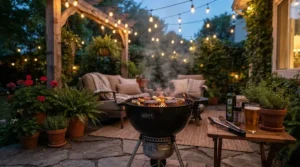
What is a charcoal kettle grill for small patios? It’s a compact, round-bodied charcoal grill — typically 14 to 22 inches in diameter — engineered with adjustable vents and a domed lid so it fits tight outdoor spaces while still delivering real charcoal flavor and even, controllable heat. The dome traps smoke, the vents manage temperature, and the round footprint sips space compared to boxy cart grills.
Weber’s original kettle design has been around since the 1950s, when George Stephen, a Chicago sheet-metal worker, cut a metal buoy in half and welded on legs because he was tired of flare-ups from his open brazier. That same basic shape now comes in sizes small enough to tuck under a stairwell, which is good news if your idea of “outdoor living space” is a concrete slab with a railing.
In this guide, we’ve dug into seven real, currently available compact kettle grill for patio cooking options — from a 14-inch tabletop model that costs less than a nice dinner out to a premium 22-inch kettle with a built-in thermometer and hinged grates. We’ll break down specs in plain English, compare them honestly, and walk through setup, storage, and the fire-code rules most apartment dwellers have never heard of. Let’s get into it.
Quick Comparison Table
| Grill | Diameter | Cooking Area | Best For |
|---|---|---|---|
| Weber Smokey Joe 14″ | 14.5 in | 147 sq in | Tiniest balconies, solo/couple meals |
| Weber Compact Kettle 18″ | 18 in | ~240 sq in | Purpose-built small-patio footprint |
| Weber Jumbo Joe 18″ | 18.5 in | 240 sq in | Portable weeknight grilling |
| Char-Griller 22″ Kettle | 22 in | 363 sq in | Budget upgrade to full-size cooking |
| Royal Gourmet CD1824EC 24″ | 24 in | 490 sq in | Most cooking area for the dollar |
| Weber Original Kettle Premium 22″ | 22 in | 363 sq in | All-around classic with thermometer |
| Weber Master-Touch 22″ GBS | 22 in | 443 sq in (incl. warming rack) | Feature-packed premium pick |
Based on the spec comparison, there’s a clean split here: the two smallest models genuinely change what fits on a 4-by-4-foot patio, while the 22-to-24-inch options trade a little floor space for a lot more cooking capacity. Cost-per-square-inch generally improves as you size up, but that only matters if your patio can physically host the bigger bowl — measure twice before you buy once.
Found a size that fits your space already? Scroll down to see current pricing before it changes. 💬
Top 7 Charcoal Kettle Grills for Small Patios: Expert Analysis
1. Weber Smokey Joe 14″ — smallest true kettle you can buy
The Weber Smokey Joe 14″ shrinks the classic kettle silhouette down to a 14.5-inch cooking grate, and that half-scale reduction is the whole point: it fits on a two-foot-square corner where a full-size grill simply can’t. The plated-steel grate sits over a porcelain-enameled bowl and lid, which means it resists rust and holds heat far better than the thin sheet-metal hibachis sold at the same price point. With 147 square inches of cooking area, you’re realistically cooking for one to three people — think burgers, kebabs, or a couple of bone-in chicken thighs, not a rack of ribs.
Who should care about this one? Based on the spec comparison, it’s built for renters, dorm-adjacent patios, and anyone who needs a grill that can be lifted with one hand and stashed in a closet between uses. Reviewers consistently note that the single top damper is enough to manage heat on a grill this small, though a few mention the shallow bowl means charcoal burns out faster than on larger kettles — expect 30 to 45 minutes of solid cooking heat per load. At around $45–$60, it’s one of the cheapest ways to get genuine porcelain-enameled construction instead of flimsy stamped steel.
Pros:
- ✅ Fits on patios as small as 2 feet by 2 feet
- ✅ Porcelain-enameled bowl resists rust for years
- ✅ Light enough to carry one-handed, even loaded
Cons:
- ❌ Short burn time limits longer, low-and-slow cooks
- ❌ Cooking area too small for groups of four or more
The Weber Smokey Joe 14″ typically runs in the $45–$60 range — a genuinely low-risk entry point if you’ve never owned a charcoal grill and want to see whether you’ll actually use one before spending more.

2. Weber Compact Kettle 18″ — built specifically for tight footprints
Where the Smokey Joe is a scaled-down accessory grill, the Weber Compact Kettle 18″ is Weber’s answer to a very specific problem: people who want an 18-inch cooking surface without the extra depth that a traditional tripod-leg kettle needs for stability. It ships with a low, compact stand — some versions include small all-weather wheels — that keeps the whole unit’s real-world footprint noticeably tighter than a standard 18-inch kettle on tall legs, despite the same grate diameter.
What most buyers overlook about this model is that the grate size is nearly identical to the Jumbo Joe below, so you’re not sacrificing cooking capacity — you’re sacrificing the tall stance in exchange for stability on uneven patio pavers or a narrow balcony ledge. The lid-mounted thermometer (on newer versions) is a genuine upgrade over guessing by touch, and the enameled steel construction should outlast cheaper unenameled competitors by years, based on Weber’s decade-plus track record with similar coatings elsewhere in the lineup. Reviewers on European retail sites, where this model has sold longer, consistently describe it as sturdy for its size, with a few noting the lower stance means more bending during long cooks.
Pros:
- ✅ Same 18-inch grate as larger models, tighter stance
- ✅ Built-in lid thermometer on current versions
- ✅ Wheeled base simplifies moving it out of the way
Cons:
- ❌ Lower height means more bending while cooking
- ❌ Less common at U.S. retailers than other Weber kettles
Priced in the roughly $100–$140 range depending on retailer and bundle, the Weber Compact Kettle 18″ earns its keep if your patio’s limiting factor is depth, not grate size.
3. Weber Jumbo Joe 18″ — most versatile for weeknight grilling
The Weber Jumbo Joe 18″ hits a sweet spot that’s hard to argue with: 240 square inches of cooking area — enough for roughly six to eight burgers — packed into a portable frame with folding legs and a locking Tuck-N-Carry lid. Aluminum dampers on the bowl and lid give you real two-zone control even at this size, which is more than you can say for boxier tabletop grills in the same price bracket.
Here’s what the spec sheet won’t tell you, but owner reports back up: the aluminum ash catcher genuinely speeds up cleanup versus scooping cold ash by hand, and the porcelain-enameled finish has held up through years of exposure in owner accounts, including several winters left under a basic cover. This is the grill for someone who wants one charcoal grill that does double duty — patio dinners most weeks, tailgate or campsite trips a few times a season. Based on the spec comparison against the Compact Kettle above, the Jumbo Joe trades the lower stance for genuine portability, since the legs fold flat for the trunk of a car.
Pros:
- ✅ 240 sq in feeds a small family in one load
- ✅ Folding legs make it genuinely trunk-portable
- ✅ Aluminum ash catcher speeds up cleanup
Cons:
- ❌ No wheels, so repositioning means lifting it
- ❌ Wobblier on uneven pavers than wider-legged kettles
Expect to pay in the $50–$70 range for the Weber Jumbo Joe 18″, which makes it one of the best value-per-square-inch charcoal grills currently sold under any brand.
4. Char-Griller 22″ Kettle — best budget alternative to the big-name brand
If you want a full 22-inch cooking surface without paying Weber’s premium, the Char-Griller 22″ Kettle (model CG30040725) is the honest alternative. It delivers 363 square inches of primary cooking area — identical to Weber’s 22-inch kettles — plus a porcelain-enameled lid and bowl for heat retention, dual adjustable dampers, and a built-in temperature gauge on the lid.
What sets this apart from other budget kettles is the charcoal access door built into the cooking grate, which lets you add fuel mid-cook without lifting the entire grate off — a genuinely practical feature that even some pricier grills skip. The EasyDump ash bucket is Char-Griller’s answer to Weber’s One-Touch system, and based on the spec comparison, it accomplishes the same job of sweeping ash into a removable container rather than a loose tray. Reviewers who’ve cross-shopped this against Weber’s Original Kettle consistently note it performs comparably for direct grilling, with the main trade-off being a shorter, 5-year warranty versus Weber’s 10-year coverage — a reasonable trade for buyers prioritizing price.
Pros:
- ✅ Matches Weber’s 22-inch cooking area for less money
- ✅ Charcoal access door adds fuel without disassembly
- ✅ EasyDump ash bucket simplifies cleanup
Cons:
- ❌ 5-year warranty is half of Weber’s comparable coverage
- ❌ Fit and finish reports are less consistent than Weber’s
The Char-Griller 22″ Kettle generally sells in the $130–$180 range, positioning it as the value pick for anyone who wants 22-inch capacity on an 18-inch-grill budget.
5. Royal Gourmet CD1824EC 24″ Kettle Grill — most cooking space per dollar
The Royal Gourmet CD1824EC 24″ Kettle Grill pushes past the traditional 22-inch ceiling with roughly 490 square inches of total cooking area, making it the largest grill on this list — a slightly counterintuitive pick for a “small patio” roundup, but one that earns its spot for a specific buyer: the household that grills often enough to want serious capacity but still needs a round kettle footprint rather than a sprawling cart grill with side tables.
What most buyers overlook here is that a 24-inch kettle’s actual footprint is barely larger than a 22-inch model — you’re gaining meaningful grate area without a proportional jump in floor space, because the extra inches go into diameter, not depth. Reviewer feedback aggregated across major retailers points to strong value for small households or couples who occasionally host, with straightforward assembly and a solid, sturdy feel once built. The included grill cover is a nice inclusion that competitors often charge extra for. Based on the spec comparison, this is the grill to choose if you’ve outgrown a 14- or 18-inch kettle but still want the round, space-efficient kettle format rather than switching to a boxier grill entirely.
Pros:
- ✅ Largest cooking area of any grill in this roundup
- ✅ Included cover adds value most competitors omit
- ✅ Footprint barely larger than a 22-inch kettle
Cons:
- ❌ Too large for the smallest apartment balconies
- ❌ Brand has a smaller review history than Weber
Pricing for the Royal Gourmet CD1824EC 24″ Kettle Grill typically lands in the $110–$150 range, undercutting comparable-capacity Weber models by a meaningful margin.
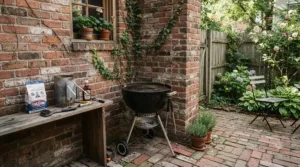
6. Weber Original Kettle Premium 22″ — the all-around classic
The Weber Original Kettle Premium 22″ is the grill most people picture when they hear “kettle grill,” and for good reason: 363 square inches of cooking area, a built-in lid thermometer, and Weber’s aluminized-steel One-Touch cleaning system that sweeps ash into a removable catcher with a simple lever motion. It’s backed by a 10-year warranty on the bowl and lid, which tells you something about how confident Weber is in the porcelain-enameled coating’s longevity.
Based on the spec comparison against the budget alternatives above, the built-in thermometer is the feature that most changes the cooking experience day to day — no more lifting the lid to guess, which also means better heat retention during longer cooks. Reviewers consistently report the paint and fit-and-finish as noticeably tighter than off-brand competitors, with one recurring complaint being the plastic lid hook, which can loosen and drop the lid if bumped. Aggregated owner reports commonly cite a decade or more of reliable service, which matters if you’re calculating cost per year of ownership rather than sticker price alone.
Pros:
- ✅ Built-in thermometer removes the guesswork
- ✅ 10-year warranty reflects genuine build confidence
- ✅ One-Touch cleaning system speeds up ash removal
Cons:
- ❌ Lid hook mechanism can loosen with heavy use
- ❌ No side table, so you’ll need a nearby surface
Expect to pay in the $130–$180 range for the Weber Original Kettle Premium 22″, which remains the benchmark every other 22-inch kettle on this list gets measured against.
7. Weber Master-Touch 22″ GBS — the premium pick
At the top of this lineup sits the Weber Master-Touch 22″ GBS, which takes the Original Kettle’s 363-square-inch primary grate and adds an 80-square-inch warming rack for 443 square inches total, plus the Gourmet BBQ System (GBS) hinged cooking grate that accepts interchangeable inserts — a griddle, wok, pizza stone, or sear grate — without needing a second grill.
What the spec sheet doesn’t fully convey is how much the hinged GBS grate changes mid-cook fuel management: you can lift just the center insert to add charcoal or wood chunks without disturbing food on the rest of the grate, which is a genuine step up from lifting an entire standard grate. It also includes 8-inch rubber wheels for easier repositioning on a patio, tool hooks built into the handles, and a Tuck-Away lid holder. Reviewers who’ve owned both the Original Kettle and the Master-Touch consistently describe the GBS system as worth the upgrade if you already cook varied meals — pizza one week, seared steaks the next — though a handful mention the higher price only pays off if you’ll actually use the accessory ecosystem rather than just the base grate.
Pros:
- ✅ GBS hinged grate accepts pizza stones and griddles
- ✅ 443 sq in total including the warming rack
- ✅ 8-inch wheels make repositioning easy on patios
Cons:
- ❌ Highest price point of any grill in this roundup
- ❌ GBS accessories are sold separately and add cost
The Weber Master-Touch 22″ GBS generally sells in the $260–$320 range, which is a real investment — but one that reviewers who cook frequently tend to say pays for itself in versatility.
Top 7 Products Comparison
| Grill | Cooking Area | Warranty | Price Range | Best For |
|---|---|---|---|---|
| Weber Smokey Joe 14″ | 147 sq in | 10 yr | $45–$60 | Micro-balconies |
| Weber Compact Kettle 18″ | ~240 sq in | 10 yr | $100–$140 | Low-clearance patios |
| Weber Jumbo Joe 18″ | 240 sq in | 10 yr | $50–$70 | Portability + capacity |
| Char-Griller 22″ Kettle | 363 sq in | 5 yr | $130–$180 | Budget full-size cooking |
| Royal Gourmet CD1824EC | 490 sq in | Limited | $110–$150 | Max capacity per dollar |
| Weber Original Kettle Premium | 363 sq in | 10 yr | $130–$180 | All-around classic |
| Weber Master-Touch GBS | 443 sq in | 10 yr | $260–$320 | Feature-rich premium |
Looking at the comparison above, the Weber Jumbo Joe 18″ delivers the best value under $75, but if hinged-grate versatility matters more than price, the Weber Master-Touch 22″ GBS justifies its higher cost through the GBS accessory system alone. Budget-focused buyers should note that the Royal Gourmet CD1824EC sacrifices Weber’s warranty length and long-term review history for a genuinely larger grate at a lower price — a fair trade for casual cooks, less so for daily grillers who value long-term brand support.

Practical Usage Guide: Setup, Charcoal Chimney Starters, and Your First 30 Days
Getting a new compact kettle grill for patio cooking dialed in starts before the first coal is lit. Assembly on most of these models takes 30 to 60 minutes with a screwdriver and basic wrench — budget a full hour your first time, since instructions vary in clarity between brands.
For lighting, skip lighter fluid entirely and invest roughly $15 in a charcoal chimney starter — a hollow metal cylinder that lights charcoal using nothing but crumpled newspaper underneath. Fill the top chamber with charcoal, stuff two sheets of loosely crumpled newspaper in the bottom, and light the paper. As Cook’s Illustrated’s testing found, it typically takes 20 to 40 minutes for the top layer of charcoal to turn ashy white — your visual cue that it’s ready to dump onto the grate. This method avoids the chemical aftertaste lighter fluid can leave behind, and it’s genuinely safer on a small patio where lighter fluid vapor has less room to disperse.
Common first-30-days mistakes worth avoiding: closing the vents too aggressively right after lighting (this smothers your fire before it’s established), skipping a first “burn-off” cook with no food to cure the grate, and forgetting to empty the ash catcher after every single use — on a small kettle, ash builds up fast relative to the bowl’s total volume. Set a simple maintenance rhythm: empty ash after each cook, wipe the exterior monthly, and do a deeper grate scrub every 8 to 10 uses.
Real-World Scenarios: Who Should Buy Which Compact Kettle Grill
Picture Maya, a grad student with a fourth-floor apartment balcony that’s barely wide enough for two chairs. Her budget tops out around $60, and she’s cooking for herself two or three nights a week. The Weber Smokey Joe 14″ is the obvious fit — cheap, tiny, and genuinely capable of a solid burger or a couple of chicken thighs without dominating her limited square footage.
Now consider Dev and Priya, a couple who share a ground-floor townhouse patio roughly 6 by 8 feet and host friends for dinner most weekends. They need real cooking capacity but still want something that stores easily. The Weber Original Kettle Premium 22″ fits their frequency of use and group size, and the built-in thermometer suits Dev’s habit of smoking a pork shoulder every few weekends using the two-zone setup a 22-inch kettle allows.
Finally, think about Marcus, a retiree with a larger patio and a genuine cooking hobby — he wants to sear steaks one night and bake a backyard pizza the next. The Weber Master-Touch 22″ GBS‘s hinged Gourmet BBQ System grate matches that variety directly, letting him swap in a pizza stone insert without buying a separate appliance.
Kettle Grill Storage Tips for Tight Spaces
Storage is where most small-patio grill owners get tripped up, because a kettle grill’s round shape doesn’t tuck against a wall as neatly as a rectangular grill cover would suggest. A few kettle grill storage tips for tight spaces that actually help: first, measure your storage spot’s height before buying — a 22-inch kettle on tall legs can stand nearly 40 inches, which won’t clear a low shelf or under-stair nook the way an 18-inch model will.
Second, invest in a properly fitted grill cover rather than a generic tarp; a snug cover cuts down on rust dramatically compared to leaving porcelain-enameled steel exposed to rain, and it also keeps the kettle from becoming a visual eyesore when it’s not in active use. Third, if patio space is genuinely at a premium, consider models with folding legs (like the Jumbo Joe) or a wheeled base (like the Compact Kettle), since these let you tuck the grill flush against a railing or wall between uses rather than needing clearance on all sides. Finally, always let a grill cool completely — a full 24 hours is the safe standard — before covering or moving it indoors-adjacent, since residual heat trapped under a cover is both a fire risk and a fast way to warp a cheap cover.
How to Choose a Charcoal Kettle Grill for Small Patios
- Measure your actual usable space first. Account for lid-open clearance, not just the closed footprint — you’ll need roughly 18 extra inches of swing room to lift the lid comfortably.
- Match cooking area to your typical group size. A rough rule of thumb: 100 square inches per two to three people being served at once.
- Check your local fire code before buying anything. Many municipalities restrict charcoal grills on balconies above ground level (more on this below).
- Prioritize a lid thermometer if you cook low-and-slow. Guessing temperature by touch works for quick sears but falls apart for longer cooks.
- Weigh warranty length against price. A 10-year warranty on a $150 grill is a stronger value signal than a short warranty on a similarly priced competitor.
- Consider mobility features if storage space is separate from cooking space. Wheels or folding legs matter more than they seem to on paper.
- Read aggregated review themes, not just star ratings. A 4.3-star grill with consistent complaints about one specific part often beats a 4.6-star grill with scattered, unrelated issues.
Small Footprint Charcoal Grill vs Traditional Full-Size Charcoal Grill
The core trade-off between a small footprint charcoal grill and a traditional full-size charcoal grill comes down to three things: floor space, cooking capacity, and heat retention efficiency. A compact kettle in the 14-to-18-inch range uses roughly a quarter to half the floor space of a full cart-style charcoal grill with side tables, which matters enormously when your patio measures single digits in square feet.
| Factor | Small Footprint Kettle (14-18″) | Traditional Full-Size Grill |
|---|---|---|
| Floor space needed | 2–4 sq ft | 6–12 sq ft |
| Typical cooking area | 147–240 sq in | 400–800+ sq in |
| Charcoal used per cook | Less (smaller volume) | More |
| Portability | High (often under 25 lb) | Low |
| Best For | Renters, small households | Larger yards, frequent hosts |
What the table doesn’t fully capture is heat efficiency: a smaller kettle’s dome shape circulates heat over a shorter distance, which means it reaches cooking temperature faster and burns less charcoal per meal than a large offset or cart grill does for the same portion size. On paper this means real savings on charcoal costs over a grilling season, even before accounting for the lower upfront price of most small kettles. The trade-off, honestly, is capacity — you simply cannot cook a full spread for ten people on a 14-inch grate, so match the format to your actual entertaining habits rather than an idealized one.

Maximizing Limited Patio Grilling Space
When your entire patio grilling space is a single 4-by-4-foot slab, layout decisions matter as much as the grill you choose. Keep at least 10 feet of clearance from the building’s exterior wall and any overhang where local code requires it (details in the safety section below), then work backward from that constraint to figure out where the grill can physically sit.
A rolling side cart or a single wall-mounted shelf can double as prep space without permanently occupying floor area, since it folds away when not grilling. Vertical storage for tools — a hook rail for tongs, spatulas, and gloves — keeps countertop clutter off whatever small surface you do have. If your patio doubles as a walkway, choose a kettle with a locking lid (like the Jumbo Joe’s Tuck-N-Carry system) so you can shift it out of the path entirely between cooks rather than leaving it as a permanent obstacle.
Common Mistakes When Buying a Compact Kettle Grill
The most frequent mistake is buying by grate diameter alone without checking overall height and width with the lid open — a 22-inch kettle can require a genuinely large clearance envelope once you factor in the lid swing and side handles. A second common error is assuming a bigger grill “just in case” is always the safer bet; oversizing wastes both patio space and charcoal on every single cook, since bigger bowls need more fuel to reach the same temperature.
Buyers also frequently skip checking their building’s grill policy before purchasing, which can mean returning a perfectly good charcoal grill because it’s simply not allowed on an upper-floor balcony. Finally, plenty of first-time buyers underestimate ash cleanup frequency on small grills — because the bowl volume is smaller, ash builds up proportionally faster, and skipping regular cleanout restricts airflow and shortens the life of the aluminum ash catcher.
Kettle Grill Lid Vents: Features That Actually Matter
Kettle grill lid vents are the single most important feature on any charcoal kettle, full stop — more important than thermometers, warming racks, or side tables. The lid vent works with the bottom bowl vent to control airflow, and airflow is what controls temperature: open both fully for high-heat searing, close the bottom vent partway and adjust the lid vent for low-and-slow cooking, and close both nearly all the way to extinguish coals for reuse later.
What most marketing copy won’t tell you is that a rust-resistant aluminum vent, like the ones on every Weber model in this roundup, matters more over five years of ownership than a slightly larger cooking grate does on day one — a seized or corroded vent effectively breaks the grill’s core temperature-control function. Features that don’t matter nearly as much as marketing suggests: built-in bottle openers, decorative side tables on grills too small to need them, and oversized wheels on grills light enough to lift by hand anyway. Spend your feature budget on vents, the ash catcher mechanism, and lid fit — everything else is genuinely secondary.
Long-Term Cost & Maintenance for Small-Space Charcoal Grills
Total cost of ownership on a charcoal kettle grill for small patios extends well past the sticker price. Budget roughly $15–$25 per bag of quality charcoal briquettes or lump charcoal, with a small 14-to-18-inch kettle typically needing a half to a full standard chimney’s worth per cook — noticeably less than a full-size grill burns through. Over a typical six-month grilling season with weekly use, that’s a meaningful ongoing cost that scales down with grill size.
Maintenance costs stay low if you stick to the basics: a $15–$20 grill cover, occasional replacement of a rusted ash catcher (rare within the warranty window on porcelain-enameled models), and periodic grate cleaning that costs nothing but time. Here’s what most buyers overlook about ROI: a $50 grill that lasts three years before rusting through actually costs more annually than a $180 grill backed by a 10-year warranty that’s still going strong a decade later. When you run the actual cost-per-year math, the mid-range and premium picks in this roundup — the Weber Original Kettle Premium 22″ and Weber Master-Touch 22″ GBS — often win on long-term value despite higher upfront prices.
Safety & Regulations: Grilling on Balconies and Small Patios
This is the section most small-patio grill shoppers skip, and it’s the one that can actually get your grill confiscated or your lease violated. Under NFPA 1, the fire code adopted in many U.S. jurisdictions, charcoal grills and similar cooking devices generally cannot be used on any balcony, under any overhanging portion of a building, or within 10 feet of a multi-family structure — a rule that specifically targets apartments, condos, and townhouses rather than standalone single-family homes. Ground-floor patios with genuine open-air clearance are typically the exception, but always confirm with your property manager or local fire marshal before assuming your specific patio qualifies.
Beyond the legal side, basic safety habits matter enormously in tight spaces: the U.S. Consumer Product Safety Commission warns that burning charcoal produces carbon monoxide, a colorless, odorless gas that can build to dangerous levels in enclosed or semi-enclosed areas — never grill in a screened-in porch or garage, even with the door cracked. Keep at least three feet of clearance from railings, furniture, and foot traffic, never leave a lit grill unattended, and let coals cool completely in the bowl (or a dedicated metal container) before disposal, since “cold to the touch” ash can still smolder for hours underneath the surface.
Frequently Asked Questions
❓ Is a charcoal kettle grill for small patios legal on an apartment balcony?
❓ What's the smallest charcoal kettle grill you can buy?
❓ How much charcoal does a small kettle grill use per cook?
❓ Do compact kettle grills get hot enough to sear steak?
❓ How do I clean a small charcoal kettle grill?
Conclusion
A charcoal kettle grill for small patios proves that great outdoor cooking was never really about square footage — it’s about matching the right tool to the space you actually have. Whether that’s the pocket-sized Weber Smokey Joe 14″ tucked into a studio apartment’s corner, the do-it-all Weber Jumbo Joe 18″ riding along to tailgates, or the feature-rich Weber Master-Touch 22″ GBS anchoring a weekend cooking hobby, there’s a genuinely good option at every price point covered here.
The honest truth is that most of these grills will outperform your expectations if you respect two things: airflow management through the vents, and your local fire code’s rules on balcony cooking. Get those right, and even a 14-inch bowl of charcoal can turn out a dinner worth bragging about. Start with your actual patio measurements, check your building’s grilling policy, and pick the grill that matches how often — and for how many people — you’ll actually be cooking.
Recommended for You
- Gas Grill Under $400: 7 Real Picks Worth Buying in 2026
- Best Gas Grill For The Money Under $500: 7 Picks for 2026
- Gas Grill Under $500: 7 Top Rated Picks for 2026
Disclaimer: This article contains affiliate links. As an Amazon Associate, I earn from qualifying purchases. If you purchase products through these links, we may earn a small commission at no additional cost to you.
✨ Found this helpful? Share it with your friends! 💬🤗
