In This Article
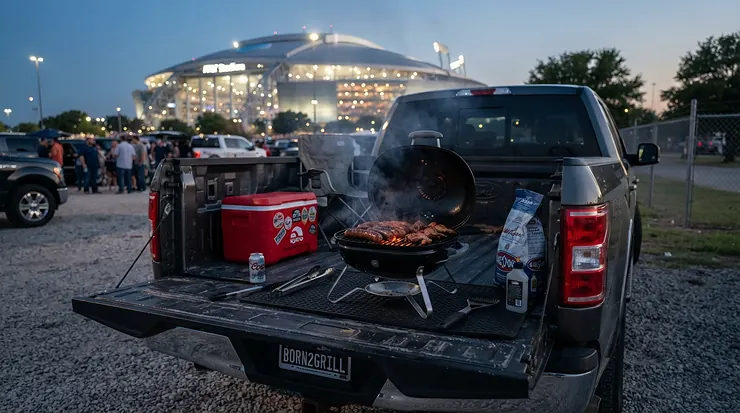
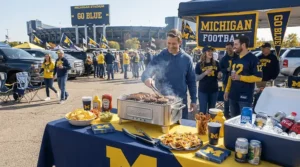
Nothing says game day quite like the smell of charcoal smoke drifting across a stadium parking lot two hours before kickoff. If you’ve ever hauled a full-size backyard kettle out of your trunk and immediately regretted every decision that led you there, you already understand why picking the right portable charcoal grill for tailgating matters more than almost any other piece of gear in your setup. A portable charcoal grill for tailgating is a compact, transportable cooker — usually under 25 pounds, with folding or lockable legs — built to deliver real wood-fired flavor from a truck bed, trunk, or folding table instead of a permanent patio spot. The catch is that “portable” covers a huge range, from featherweight hibachi-style boxes to rugged cast-iron units that double as smokers, and picking wrong means either babysitting a wobbly grate or throwing your back out hauling something the size of a filing cabinet.
We dug into real product specs, verified owner reviews, and manufacturer data (not marketing copy) to find seven charcoal grills that actually earn their spot in a tailgate lineup, and according to CPSC grilling safety data, burns are the single most common grill-related injury nationwide, which makes build quality and lid security more than a comfort issue. Below, you’ll find honest comparisons, a decision framework, a full tailgate grilling setup guide, and answers to the questions that actually come up in a parking lot at 9 a.m. on Saturday.
Quick Comparison Table
Before you scroll through seven full write-ups, here’s the 30-second version. This table ranks our picks by who they’re genuinely built for, not just by price, because the “best” grill for a solo tailgater with a hatchback is a different animal than the one for a ten-person crew running a full spread.
| Grill | Cooking Area | Weight | Price Range | Best For |
|---|---|---|---|---|
| Weber Smokey Joe | ~147 sq in | ~9.5 lbs | Around $35–$45 | Solo tailgaters, minimal trunk space |
| Cuisinart CCG-190 | 150 sq in | ~10 lbs | $30–$45 range | Tightest budgets |
| Weber Go-Anywhere | 160 sq in | ~12–13 lbs | $45–$65 range | All-around travel reliability |
| Weber Jumbo Joe | 240 sq in | ~20 lbs | $50–$70 range | Groups of 4–6 |
| Char-Griller E82424 | 250 sq in | ~38–40 lbs | $90–$110 range | Big crews, dual-use smoking |
| PK Grills PKGO | up to 400 sq in (flipped) | ~24–30 lbs | $250–$400 range | Long-term investment buyers |
| Everdure CUBE | ~115 sq in | ~16–21 lbs | $200–$280 range | Style-conscious small groups |
Looking at the spread above, the sweet spot for most tailgaters sits with the Weber Go-Anywhere or Weber Jumbo Joe, since both balance real cooking capacity against a weight you can still carry one-handed across a parking lot. If you’re outfitting a group tailgate with a rotating crew of hungry friends, the Char-Griller E82424 justifies its extra bulk with genuinely larger cooking surface, while solo tailgaters or apartment dwellers with zero storage space should look hard at the Weber Smokey Joe.
💬 Already spotted your match? Tap any bolded name above to check today’s price and availability before you keep reading — deals shift fast during football season.
Top 7 Portable Charcoal Grills for Tailgating: Expert Analysis
Every product below gets the same honest treatment: real specs, what those specs actually mean at a tailgate, and aggregated review sentiment pulled from verified owner feedback rather than invented quotes. We’ve deliberately spread these across budget, mid-range, and premium tiers, plus one dual-purpose pick and one design-forward splurge, so there’s a genuine fit no matter your crew size or vehicle.
1. Weber Smokey Joe — lightest grill in this entire lineup
The Weber Smokey Joe opens the list because, at roughly 9.5 pounds, it’s the single easiest grill here to toss in a trunk that’s already stuffed with folding chairs and a cornhole set. Its 14-inch porcelain-enameled bowl and lid deliver around 147 square inches of chrome-plated grate space, which in practice means two to three burger-and-brat combos at a time rather than a full spread. Based on the spec comparison, this is the grill for the person who tailgates solo or in pairs and values not having to think about the grill at all until it’s time to light it. Reviewers consistently note that the porcelain finish holds up for years without rusting or peeling, though several mention the compact ash catcher fills up fast during a long tailgate session and needs mid-cook attention.
Pros:
- ✅ Among the lightest charcoal grills sold under a major brand name
- ✅ Porcelain-enameled construction resists rust for years of seasonal use
- ✅ Compact footprint fits easily in a hatchback or under a truck seat
Cons:
- ❌ Cooking area is genuinely small for groups larger than two or three
- ❌ Ash disposal is more fiddly than models with a dedicated slide-out tray
At around $35–$45, the Weber Smokey Joe delivers strong value if your tailgate crew rarely exceeds a couple of people, but it’s the wrong pick the moment you’re feeding a full car full of friends.
2. Cuisinart CCG-190 — cheapest true folding-leg grill here
The Cuisinart CCG-190 stands out for being the most budget-friendly grill on this list that still gives you a proper 14-inch, 150-square-inch chrome-plated cooking grate rather than a stripped-down toy. Its dual venting system on the top and bottom lets you shift between a low-and-slow zone for sausages and a hotter zone for searing, and the enamel-coated firebox is rated to survive repeated high-heat sessions without warping. What most buyers overlook about this model is that its three-latch locking lid genuinely matters for tailgating specifically, since it means charcoal residue and grease can’t slosh out during the drive over. Aggregated owner feedback is mixed but informative: many reviewers praise the price-to-performance ratio and the quick 10-minute screwdriver assembly, while a notable minority report quality-control issues like stripped leg screws or minor porcelain chipping out of the box.
Pros:
- ✅ Lowest entry price of any grill in this comparison
- ✅ Dual damper system gives real temperature control for the size
- ✅ Three-latch lid locks contents in during transport
Cons:
- ❌ Owner reviews report inconsistent quality control on hardware and legs
- ❌ Feels noticeably less sturdy underfoot than the Weber alternatives here
Priced in the $30–$45 range, the Cuisinart CCG-190 is the pick for a first-time tailgater who wants to try charcoal grilling without a big financial commitment, as long as you’re patient with the assembly step.
3. Weber Go-Anywhere Charcoal Grill — most iconic travel grill on the market
The Weber Go-Anywhere Charcoal Grill earns its name honestly: its rectangular firebox and pivoting, lockable legs fold flat around the lid so the whole unit becomes one sealed, carryable box the moment the party’s over. At 160 square inches of cooking space and roughly 12 to 13 pounds, it hits a genuine middle ground — big enough to grill for two or three people at once, light enough that carrying it across a stadium lot doesn’t feel like a workout. Here’s what to weigh: the porcelain-enameled firebox and lid carry a 10-year warranty from Weber, which reviewers repeatedly cite as evidence this isn’t a one-season disposable grill, unlike several off-brand copies that mimic its shape. Reviewers consistently report that the dual top-and-bottom dampers give surprisingly precise heat control for something this size, though a recurring complaint involves the plastic lid handle getting uncomfortably warm during longer cooks.
Pros:
- ✅ Folds into a single sealed unit for genuinely mess-free transport
- ✅ Backed by a 10-year manufacturer warranty on the bowl and lid
- ✅ Dual damper system rivals grills twice its cooking area
Cons:
- ❌ No dedicated ash tray, so cleanup means lifting out both grates
- ❌ Plastic handle can get noticeably hot on extended cooking sessions
Sitting in the $45–$65 range at the time of research, the Weber Go-Anywhere Charcoal Grill is the single grill we’d recommend to someone who only wants to own one portable charcoal grill for tailgating, camping, and backyard use combined.
4. Weber Jumbo Joe — best cooking capacity for group tailgates
Step up to the Weber Jumbo Joe and you’re looking at an 18-inch kettle-style grill with 240 square inches of cooking surface, nearly 60 percent more real estate than the Go-Anywhere above it. That extra grate space is the entire reason to choose this model: it’s the difference between grilling in shifts and getting everyone’s food onto the grate in a single pass, which matters enormously when kickoff is in twenty minutes. Based on the spec comparison, the rust-resistant aluminum dampers and built-in ash catcher (something the smaller Webers lack) mean less mid-cook fiddling and an actual cleanup system rather than an afterthought. What reviewers overlook about the Tuck-N-Carry lid lock is that it doubles as both a transport latch and a lid holder while you’re actively cooking, a small design touch that keeps you from setting a hot lid directly on asphalt.
Pros:
- ✅ Largest single-piece cooking surface among the budget-to-mid-tier kettles here
- ✅ Built-in ash catcher simplifies cleanup versus grate-lifting alternatives
- ✅ Tuck-N-Carry lid lock doubles as a lid holder mid-cook
Cons:
- ❌ Kettle shape takes up more vertical trunk space than flat-folding designs
- ❌ At roughly 20 pounds, it’s noticeably heavier to carry one-handed
At a $50–$70 price range, the Weber Jumbo Joe is the strongest pick here for a tailgate crew of four to six people who’d rather cook one full batch than babysit multiple rounds.
5. Char-Griller E82424 Table Top Charcoal Grill — most versatile dual-purpose pick
The Char-Griller E82424 Table Top Charcoal Grill breaks from the pack by doing double duty: as a standalone tabletop grill it offers 250 square inches on two-piece cast iron grates, and it also converts into a side fire box attachment for Char-Griller’s larger barrel smokers, turning your tailgate grill into a Texas-style offset smoker at home.
The cast iron grate material genuinely matters here — it retains and radiates heat more evenly than the chrome-plated steel used on the smaller grills in this list, which translates to more consistent sear marks across a full batch of burgers. On paper, this means the E82424 rewards people who already own or plan to own a Char-Griller smoker, since the same firebox pulls double duty instead of gathering dust in the garage between tailgates.
Aggregated review sentiment highlights the EasyDump ash pan as a genuine time-saver, with owners specifically calling out how much faster cleanup is compared to grate-lifting designs.
Pros:
- ✅ Largest cooking surface of any grill in this lineup at 250 square inches
- ✅ Cast iron grates hold and radiate heat more evenly than steel
- ✅ Doubles as a side fire box for compatible Char-Griller smokers
Cons:
- ❌ At roughly 38 to 40 pounds, this is by far the heaviest option here
- ❌ Lacks the single-hand lockable-lid transport design of the Weber models
Priced around $90–$110, the Char-Griller E82424 Table Top Charcoal Grill makes the most sense for tailgaters who park close to the venue and prioritize cooking capacity and long-term versatility over how far they have to carry it.
6. PK Grills PKGO — built to outlast every grill on this list
The PK Grills PKGO takes a completely different construction approach than everything above it: a rust-proof cast aluminum body instead of painted or porcelain-coated steel, which is the same material PK Grills has used on its flagship kettle since the 1950s. Flip the lid and the PKGO transforms from a single 200-square-inch primary grill into two independent open-top cooking surfaces totaling roughly 400 square inches, letting you run a hot zone and a low zone simultaneously without shuffling coals around. What most buyers overlook about cast aluminum is that, unlike painted steel, it genuinely cannot rust through over time, which is why owners in coastal and humid climates specifically seek this brand out. Owner feedback collected across verified retailer reviews consistently praises the build quality and heat retention, with several long-term owners specifically noting it as an heirloom-grade purchase rather than a seasonal disposable.
Pros:
- ✅ Cast aluminum construction is genuinely immune to the rust that kills steel grills
- ✅ Flip-lid design creates two independent cooking zones from one unit
- ✅ Dual cam locks secure the lid firmly for transport
Cons:
- ❌ Meaningfully pricier upfront than every steel competitor in this comparison
- ❌ Heavier to carry solo without the optional folding stand accessory
In the $250–$400 range depending on configuration, the PK Grills PKGO is the pick for someone who tailgates every single Saturday for a decade and wants the math to work out in cost-per-use rather than sticker price.
7. Everdure by Heston Blumenthal CUBE — best-looking grill in the parking lot
The Everdure by Heston Blumenthal CUBE closes out this list as the design-forward splurge pick, developed with input from Michelin-starred chef Heston Blumenthal and built around a genuinely clever integrated storage tray and bamboo prep board that snap into the unit itself.
At roughly 115 square inches of cooking area and 16 to 21 pounds depending on configuration, it trades raw capacity for a self-contained system where your tongs, extra charcoal, and prep board travel inside the sealed unit rather than rattling around your trunk separately. Here’s what the spec sheet won’t tell you: the cool-to-the-touch handles and built-in heat shield are a real safety upgrade over the plastic handles on cheaper alternatives, which matters given that CPSC data flags contact burns as the most common grill-related injury.
Reviewers consistently highlight the compact footprint and clean-up simplicity as standout traits, while acknowledging the smaller grate size means this isn’t the grill for feeding a full tailgate crew on its own.
Pros:
- ✅ Genuinely cool-touch handles and heat shield, unlike plastic-handled budget grills
- ✅ Integrated storage tray and prep board eliminate extra packed gear
- ✅ Distinctive design stands out visually in a sea of black kettle grills
Cons:
- ❌ Smallest primary cooking area relative to its premium price point
- ❌ Costs significantly more than steel grills with comparable cooking space
At a $200–$280 price range, the Everdure by Heston Blumenthal CUBE suits a couple or small group that tailgates in style and values the self-contained design more than raw square inches of grate.
Building Your Tailgate Grilling Setup
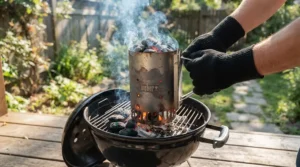
A great grill is only half of a workable tailgate grilling setup — the other half is everything you do around it. Start by lighting your charcoal in a chimney starter twenty to thirty minutes before you plan to cook, since arriving at the lot and immediately dumping lighter fluid on cold coals is the single biggest reason first-timers eat lunch an hour late. Pack a metal bucket or a dedicated ash-safe container so you’re never tempted to dump hot coals directly onto asphalt, which many stadium lots explicitly prohibit. During the first thirty days of ownership, the most common mistake is over-filling the firebox; most of these grills perform best with a single, evenly spread layer of lit charcoal rather than a heaping pile, since it keeps temperatures consistent instead of scorching one side. For maintenance, a quick wire-brush scrape of the grates while they’re still warm from the last cook, plus an occasional wipe of the porcelain exterior, keeps any of these seven grills running for years rather than one season.
Your Tailgate Party Checklist
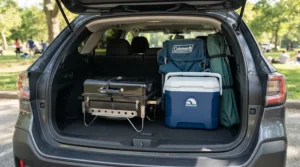
Beyond the grill itself, a genuinely complete tailgate party checklist saves you from the sinking feeling of realizing you forgot tongs at 10 a.m. in a stadium parking lot. Pack a chimney starter and a bag of charcoal (briquettes for consistency, lump if you want more smoke flavor), long-handled tongs and a spatula, a meat thermometer, heavy-duty foil, a cooler with separate compartments for raw and cooked food, hand sanitizer or wipes, and a fire extinguisher or a jug of water sized to your grill. Add folding chairs, a table if your grill doesn’t come with legs tall enough for comfortable standing cooking, and trash bags, since most lots require you to pack out everything you bring in. Cross-referencing back to the grill picks above, smaller units like the Weber Smokey Joe or Everdure by Heston Blumenthal CUBE genuinely reduce how much of this list you need to pack, since their integrated designs (or simply their size) mean less separate gear rattling around your trunk.
Real-World Scenarios: Which Grill Fits Your Tailgate
Picture Jake, a college student who tailgates solo or with one roommate out of a compact hatchback with almost no cargo room: the Weber Smokey Joe or Cuisinart CCG-190 fits his budget and his trunk equally well, since neither one eats into space he needs for a cooler and folding chairs. Now picture the Martinez family, who show up with a full SUV, two kids, and eight to ten hungry relatives every home game: the Weber Jumbo Joe or Char-Griller E82424 Table Top Charcoal Grill makes far more sense here, because cooking capacity — not portability — is the binding constraint on a group this size. Finally, picture Dana, a season-ticket holder who’s owned three cheap grills that rusted out within two seasons and finally wants to buy once: the PK Grills PKGO is built for exactly this buyer, since its cast aluminum body is designed to outlast a decade of Saturdays rather than needing replacement every other year.
✨ Don’t miss these picks while they’re in stock!
🔥 Whichever scenario matches your Saturday, take a closer look at the grill built for it — the right pick pays for itself in fewer burnt burgers and fewer trips back to buy a replacement next season.
How to Choose a Portable Charcoal Grill for Tailgating
Picking the right portable charcoal grill for tailgating comes down to a handful of concrete decision points rather than brand loyalty alone. Work through these in order:
- Count your crew size first. A grill under 160 square inches suits one to three people; anything feeding four or more should look at 240 square inches or larger.
- Weigh your actual vehicle space. A hatchback or small sedan favors flat-folding designs like the Go-Anywhere; a truck bed or SUV can absorb heavier, bulkier units without complaint.
- Decide if lid-lock transport matters to you. Grills with a lockable lid mean you can carry warm ash and grease residue without spilling it across your cargo area.
- Factor in your climate. Coastal or high-humidity regions genuinely benefit from rust-resistant materials like cast aluminum or well-maintained porcelain enamel.
- Set a realistic budget band. Entry-level grills in the $30–$70 range cover the vast majority of casual tailgaters; premium builds only pay off with genuinely frequent use.
- Check the warranty terms. A 10-year bowl-and-lid warranty, like Weber offers, signals a manufacturer’s real confidence in long-term durability.
Foldable Charcoal Grill for Travel: What Folding Grill Legs Actually Buy You
Why a Foldable Charcoal Grill for Travel Beats a Fixed One
A foldable charcoal grill for travel earns its keep the moment you’re trying to Tetris a cooler, chairs, a folding table, and a grill into a trunk that was never designed for tailgating. What most buyers overlook is that “foldable” isn’t just about saving inches — a grill that collapses into a single sealed shape, like the Weber Go-Anywhere Charcoal Grill, also keeps loose ash and grease contained during transit, which a rigid tabletop model simply can’t do.
Folding Grill Legs: The Detail That Makes or Breaks Packing
Folding grill legs specifically matter because they determine whether your grill packs flat or still eats up vertical trunk space even when collapsed. Reviewers of budget models like the Cuisinart CCG-190 frequently note that screw-on folding legs can loosen or strip over repeated setup-and-breakdown cycles, while the pivoting hinge legs on the Weber lineup are built into the frame itself and consistently hold up over years of weekly use.
Lightweight Charcoal Grill for Cookouts: How Much Does Weight Really Matter?
A genuinely lightweight charcoal grill for cookouts, in the 9-to-13-pound range like the Weber Smokey Joe or Weber Go-Anywhere Charcoal Grill, matters most if you’re walking any real distance from your parking spot to your tailgate site. If you’re parking directly next to your setup spot, though, weight becomes far less important than cooking capacity — which is exactly why heavier options like the Char-Griller E82424 Table Top Charcoal Grill still make our list.

Charcoal Briquette Portability: Lump vs. Briquettes for the Parking Lot
Charcoal briquette portability is an underrated factor in tailgate planning: briquettes are uniform, stack neatly in a cooler or trunk bin, and burn at a predictable, steady rate that suits the timing pressure of a pre-kickoff cookout. Lump charcoal, by contrast, comes in irregular chunks that are harder to portion and pack efficiently, though it lights faster and imparts a smokier flavor that some tailgaters prefer. The modern charcoal briquette itself dates back roughly a century, having been developed and commercialized by the Ford Motor Company as a way to repurpose sawdust from its auto plants, which is a fitting bit of trivia given how many briquettes now travel to tailgates in the back of a car. For a portable charcoal grill for tailgating specifically, briquettes’ predictable burn time is the more practical choice, since knowing roughly how long your coals will stay hot helps you time cooking around kickoff rather than guessing.
Common Mistakes When Buying a Portable Charcoal Grill for Tailgating
The most frequent mistake is buying based on cooking area alone without checking weight — a 250-square-inch grill sounds great until you’re the one carrying 40 pounds across a stadium lot solo. A close second is skipping the ash-management question entirely; grills without a dedicated ash tray or catcher, like the Weber Go-Anywhere Charcoal Grill, require lifting out the grate to dump ash, which is a real inconvenience mid-cook even though the grill itself is excellent. Buyers also frequently underestimate how much a locking or sealing lid matters for transport, since an open-frame tabletop grill can spill ash and grease residue throughout a trunk during the drive home. Finally, many first-time buyers skip checking whether local venue rules even allow charcoal grills before purchasing, which is worth confirming with your specific stadium or venue in advance.
Portable Charcoal Grill vs Portable Gas Grill for Tailgating
The charcoal-versus-gas debate for tailgating comes down to a genuine tradeoff between flavor and convenience, and the table below breaks down where each fuel type actually wins.
| Factor | Portable Charcoal Grill | Portable Gas Grill |
|---|---|---|
| Startup time | 15–25 minutes to reach cooking temp | Under 5 minutes with push-button ignition |
| Flavor profile | Smokier, more traditional wood-fired taste | Cleaner-tasting, less smoke character |
| Cleanup | Ash disposal required after every use | No ash; just a grease tray to empty |
| Best For | Flavor purists, traditional tailgaters | Time-crunched cooks, tight schedules |
Looking at the comparison above, a portable charcoal grill for tailgating wins decisively on flavor and the ritual experience many tailgaters actually show up for, while a gas grill wins on raw convenience when you’re working with a tight pre-kickoff window. If your tailgate crew values the smoke and char more than speed, every grill reviewed in this article earns its keep; if convenience is non-negotiable, that’s a genuinely different buying guide.
Safety and Regulations: Charcoal Grilling at Stadiums and Parking Lots
Before you pack any of these grills, it’s worth checking your specific venue’s rules, since many stadiums restrict or outright ban open-flame charcoal grilling in certain lots or require grills to sit a set distance from vehicles. According to the CPSC, thermal burns remain the leading cause of grill-related emergency room visits, which is exactly why features like locking lids and cool-touch handles matter more than they might seem on a spec sheet. Beyond fire safety, food safety deserves equal attention: the USDA recommends specific minimum internal temperatures for burgers, chicken, and other tailgate staples, and a simple meat thermometer removes all the guesswork color alone can’t answer. For a fuller rundown of safe grilling practice, including proper coal disposal and safe food handling in outdoor settings, the University of Minnesota Extension’s grilling safety guidelines are a genuinely useful reference to bookmark before game day.

FAQ
❓ What is the best portable charcoal grill for tailgating in 2026?
❓ How do I keep charcoal ash from making a mess in my trunk?
❓ Are charcoal grills allowed at NFL and college tailgates?
❓ How much charcoal do I need for a tailgate cookout?
❓ Can a portable charcoal grill fit in a small trunk or SUV cargo area?
Conclusion
Choosing the right portable charcoal grill for tailgating isn’t about finding the single “best” model on the market — it’s about matching cooking capacity, weight, and price to how you actually tailgate. Solo fans and duos are well served by the featherweight Weber Smokey Joe or budget-friendly Cuisinart CCG-190, while the Weber Go-Anywhere Charcoal Grill remains the strongest all-around pick for anyone who wants one grill that does everything reasonably well. Bigger crews should look toward the Weber Jumbo Joe or the dual-purpose Char-Griller E82424 Table Top Charcoal Grill, and buyers planning to tailgate for a decade or more should seriously weigh the long-term value of the PK Grills PKGO or the design-forward Everdure by Heston Blumenthal CUBE. Whichever you choose, the honest research above should leave you with a genuinely informed pick rather than a guess based on packaging alone — and a properly chosen grill means more time enjoying the tailgate and less time fighting with your gear.
Recommended for You
- Charcoal Kettle Grill For Small Patios: 7 Top Picks for 2026
- Gas Grill Under $400: 7 Real Picks Worth Buying in 2026
- Best Gas Grill For The Money Under $500: 7 Picks for 2026
Disclaimer: This article contains affiliate links. As an Amazon Associate, I earn from qualifying purchases. If you purchase products through these links, we may earn a small commission at no additional cost to you.
✨ Found this helpful? Share it with your tailgate crew before next Saturday! 💬🤗
