
In This Article
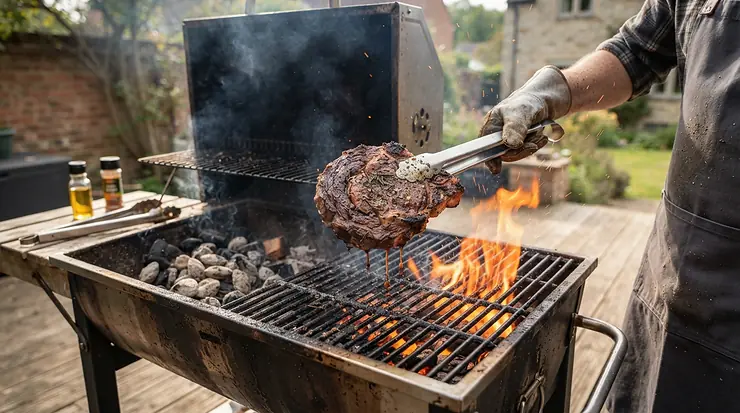
Picture the sound first: a thick ribeye hitting a screaming-hot grate, that sharp crackle that makes the neighbors lean over the fence. That sound is the whole game. It’s what a good charcoal grill for searing steaks is built to deliver: fierce radiant heat, a grate that holds onto it, and vents that let you steer the fire instead of begging it for mercy.
Most buyers shop backward. They compare size, shelves and cup holders, then wonder why the crust comes out gray and sulky. The real drivers are heat ceiling, airflow and grate mass. Get those right and an ordinary steak earns a deep, mahogany crust, thanks to the browning chemistry behind searing.
This guide breaks down seven real models, from a compact kettle that fits a balcony to a ceramic kamado that doubles as a smoker. You’ll also get a plain-English look at high heat charcoal grill for steak requirements, grate materials, chimney math and reverse sear charcoal grilling.
One honest note up front: I haven’t cooked on these grills myself. Everything below comes from manufacturer specs and published roundup testing, filtered through spec-by-spec reasoning.
What Is a Charcoal Grill for Searing Steaks?
A charcoal grill for searing steaks is a charcoal-fueled cooker that can reach and hold grate temperatures of roughly 600°F or higher. It has adjustable airflow, a hot direct zone and a grate that stores heat. Kettles, kamados and gravity-fed models all qualify, as long as they let you build an intense bed of coals close to the food.
Quick Comparison: 7 Grills at a Glance
Here’s the short version before the deep dives. Prices are approximate ranges at the time of research and can change, so check the current price on the retailer’s page.
| Grill | Type | Searing Edge | Price Range | Best For |
|---|---|---|---|---|
| Weber Original Kettle Premium 22″ | Kettle | Coals close to the grate, simple vent control | $200-$300 range | First-time charcoal buyers |
| Char-Griller Akorn Kamado | Steel kamado | Triple-wall insulation, cast iron grate | $350-$500 range | Value-focused kamado fans |
| SnS Grills Slow ‘N Sear Kettle 22″ | Kettle with fire corral | Built-in hot and cold zones, rotating grate | Mid-$400s to mid-$600s | Steak-first, two-zone cooks |
| Kamado Joe Classic Joe Series II | Ceramic kamado | 225-750°F+ range, heavy insulation | $1,000-$1,500 range | Smoke-and-sear perfectionists |
| Masterbuilt Gravity Series 1050 | Gravity-fed digital | Reversible cast iron grates, digital control | $600-$900 range | Big families, tech lovers |
| Royal Gourmet CC1830T | Barrel | Height-adjustable charcoal pan | $150-$250 range | Budget buyers |
| Weber Jumbo Joe 18″ | Portable kettle | Compact bowl that reaches steak-searing heat | Under $150 | Balconies, camping, couples |
Looking at the table, the Weber Original Kettle Premium 22″ delivers the broadest value, while the Kamado Joe Classic Joe Series II justifies its price only if you’ll also smoke and bake. Budget buyers should note that the Royal Gourmet CC1830T and Weber Jumbo Joe 18″ trade capacity and insulation for a low entry cost. If you cook steak a few times a month, the middle of this table is the sweet spot.
💬 Just one click — help others make better buying decisions too!😊
Top 7 Charcoal Grill for Searing Steaks: Expert Analysis
Each grill below gets the same treatment: what the specs mean in practice, who it suits, and what published testers say. I couldn’t verify individual Amazon review counts, so the sentiment notes lean on reputable roundups.
1. Weber Original Kettle Premium 22″ — the proven all-rounder
The 22-inch kettle has been doing its thing since 1952, and the shape endures because it’s brutally simple: a deep bowl, a snug lid and vents that act like a throttle.
The 22-inch grate offers roughly 363 square inches, enough for four hefty steaks with a cooler corner left for resting. Bank a full chimney of coals beneath the grate, open both vents, and the coal bed sits close enough to the meat that radiant heat does the heavy lifting. Steel grates won’t store heat like cast iron, but proximity compensates. For reverse sear charcoal grilling, the same lid and dual vents hold a steady 225-250°F zone without drama.
Based on the spec comparison, this is the grill for first-time charcoal buyers, renters upgrading from gas, and anyone who wants flexibility without a four-figure outlay. What the spec sheet won’t tell you: keep the lid off during the sear to maximize radiant heat, then drop it on to tame flare-ups.
Steak-focused roundups keep ranking this kettle at or near the top. Reviewers praise its searing ability, easy cleanup and 10-year warranty.
Pros:
- ✅ Hot direct zone with simple vent control
- ✅ Easy two-zone setup for reverse sear
- ✅ 10-year warranty reported by roundup testers
Cons:
- ❌ Steel grate stores less heat than cast iron
- ❌ Burns through charcoal faster than kamados
Price: around $200-$300 range (check current price). It’s the strongest value in this lineup.

2. Char-Griller Akorn Kamado — kamado-style insulation without the ceramic price
Insulation is the secret weapon here. Triple-walled 22-gauge steel traps heat much as ceramic does, just in a lighter shell.
The manufacturer lists a 200-700°F operating range, 447 square inches in total (314 primary plus a 133-square-inch warming rack), and a heavy cast iron grate. That 700°F ceiling is plenty, since steaks sear beautifully well below it. The cast iron mass means the grate stays hot after each steak lands, so the second and third steaks sear as aggressively as the first. Dual dampers let you choke the fire down after the sear for a gentle finish. At roughly 97 pounds on locking casters, it’s movable without feeling flimsy.
On paper, this suits the cook who wants one grill for sears, reverse sears and the occasional smoke. The honest trade-off is that it’s steel rather than ceramic, so it’s lighter and less insulated than premium kamados. Some reviewers also question how sturdy certain parts feel.
Food Network’s testing found it performed exceedingly well for both searing and indirect cooking, and judged it hard to beat for the money.
Pros:
- ✅ Cast iron grate delivers deep sear marks
- ✅ Triple-wall insulation stretches your charcoal
- ✅ Dual dampers for precise heat control
Cons:
- ❌ Steel shell insulates less than ceramic
- ❌ Some parts feel lightweight to reviewers
Price: around $350-$500 range (check current price). It’s the best-value kamado in this guide.
3. SnS Grills Slow ‘N Sear Kettle 22″ — hot zone and cold zone built in
This one solves the biggest headache of kettle cooking: keeping the fire where you want it.
Built around the Slow ‘N Sear system, the 22-inch kettle corrals coals to one side, creating a dedicated hot zone and cold zone. The grate rotates a full circle, which is clever for reverse sear. A steak can cook gently on the cool side, then swing over the fire without being lifted. Hinged stainless grates also give you access to the coals for refueling, which matters when you’re topping up for the sear.
One roundup reviewer named it their favorite grill for searing a steak. They also called it the best at two-zone cooking for a single family. The trade-offs are real, though. The lift-off lid feels awkward compared with Weber’s slide-over style, and a grate that spins so freely can be a chore to clean.
Here’s what to weigh: if you cook steak a few times a month and hate fiddling with banked coals, the system is probably worth the premium. If you regularly feed a crowd, the single-family framing is a hint to look at larger options.
Pros:
- ✅ Built-in hot and cold zones
- ✅ Rotating grate simplifies reverse sear
- ✅ Hinged grates allow easy mid-cook refueling
Cons:
- ❌ Lift-off lid feels awkward in use
- ❌ Moving grate is harder to clean
Price: in the mid-$400s to mid-$600s range (check current price). You’re paying for convenience over the plain Weber Original Kettle Premium 22″.
4. Kamado Joe Classic Joe Series II — premium ceramic that climbs past 750°F
Thick ceramic walls are the whole story. They insulate so well that one load of lump charcoal can cover a long smoke and then a ripping-hot sear.
Roundup data lists an 18-inch ceramic body with roughly 250 square inches of cooking area and a 225°F to 750°F+ range. It also has an Air Lift Hinge for one-handed dome operation and the Divide & Conquer flexible cooking system. That range is the point: you can run a low-and-slow reverse sear stage, then push the fire for the finish, all without relighting. Verify the grate type in the current listing, since cast iron is typically an accessory upgrade.
This grill suits the cook who smokes, bakes and sears, and who values fuel efficiency and a lifetime ceramic warranty. It’s less ideal if you need to feed eight people, because 250 square inches fills up fast. Ceramic is also heavy and unforgiving if you drop it.
Roundups consistently call it the most capable charcoal grill for smoking, searing, baking and roasting on a single load of charcoal. One test of the related Konnected Joe reported a 700°F sear stage that reached temperature in under twenty minutes.
Pros:
- ✅ Ceramic insulation saves charcoal
- ✅ 225-750°F+ range covers every cook
- ✅ Lifetime ceramic warranty
Cons:
- ❌ Premium price is a real commitment
- ❌ Heavy, with limited cooking area
Price: around $1,000-$1,500 range (check current price). It’s the best choice if you’ll use every feature.
5. Masterbuilt Gravity Series 1050 — digital control with cast iron sear power
Think of this as a charcoal grill with a thermostat. A gravity-fed hopper, a fan and digital controls hold your target temperature while you do something else.
It features Wi-Fi and Bluetooth monitoring, a very large cooking surface and reversible cast iron grates for searing or low-and-slow work. Food Network’s testers called out some of the most impressive sear marks among the grills they tested. For reverse sear charcoal grilling, the digital controller can hold a 225°F stage precisely, then you ramp for the finish. Check the manufacturer’s stated maximum temperature, since the fan-fed design behaves differently from a vent-driven kettle.
It’s built for large families, entertainers and tech-friendly cooks who want smoke flavor without babysitting. The trade-offs are practical. It needs an electrical outlet, and electronics add components that can fail. It’s also a bigger footprint than any kettle here.
Reviewers frame it as the easiest way to get consistent results across steak, chicken and smoked meats.
Pros:
- ✅ Digital controls hold steady low temperatures
- ✅ Reversible cast iron grates for sear marks
- ✅ Wi-Fi and Bluetooth monitoring
Cons:
- ❌ Requires electricity to run
- ❌ More moving parts to maintain
Price: around $600-$900 range (check current price). The value is strongest if you smoke often, not just sear.
6. Royal Gourmet CC1830T — budget barrel with an adjustable charcoal pan
The standout here is mechanical, not digital: a height-adjustable charcoal pan.
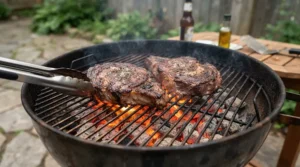
Raising the pan puts coals closer to the grate for high-heat searing, and lowering it gives longer, more controlled burns. That matters because heat intensity falls off quickly with distance. A pan that moves effectively gives you two grills in one. Barrel grills also offer a wide, horizontal cooking surface, handy when you’re searing several steaks side by side.
Based on how budget barrels are typically built, expect thinner steel than premium models, so heat leaks faster and fuel burns quicker. That makes it a fit for cooks who want charcoal flavor on a tight budget and don’t mind refueling. It’s not the right tool for long smoking sessions.
I couldn’t verify detailed owner-review data for this model. What I can say is that BBQ Report labeled it the best budget barrel grill and singled out the adjustable pan as its practical highlight.
Pros:
- ✅ Adjustable pan dials sear distance
- ✅ Wide barrel surface suits multiple steaks
- ✅ Low entry price for charcoal flavor
Cons:
- ❌ Budget steel loses heat faster
- ❌ Burns more charcoal than insulated grills
Price: roughly $150-$250 range (check current price). It’s good value if searing is the main job.
7. Weber Jumbo Joe 18″ — small body, surprisingly big sear
Small kettles have a hidden advantage: the coal bed sits close to the food in a compact bowl, which concentrates heat.
One steak-focused roundup reviewer admitted skepticism about an 18-inch kettle reaching steak-searing temperatures, then reported it absolutely could. Practically, expect room for two steaks with a cool corner. Two-zone cooking is possible but cramped, so reverse sear on thick cuts works best when you’re cooking for one or two people. A compact chimney starter, which holds roughly 33 to 40 briquettes, matches this grill’s scale.
This is the pick for balconies, campsites and couples who treat steak night as a ritual rather than a party. It’s less suited to families, since you’d be searing in rounds while the first steaks go cold.
The roundup that included it listed it among its top steak grills, which says something about how well compact kettles handle one job.
Pros:
- ✅ Small footprint and easy to carry
- ✅ Reaches steak-searing heat per roundup testers
- ✅ Very low entry price
Cons:
- ❌ Tight space for two-zone cooking
- ❌ Limited capacity for groups
Price: under $150 (check current price). It’s strong value for small households.
How to Choose a Charcoal Grill for Searing Steaks
Choosing comes down to heat output, airflow control and cooking area. Work through these seven steps in order.
- Check the heat ceiling. Aim for a grill that sustains 600°F or higher at the grate. Kamados and well-vented kettles clear that bar.
- Match grate material to your habits. Cast iron grill grates sear harder but demand upkeep. Thick stainless is easier to live with.
- Prioritize airflow control. Dual vents or dampers let you speed up or smother the fire. Without them, you’re guessing.
- Look for two-zone capability. You’ll want a hot side for the sear and a cool side for reverse sear.
- Size the cooking area to your crowd. A grill that fits only two steaks forces you to sear in rounds.
- Weigh fuel efficiency. Insulated kamados burn far less charcoal per cook than thin-walled barrels.
- Count warranty and cleanup. A 10-year kettle warranty or a lifetime ceramic warranty reduces long-term risk.
If you only get three right, make them heat ceiling, airflow and grate material. The rest is convenience.
High Heat Charcoal Grill for Steak: What the Numbers Really Mean
A high heat charcoal grill for steak isn’t about a number on a dome thermometer. It’s about the temperature at the grate surface where the meat touches.
One roundup defines the target as sustaining 600°F or higher at the grate. In one test, a Weber kettle reportedly topped 600°F during a ribeye sear, and a kamado reportedly hit a 700°F setting in under twenty minutes. The takeaway is that a good kettle can get there with the right fuel load, and a kamado gets there with less fuel.
Why do those numbers matter? A crust forms through browning chemistry, which accelerates as surface temperature climbs and surface moisture disappears. At lower heat, the steak steams in its own juices and the interior overcooks before the crust develops. That’s the gray band that frustrates so many first-timers.
Here’s the practical read. A high heat charcoal grill for steak should reach searing temperature within 15 to 25 minutes of lighting. It should hold that heat across multiple steaks, and it should let you throttle back when fat flares. A dome gauge can read differently from the grate, so a grate-level probe is worth the small expense. If you’re comparing models, favor the one whose design puts coals closest to the meat or insulates best.
Charcoal Grill Grate Material for Searing: Cast Iron Grill Grates vs Stainless Steel
Charcoal grill grate material for searing is where physics gets personal. Cast iron grill grates store and release heat steadily, so a cold steak doesn’t crash the surface temperature. Stainless heats faster but cools faster.
Cast iron’s trade-off is care. It needs seasoning, drying and rust prevention, and it’s heavy to lift and clean. Stainless, especially thick, heavy-gauge stainless, resists rust and cleans easily but holds less heat. Thin versions can also warp under repeated high heat.
| Grate Material | Heat Retention | Maintenance | Best For |
|---|---|---|---|
| Cast iron | Best-in-class | Season, dry and oil regularly | Deep sear marks; Char-Griller Akorn Kamado, Masterbuilt Gravity Series 1050 |
| Thick stainless steel | Very good | Low; wipes clean | Low-maintenance searing; SnS Grills Slow ‘N Sear Kettle 22″ |
| Thin steel or plated grates | Moderate | Low to moderate | Budget kettles that rely on coal proximity; Weber Jumbo Joe 18″ |
The pattern is clear. Cast iron wins on sear power, while stainless wins on convenience. If you grill several times a week and hate maintenance, thick stainless is a smart compromise. If every steak is an event, cast iron grill grates earn their keep.
Charcoal Chimney Heat Output: How Much Fire Do You Actually Need?
Charcoal chimney heat output is really a loading question: how much fuel, lit to what stage, and spread how. A chimney also doubles as a measuring cup.
A standard Weber Rapidfire chimney holds about 100 briquettes, or roughly 5.7 pounds. It typically lights in 15 to 20 minutes. Weber’s own guide to using a chimney starter explains how the chimney effect lights coals from the bottom up. Grill-guide sources suggest three-quarters to a full chimney for searing, and roughly three-quarters banked to one side for two-zone cooking. One guide also notes that a full chimney of lump delivers roughly the same heat as a full chimney of briquettes, though lump burns less uniformly.
Here’s a simple chimney routine:
- Searing on a 22-inch kettle: a full chimney, coals spread under the hot zone, vents wide open.
- Two-zone or reverse sear: about three-quarters of a chimney banked to one side.
- Compact grills: a smaller chimney holding roughly 33 to 40 briquettes suits Weber Jumbo Joe 18″-size grills.
- Light smaller loads upside down: this keeps a small pile concentrated at the cone.
Watch for coals that are ashed over before you dump them. If they’re still black in the middle, the sear will start cooler than you expect.
Reverse Sear Charcoal Grilling: Step-by-Step Guide
Reverse sear charcoal grilling flips the usual order. You cook the interior gently first, then sear at the end. The goal is to shrink that gray band and deliver a wall-to-wall pink center. If you want the science, Serious Eats’ reverse sear breakdown is a widely cited reference.
- Dry brine. Salt the steaks at least 20 minutes ahead, longer if possible. Pat the surface dry before they hit the grill.
- Build a two-zone fire. Bank coals to one side and aim for 225-250°F on the cool side.
- Place the steaks on the cool side. Position bone or fat sides toward the coals, and set the lid vent over the meat so smoke passes across it.
- Pull early. Sources vary widely, but a practical range is roughly 10-15°F below your finish temperature, because the sear adds heat.
- Rest and reload. While the steak rests for about 5-10 minutes, add fresh lit coals on top of the existing ones and open the vents.
- Sear hard. Cook about 1½-2 minutes per side, or flip every 30 seconds for an even crust. Pull when you hit your target.
- Rest again briefly. Reverse-seared steaks need less rest, but a few minutes still lets juices settle.
Kamados like the Kamado Joe Classic Joe Series II and the Char-Griller Akorn Kamado make step 2 easier, because they hold low temperatures steadily. Kettles work too, with a bit more vent babysitting.
Steak Doneness Temperature: Pull Temps vs Final Temps
Steak doneness temperature is where charcoal grilling punishes impatience. Carryover heat continues to raise the internal temperature after you pull the steak, so you pull before the final number.
For safety, the USDA lists a 145°F minimum internal temperature with a 3-minute rest for whole-muscle beef steaks. USDA also notes that people may choose higher temperatures for personal preference. Many cooks choose lower final temperatures. That’s a personal decision, and it’s worth knowing the official minimum.
| Doneness | Pull Temp | Final Temp | Best For |
|---|---|---|---|
| Rare | 115-120°F | 120-125°F | Very tender, thick cuts with a trusted source |
| Medium-rare | 125-130°F | 130-135°F | Marbled cuts like ribeye, where fat renders |
| Medium | 135-140°F | 140-145°F | Guests who want a hint of pink |
| Medium-well | 145-150°F | 150-155°F | Thicker cuts that resist drying |
| Well done | 155°F+ | 160°F+ | Fattier cuts or cooks who want no pink |
These are standard pull temperatures for conventional cooking. Reverse sear pulls earlier, since the sear adds heat. The practical lesson is that a fast, accurate probe thermometer matters more than any feature on the grill itself. If you pick one doneness for company, medium-rare to medium is the safest crowd-pleaser, and it keeps leaner cuts from drying out.
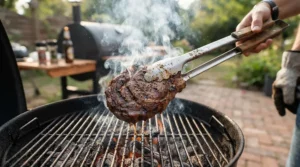
Real-World Scenarios: Which Grill Fits Your Cooking Life?
Specs mean little until they meet a real patio. Here are three buyer profiles matched to the best fit.
The balcony couple. You have a $150 budget, limited space, and steak night once a week. The Weber Jumbo Joe 18″ fits the footprint and the budget. Plan on searing in a single batch of two steaks, with a smaller chimney for fuel.
The weekend host. You cook for five or six people every other Saturday and want hands-off consistency. The Masterbuilt Gravity Series 1050 handles volume and holds low temperatures for reverse sear. If you’d rather skip electronics, the Weber Original Kettle Premium 22″ gives you simple, reliable heat at a fraction of the price.
The smoke-and-sear devotee. You do a weekend brisket, then a ribeye on Sunday. Insulation pays off here. The Kamado Joe Classic Joe Series II is the premium option, while the Char-Griller Akorn Kamado delivers much of the same behavior for less money.
✨ Ready to Upgrade Your Sear?
🔍 Take your steak night to the next level with these carefully selected grills. Click on any highlighted item to check current pricing and availability. These tools will help you create the crust your guests will ask about for weeks!
Problem → Solution: Fix the Most Common Searing Failures
Even a great grill can’t rescue bad technique. Here are five common problems and what to do about them.
- Gray, steamed crust. The surface was wet or the grate wasn’t hot enough. Pat steaks dry, preheat the grate, and avoid crowding the surface.
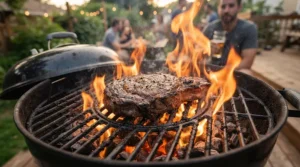
- Flare-ups. Dripping fat feeds flames. Trim excess fat, keep a cool zone to retreat to, and use the lid to limit oxygen briefly. A grill with two zones, like the SnS Grills Slow ‘N Sear Kettle 22″, makes this easy.
- The fire dies before the sear. Add fresh lit coals on top of the existing ones while the steak rests, and open the vents fully. A kamado’s insulation, as in the Char-Griller Akorn Kamado, reduces this problem.
- Uneven doneness. A thick steak seared first can overcook the outside. Switch to reverse sear charcoal grilling so the interior is already near target before the sear.
- Sticking. Clean the grate and oil the steak, not the grate. On cast iron grill grates, keep the seasoning layer intact.
If you only fix one thing, fix the dryness. A bone-dry surface does more for crust than most upgrades.
Charcoal Grill for Searing Steaks vs Gas and Pellet Grills
Charcoal isn’t the only way to sear, so it’s fair to ask what you gain and what you give up.
Charcoal’s strengths are intense radiant heat and real smoke flavor, especially during a low-and-slow stage. Gas wins on convenience: push a button, wait a few minutes, cook. Pellet grills excel at set-and-forget smoking, though many models run lower maximum temperatures than a charcoal grill, so check each model’s spec before assuming searing power.
| Fuel Type | Searing Strength | Convenience | Best For |
|---|---|---|---|
| Charcoal | Excellent radiant heat, with smoke flavor | Moderate; lighting and cleanup take time | Flavor-first cooks; Weber Original Kettle Premium 22″ |
| Gas | Good to very good, model-dependent | High; fast start and easy control | Weeknight speed |
| Pellet | Varies, often lower at the top end | High for smoking | Low-and-slow cooks who sear occasionally |
The table tells a simple story. If crust and flavor are the priority, a charcoal grill for searing steaks is the strongest choice. If speed matters most, gas wins. Pellet grills fall between the two for people who smoke more than they sear.
Long-Term Cost and Maintenance
Cost per cook matters more than sticker price. A cheap grill that burns twice the charcoal quietly erases its savings.
Fuel efficiency favors insulated designs. Kamados such as the Kamado Joe Classic Joe Series II use far less charcoal per cook than thin-walled barrels like the Royal Gourmet CC1830T. Warranty length shifts the math too: roundup data lists a 10-year warranty on the Weber Original Kettle Premium 22″, a lifetime ceramic warranty on the Kamado Joe, and a 5-year body warranty on the Char-Griller Akorn Kamado. A chimney starter is a small recurring expense, typically lasting several years of regular use.
Maintenance rhythm is simple:
- First 30 days: season cast iron grates, learn your vents, and clean ash after every cook.
- Monthly: check for rust, brush the grate, and inspect gaskets or seals where applicable.
- Seasonally: cover the grill and keep fuel dry.
A grill that you actually maintain outlasts a better grill that you don’t.
Frequently Asked Questions
❓ What is the best budget charcoal grill for searing steaks?
❓ Is a kamado worth the money for searing steaks?
❓ How much charcoal should I use in a 22-inch kettle for searing?
❓ Do I need cast iron grill grates to get a good sear?
❓ Which charcoal grill for searing steaks is easiest for beginners?
Conclusion
The best charcoal grill for searing steaks isn’t the biggest or the fanciest. It’s the one that matches how you cook. For most backyards, the Weber Original Kettle Premium 22″ delivers searing power, two-zone flexibility and a long warranty at a friendly price. If you want kamado insulation on a budget, the Char-Griller Akorn Kamado is the value play. If you cook steak constantly and hate fiddling with coals, the SnS Grills Slow ‘N Sear Kettle 22″ earns its premium.
For smoke-and-sear devotees, the Kamado Joe Classic Joe Series II is the long-term investment. Big households and tech lovers will like the Masterbuilt Gravity Series 1050. Tight budgets point to the Royal Gourmet CC1830T, and small spaces to the Weber Jumbo Joe 18″.
Whichever you choose, remember the real recipe: a dry surface, a hot grate, a calibrated thermometer, and patience with steak doneness temperature. Do those four things and any grill on this list can produce a crust worth bragging about.
Recommended for You
- Charcoal Grill For Apartment Balconies: 7 Smart Picks (2026)
- Barrel Drum Charcoal Grill For Low And Slow Smoking: 7 Best In 2026
- Charcoal Grill Under $500 For Backyard Parties: 7 Top Picks 2026
Disclaimer: This article contains affiliate links. As an Amazon Associate, I earn from qualifying purchases. If you purchase products through these links, we may earn a small commission at no additional cost to you.
✨ Found this helpful? Share it with your friends! 💬🤗
