
In This Article
Here’s a funny thing about charcoal grilling. The best first grill is the one that looks like it was designed in 1952, because it more or less was. The round, dome-lidded kettle has survived seven decades of gadgets, apps, and pellet-fed wizardry. It’s still the grill most reviewers point to when someone asks where to start.
Why? A kettle gives you exactly two controls: the bottom vent and the top vent. You learn fire the way you learn to drive a stick shift. It’s a little clumsy for a weekend, then it clicks, and then you wonder why anyone makes it complicated.
This charcoal kettle grill review for beginners compares seven real models. They run from a budget portable to a push-button-ignition cart. One honest note on method: I haven’t cooked on these grills myself. Everything here comes from published specs, independent test write-ups, and the aggregated sentiment of owner reviews.
Beginner friendly kettle grill features matter more than raw power, so I focus on three things. Is the ash cleanup painless? Is the lid thermometer worth trusting? Does the grill survive your first month without a meltdown? Prices are given as ranges, and every spec gets translated into what it means on a Saturday afternoon with hungry people watching.
What Is a Charcoal Kettle Grill?
A charcoal kettle grill is a round, dome-lidded grill that burns charcoal in a bowl-shaped base. Top and bottom vents control airflow, which controls temperature. The lid traps and circulates heat, so the same grill can sear burgers directly over the coals or roast a whole chicken beside them.
The design dates to 1952, when metalworker George Stephen shaped the first one at Weber Brothers Metal Works. NBC News notes that Weber’s Original Kettle remains one of the best-selling charcoal grills thanks to its efficiency and simplicity.
For a beginner, that simplicity is the whole point. There are no burners to troubleshoot and no software to update. Your learning curve is fire management, and kettles teach it forgivingly. Their deep bowls hold heat well, their vents give you real control, and they handle everything from smash burgers to slow-roasted ribs.
The tradeoff is time. Charcoal asks you to light the fuel, wait, and clean up afterward. Much of this guide is about shrinking those chores, because that’s where the models really differ.
Quick Comparison: 7 Beginner Kettles at a Glance
| Product | Cooking Area | Ash System | Lid Thermometer | Best For |
|---|---|---|---|---|
| Weber Original Kettle Premium | 363 sq in | Enclosed One-Touch catcher | Yes | Most first-time buyers |
| Weber Original Kettle | 363 sq in | Basic open pan | No | Tight budgets |
| Weber Jumbo Joe | 240 sq in | Small aluminum dish | No | Tiny patios, tailgates |
| Weber Master-Touch | 363 sq in + 80 sq in warming rack | Enclosed One-Touch catcher | Yes | Upgraders who like accessories |
| Oklahoma Joe’s Blackjack | About 363-382 sq in (listings vary) | Removable porcelain pan | Yes | Side-shelf and wheel lovers |
| Napoleon PRO22 | 365 sq in | Removable steel catcher | Yes | Searing and heat control |
| Weber Performer Deluxe | 363 sq in | Enclosed One-Touch catcher | Yes | People who dread chimney starters |
Notice how little the cooking area varies. Five of the seven land near 363 square inches. The real differences are cleanup, convenience, and control. If you only want the budget-versus-premium headline, the Weber Original Kettle Premium is the sweet spot. The Weber Jumbo Joe wins on price and portability, and the Weber Performer Deluxe wins on convenience.
💬 Just one click — help others make better buying decisions too!😊
Top 7 Charcoal Kettle Grills for Beginners: Expert Analysis
1. Weber Original Kettle Premium — best all-round first kettle
This is the grill most “best for beginners” roundups land on, and the reason is boring in the best way. It makes the unglamorous parts of charcoal grilling easy.
The 22-inch body gives you 363 square inches of cooking space. Weber says that fits about 13 burgers made with its press. That’s a family of five with seconds to spare. A One-Touch lever sweeps ash through the bottom vent into a high-capacity enclosed aluminum catcher. A hinged grate lets you add charcoal without moving your food. A built-in lid thermometer and rust-resistant aluminum dampers round it out.
On paper, that means fewer chores and fewer surprises. The enclosed catcher is the quiet hero, because the open trays on cheaper kettles let ash blow around. Weber’s published warranty, per one review roundup, runs 10 years on the bowl and lid, 5 on the cleaning system, and 2 on everything else.
Retailer listings show roughly a 4.7-star average across several thousand ratings. Owners who upgraded from 18-inch grills often mention the better ash pan and charcoal baskets. A few note the ash catcher’s release handle takes a firm squeeze.
Pros:
- ✅ Enclosed ash catcher keeps cleanup tidy
- ✅ Hinged grate simplifies adding fuel mid-cook
- ✅ Strong warranty on bowl and lid
Cons:
- ❌ Lid thermometer is only a ballpark guide
- ❌ Plain frame has no side shelf
Price check: roughly the $175-$230 range, which is strong value for what you get.

2. Weber Original Kettle — cheapest route to a real Weber
Strip away the extras and you get the shape that made the brand famous. It’s the same porcelain-enameled bowl and lid, the same two dampers, and the same 363 square inches.
The catch is what’s missing. There’s no lid thermometer, no hinged grate, and only a basic aluminum ash pan with an open design. In practice, you’ll lift the whole grate to add charcoal, which is awkward with food on it. Ash can also blow around on a windy day. That’s fine if you’re patient, and annoying if you aren’t.
My read: this suits the buyer who wants to learn fire control without a safety net. You’ll want an inexpensive probe thermometer anyway, since even the built-in dials on pricier models are only rough guides. A basic grill plus a good thermometer can honestly be the smarter spend.
Reviewers consistently describe it as a no-frills workhorse. The most repeated complaint is the messier ash pan. Comparison pages put the price gap against the Premium at roughly $80, a gap that buys you cleanup convenience.
Pros:
- ✅ Lowest price for a full-size Weber
- ✅ Same heat-holding porcelain construction
- ✅ Simple, repairable, widely supported design
Cons:
- ❌ Open ash pan can scatter ash
- ❌ No lid thermometer or hinged grate
Price check: low-to-mid $100s, a solid value if you accept the manual chores.
3. Weber Jumbo Joe — grab-and-go for tiny patios
Think of this as a kettle that went to the gym and then shrank in the wash. The 18.5-inch grate gives 240 square inches, enough for about eight burgers per Weber. The body weighs in the high teens to low twenties of pounds depending on the listing.
That makes it genuinely portable, with a lid lock that doubles as a lid holder. There’s no thermometer and no wheels. The bowl is porcelain-enameled like its bigger siblings.
For a balcony-sized budget or a tailgate, it’s a smart first charcoal grill. It’s also big enough for a small chicken if you cook indirectly. AmazingRibs gave it their Gold Medal. The tradeoff is the little aluminum ash dish below the bottom vent. Reviewers call it fiddly to remove, and ash blows around in wind. One reviewer’s workaround was a pie plate over the dish.
Treat it as a “learn charcoal cheaply” grill, not a party grill. Cooking for more than three or four people will get tedious fast.
Pros:
- ✅ Very low price for a porcelain kettle
- ✅ Light enough to carry and store easily
- ✅ Same vents and heat-holding design as bigger kettles
Cons:
- ❌ Ash dish is fiddly and wind-prone
- ❌ Limited capacity for larger groups
Price check: roughly $90-$120, and great value for small-batch cooks.
4. Weber Master-Touch — hinged grate system built right in
This is the Premium’s feature-rich cousin. It adds the Gourmet BBQ System grate, a hinged grate with a removable 12-inch center insert. That insert can swap for a pizza stone, wok, or griddle (sold separately).
It also includes two Char-Rails for arranging charcoal. A Tuck-Away lid holder cradles the lid beside the bowl. A warming rack adds 80 square inches, for 443 total. The legs are a couple of inches taller, and a wire shelf sits below. Weber backs it with a 10-year limited warranty.
Honest take: the grate system and Char-Rails are the real upgrades. The first helps if you’ll experiment. The second makes two-zone setups foolproof for beginners. AmazingRibs notes the lid thermometer is still the same rough indicator found on every Weber.
Weber.com shows roughly a 4.7 average from about 4,400 ratings. Reviewers like the sturdier grate, built-in thermometer, and ash catcher. One reviewer complained that the ash system misses some ash and leaves small piles inside the bowl.
Pros:
- ✅ Char-Rails make direct and indirect zones easy
- ✅ Hinged grate accepts pizza stone and wok inserts
- ✅ Tuck-Away lid holder is genuinely handy
Cons:
- ❌ More moving parts than a basic kettle
- ❌ Accessories cost extra
Price check: priced above the Premium, so check current price and decide whether you’ll actually use the inserts.
5. Oklahoma Joe’s Blackjack — wagon wheels and a real side shelf
This is the kettle for people who hate setting plates on the ground. It has a modular side shelf, a towel bar, a bottom shelf, and big wagon-style wheels. The 21.5-inch grate is listed at 363 or 382 square inches depending on the retailer, so verify before buying. Heavy-gauge construction pushes the weight into the 65-74 pound range.
The bowl and lid are porcelain-coated. A 360-degree air intake, adjustable smokestack, and height-adjustable charcoal tray give you airflow and fire-height control. The ash pan removes from below, and the hinged lid lets you peek or feed the fire. The warranty is 2 years on all parts, shorter than Weber’s bowl-and-lid coverage.
Consumer Reports rated it very good for heating evenness, fair for indirect cooking, and good for ash removal. Retailer ratings hover around 4.6. One owner noted you must remove the cooking and charcoal grates before lifting out the ash pan. Another said the lower damper doesn’t seal tightly, which makes snuffing the fire less effective.
Pros:
- ✅ Side shelf and towel bar add prep space
- ✅ Large wheels roll easily across patios
- ✅ Height-adjustable charcoal tray for fire control
Cons:
- ❌ Ash pan access takes extra steps
- ❌ Only a 2-year parts warranty
Price check: mid-$300s, which makes it fair value if the shelf matters to you.
6. Napoleon PRO22 — cast iron grates at three heights
The standout here is the cooking surface. Hinged, porcelain-coated cast iron grids sit at three adjustable heights over 365 square inches. Lower the grate for a hot sear, or raise it for gentler, slower cooking.
A stainless steel heat diffuser sits in the bowl and can be removed for high-heat grilling. The offset hinged lid swivels 180 degrees, so smoke and heat can be directed away from you. A steel charcoal grate feeds spent coals into a high-capacity ash catcher, and an ACCU-PROBE gauge sits in the lid. Retailers cite a 10-year limited warranty.
Consumer Reports scored its evenness as good, indirect cooking as fair, and ash cleaning as very good. That cleanup score is among the best in this group. AmazingRibs has mixed feelings about the hinged lid but likes the adjustable grate. A word of caution on reviews: several retailer testimonials were collected through promotions, so I weight them lightly.
Pros:
- ✅ Adjustable-height cast iron grates for better searing
- ✅ Very good cleanup score from Consumer Reports
- ✅ Hinged lid swings clear of rising heat
Cons:
- ❌ More complex than a basic kettle
- ❌ Smaller accessory ecosystem than Weber
Price check: roughly the $300-$400 range, which is good value for cast iron and adjustability.
7. Weber Performer Deluxe — push-button ignition and a prep table
This is the “I’ve seen the chimney starter and I’d like to opt out” grill. A Touch-N-Go gas ignition lights the charcoal with the push of a button, using a small disposable propane cylinder. No lighter fluid flavor, and no newspaper-and-prayer routine.
The cart adds a large work table, a weather-protected CharBin for charcoal storage, a removable backlit LCD timer, and a wire shelf. The cooking area is still 363 square inches, with One-Touch cleaning, an enclosed catcher, and a hinged GBS grate. The tradeoff is size. It weighs about 96 pounds and spans roughly 48 inches wide.
Owners praise the ignition, the table, and the charcoal storage. Some bought adapters to run it from a larger propane bottle. Smoked BBQ Source notes it works much like the Original Kettle underneath, so you’re paying for convenience, not extra cooking performance.
Pros:
- ✅ Push-button ignition skips the chimney starter
- ✅ Large work table keeps prep close
- ✅ Weather-protected charcoal bin on the cart
Cons:
- ❌ Heavy and bulky for small spaces
- ❌ Highest price of the seven
Price check: generally the $500+ range, so confirm current pricing before you commit.
Here’s the Top 7 side by side, with price ranges and what reviewers keep saying.
| Product | Price Range | Reviewer Signal | Build / Warranty Note | Best For |
|---|---|---|---|---|
| Weber Original Kettle Premium | $175-$230 | Roughly 4.7 stars on large retailer listings | 10-year bowl and lid | First kettle for most people |
| Weber Original Kettle | Low-to-mid $100s | Praised as simple; ash mess noted | Confirm warranty terms | Budget buyers |
| Weber Jumbo Joe | $90-$120 | AmazingRibs Gold Medal; ash dish fiddly | Porcelain, portable | Small spaces |
| Weber Master-Touch | Above Premium; check price | Roughly 4.7 on Weber.com | 10-year limited | Accessory experimenters |
| Oklahoma Joe’s Blackjack | Mid-$300s | Around 4.6 on retailer listings | 2 years on all parts | Prep-space seekers |
| Napoleon PRO22 | $300-$400 | Good evenness, very good cleaning (Consumer Reports) | 10-year limited | Searing fans |
| Weber Performer Deluxe | $500+ range; check price | Praised for ignition and table | Confirm terms | Convenience seekers |
Read the table as three tiers. The Weber Jumbo Joe and Weber Original Kettle are the “learn cheaply” options. The Weber Original Kettle Premium and Weber Master-Touch are the “make it easy” options. The Oklahoma Joe’s Blackjack, Napoleon PRO22, and Weber Performer Deluxe are the “pay for a specific advantage” options. If you can’t name the advantage you’d use weekly, the middle tier is almost always the better buy.
Beginner Friendly Kettle Grill Features That Actually Matter (And Those That Don’t)
Marketing sheets love long feature lists. Here’s what earns its keep when you’re new.
Features that matter:
- ✅ Two adjustable dampers. Airflow is your thermostat, so look for rust-resistant vents that move smoothly.
- ✅ An enclosed or removable ash catcher. This is the biggest cleanup upgrade and gets its own section below.
- ✅ A hinged grate. It lets you add charcoal mid-cook without lifting food.
- ✅ A sensible size. A 22-inch grate is the common beginner sweet spot, and an 18-inch grate suits small households.
- ✅ A lid holder. It keeps a hot lid off the grass and your hands safer.
Features that don’t matter yet:
- ❌ Wok or griddle inserts. Fun later, irrelevant for your first ten burgers.
- ❌ Fancy wheels and shelves. Helpful, but not performance-changing.
- ❌ Smart-grill connectivity. Charcoal is a hands-on craft, and an app can’t fix a bad fire.
The pattern is simple. Beginner friendly kettle grill features reduce chores and mistakes. Everything else is a bonus. A grill with great dampers, a good ash system, and a hinged grate will teach you faster than one packed with accessories you won’t touch for six months.
Kettle Grill Assembly and First Use: A Practical Walkthrough
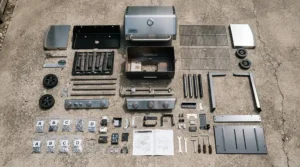
Kettle grill assembly and first use is where beginners either fall in love or lose a weekend. Here’s the sequence I’d follow, based on typical manufacturer guidance.
Assembly:
- Inventory the parts first. Lay everything out and match it to the manual’s parts list.
- Work on a soft surface. Grass or a blanket protects the porcelain finish from scratches.
- Leave bolts finger-tight until the end. Then tighten everything evenly so the legs don’t wobble.
- Budget time. Plan on an hour or so for a basic kettle. Carts like the Weber Performer Deluxe take noticeably longer.
First use:
- Place the grill outdoors on level, non-flammable ground, away from structures.
- Many manufacturers suggest a short empty burn with vents open to burn off factory residues. Check your manual.
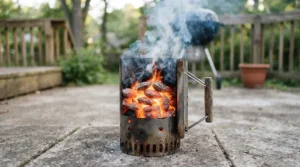
- Light a small batch of charcoal in a chimney starter, then pour it onto one side of the grate for a two-zone fire.
- Cook something forgiving first, like burgers or sausages.
Common mistakes in the first 30 days: closing the top vent too soon, which smothers flavor and heat; peeking too often; piling on too much charcoal; and skipping a food thermometer. Fix those four and most “my grill is broken” stories disappear.
Easy to Clean Charcoal Kettle Grill: Ash Catcher Design Explained
An easy to clean charcoal kettle grill isn’t about scrubbing less. It’s about touching less ash. Ash is light, messy, and loves a breeze, so the system that handles it matters more than any other cleanup feature.
Why Ash Catcher Design Changes Everything
Ash catcher design comes in three flavors across these seven grills.
- Open pan (Original Kettle, Jumbo Joe). Ash falls through the bottom vent into an exposed tray. It’s cheap and simple, but ash can blow away or spill when you move it. Reviewers of the Weber Jumbo Joe specifically call the tray fiddly.
- Enclosed One-Touch catcher (Premium, Master-Touch, Performer Deluxe). A lever sweeps ash through the vent into a sealed aluminum container. It’s the tidiest approach, and stray embers stay contained on windy days.
- Removable lower pan (Blackjack, Napoleon PRO22). A steel or porcelain pan sits beneath a raised charcoal grate. Consumer Reports rated the Napoleon PRO22 very good for ash cleaning, and the Oklahoma Joe’s Blackjack good.
My advice: if you’ll grill more than a few times a month, an enclosed catcher is worth paying for. If you’ll grill rarely, don’t sweat it.
Cleanup Habits That Help
Let coals burn out completely and cool before handling ash. Dispose of it in a metal container, never a plastic bin. Brush the grate while it’s still warm, then wipe the bowl interior once it’s cold.
Kettle Grill Lid Thermometer: Helpful Guide or Misleading Gadget?
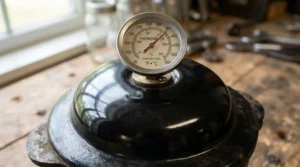
A kettle grill lid thermometer is the little dial that makes you feel in control. It deserves a gentle reality check, because it measures air near the top of the dome, not at the grate where your food sits.
AmazingRibs notes that Weber’s bi-metal lid thermometers give only a ballpark reading and recommends a digital probe at grate level. The Napoleon PRO22‘s gauge gets similar advice from reviewers: a reasonable rough guide, not a lab instrument.
So is it worthless? No. It’s a trend indicator. If the needle drifts down over an hour, your fire is fading. If it spikes, you’ve opened a vent too far. Use it that way and it earns its place.
For anything that matters, like chicken or burgers, rely on a food thermometer instead. Which brings me to the practical rule: buy a decent probe thermometer on day one. It costs a fraction of the grill and removes the biggest source of beginner anxiety. Models without a lid thermometer, like the Weber Original Kettle and Weber Jumbo Joe, just push you toward this habit sooner, which is arguably no bad thing.
Charcoal Grill Maintenance: A Simple Schedule for Kettle Owners
Charcoal grill maintenance is refreshingly low-drama. Kettles are basically a steel bowl, a lid, and a few vents. Here’s a schedule that keeps one healthy.
After every cook:
- Close the vents and let the fire burn out.
- Brush the grate while it’s still warm.
- Empty cooled ash into a metal container.
Monthly (in season):
- Wipe the lid interior. Flaky gray residue is usually baked-on grease and smoke, not paint, and a gentle scrape handles it.
- Check dampers for smooth movement and clear any ash that binds them.
- Inspect legs and bolts, and retighten if anything wobbles.
Seasonally:
- Do a full ash-and-grease clear-out of the bowl.
- Check for rust and chips in the porcelain. Fire safety advice also flags rust damage that could let embers drop through the metal.
- Cover the grill, and keep charcoal dry, since damp briquettes are the root of most lighting problems.
Longer term: Weber says its porcelain-enameled bowls and lids resist rust, cracking, and peeling, and parts for Weber kettles are widely available. That’s a real advantage when a damper or grate eventually needs replacing. Whatever you buy, register the warranty and keep the receipt.
How to Choose a Charcoal Kettle Grill for Beginners
The short answer: choose a 22-inch kettle with an enclosed ash catcher and a hinged grate, then add a probe thermometer. Here’s the reasoning in order.
- Set a total budget, not just a grill budget. Add a chimney starter, a probe thermometer, and charcoal. The USDA says to use a food thermometer to confirm safe internal temperatures, such as 160°F for ground beef and 165°F for poultry.
- Pick your size honestly. An 18-inch grate suits one or two people, and 22 inches suits families.
- Prioritize ash handling. Enclosed catchers beat open pans for anyone grilling regularly.
- Check the hinged grate. You’ll thank yourself during a long cook.
- Consider weight and space. A 96-pound cart is not a balcony grill.
- Compare warranties. Bowl and lid coverage varies from 2 to 10 years.
- Match convenience to your habits. If lighting charcoal is your sticking point, consider the Weber Performer Deluxe.
If you’re stuck between two grills, choose the one with the better ash system. You’ll interact with it every single cook.
Real-World Scenarios: Which Kettle Fits Your Life?
Let’s put names on the shopping lists.
Scenario 1: The college student on a patio. Budget under $150, a small shared space, and cooking for two or three friends. The Weber Jumbo Joe fits the footprint and the wallet. The Weber Original Kettle is the step up if you’ll host more. Skip the ash worries by placing a pie plate over the dish, as one reviewer suggested.
Scenario 2: The family of four grilling weekly. You want burgers for everyone without three batches. The Weber Original Kettle Premium gives you the room, the enclosed catcher, and the hinged grate. It’s also the model most roundups pick for this exact situation.
Scenario 3: The gadget-friendly host. You like having a prep surface, wheels, and room to experiment. The Oklahoma Joe’s Blackjack gives you shelf space, and the Weber Master-Touch gives you inserts for pizza and woks. If lighting charcoal is the thing you dread, the Weber Performer Deluxe removes it.
Scenario 4: The aspiring low-and-slow cook. The Napoleon PRO22‘s adjustable grate and diffuser make heat management more flexible. Just plan on learning a few more controls.
Charcoal Kettle Grill vs Gas Grill: What Beginners Should Know
| Factor | Charcoal Kettle | Gas Grill | Electric Grill |
|---|---|---|---|
| Flavor | Smoky, classic | Cleaner, milder | Mild |
| Start-up time | Slower (lighting + waiting) | Fast | Fast |
| Learning curve | Moderate (vent control) | Low | Low |
| Best For | Flavor-focused beginners | Weeknight speed | Balconies with restrictions |
If speed is your top priority, gas wins, and there’s no shame in that. Charcoal rewards patience with flavor and teaches you real heat control. The kettle also tends to cost less upfront than a comparable gas grill. For many beginners, the extra 15 minutes of lighting time becomes part of the fun.
That said, be realistic about your routine. If you’ll grill mostly on tired weeknights, a gas grill may suit you better. If you grill mostly on weekends and enjoy the process, the kettle is hard to beat.
Long-Term Cost & Maintenance: What You’ll Really Spend
Sticker price is only the first number. Charcoal, a chimney starter, a thermometer, and eventual replacement parts all add up. Charcoal is a recurring cost, so a bigger grill that burns more fuel per session costs more to run than a compact one.
| Tier | Product | Price Range | Value Verdict | Best For |
|---|---|---|---|---|
| Budget | Weber Jumbo Joe | $90-$120 | Excellent for small cooks | Tiny spaces |
| Budget | Weber Original Kettle | Low-to-mid $100s | Strong if you accept manual chores | Frugal learners |
| Mid | Weber Original Kettle Premium | $175-$230 | Best overall value | Most beginners |
| Mid-plus | Napoleon PRO22 | $300-$400 | Fair for cast iron flexibility | Searing fans |
| Mid-plus | Oklahoma Joe’s Blackjack | Mid-$300s | Fair if you value shelves | Prep-space seekers |
| Premium | Weber Performer Deluxe | $500+ range | Pay-for-convenience | Chimney avoiders |
The big finding: the jump from the Weber Original Kettle to the Weber Original Kettle Premium buys the most practical improvement per dollar. After that, you’re mostly paying for convenience and accessories. Long-term, parts availability and warranty coverage can matter more than a small price difference. A 10-year bowl-and-lid warranty is worth real money if you plan to keep the grill for years.
Charcoal Grill Safety and Placement Basics
Charcoal is hot, patient, and unforgiving of carelessness. A few rules keep your cookouts uneventful.
- Outdoors only. Charcoal grills produce carbon monoxide, so never use one in a garage, tent, or enclosed space.
- Keep your distance. NFPA fire-code guidance says that for buildings other than one- and two-family homes, grills shouldn’t be used on balconies, under overhangs, or within 10 feet of a structure. Apartment dwellers should check lease and local rules before buying.
- Use the right starter. If you use starter fluid, use only charcoal starter fluid, and never add it to burning coals.
- Cool before you dump. Let coals cool completely before disposing of them in a metal container.
- Cook to safe temperatures. Ground meats reach safety at 160°F and poultry at 165°F, measured with a food thermometer.
Keep kids and pets at least three feet from the grill, and never leave it unattended. Boring advice, yes. It’s also the advice that prevents the dramatic stories.

FAQ
❓ Is the Weber Original Kettle Premium worth the extra money over the Weber Original Kettle?
❓ What's the best charcoal kettle grill for a small budget?
❓ Can I use a charcoal kettle grill on an apartment balcony?
❓ Do I really need a separate thermometer for a kettle grill?
❓ Is the Weber Performer Deluxe worth it for a first-time buyer?
Conclusion
Starting charcoal grilling doesn’t require a gadget arsenal. It requires a grill that makes the chores easy so you can focus on the fire. For most people reading this charcoal kettle grill review for beginners, that grill is the Weber Original Kettle Premium: roomy, tidy, and well supported. If your budget or balcony is tight, the Weber Jumbo Joe and Weber Original Kettle are honest, capable starting points.
If you want more, the Weber Master-Touch adds hinged-grate versatility, the Oklahoma Joe’s Blackjack adds shelves and wheels, and the Napoleon PRO22 adds cast iron and adjustable heights. The Weber Performer Deluxe is the pick when lighting charcoal is the thing standing between you and dinner.
Whatever you choose, remember the basics: practice vent control, buy a probe thermometer, clean the ash, and keep the grill away from anything that can burn. Do that, and your first month will be less “what went wrong?” and more “when can we do this again?”
Recommended for You
- Charcoal Grill For Searing Steaks: 7 Ultimate Picks For 2026
- Charcoal Grill For Apartment Balconies: 7 Smart Picks (2026)
- Barrel Drum Charcoal Grill For Low And Slow Smoking: 7 Best In 2026
Disclaimer: This article contains affiliate links. As an Amazon Associate, I earn from qualifying purchases. If you purchase products through these links, we may earn a small commission at no additional cost to you.
✨ Found this helpful? Share it with your friends! 💬🤗
