In This Article
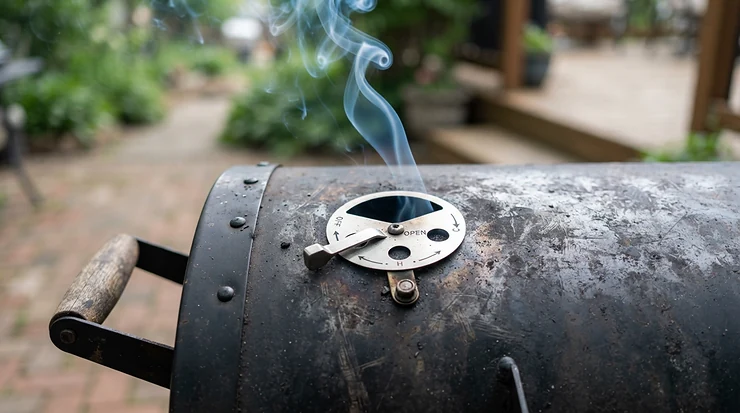
A barrel drum charcoal grill for low and slow smoking is a vertical, lidded steel cooker. Charcoal burns in a basket at the bottom while meat cooks on grates or hangs from hooks above it. Adjustable intake vents and a lid exhaust hold a steady 225–275°F for many hours, with almost no fuss.
That’s the textbook answer. Here’s the honest one: it’s the closest thing backyard barbecue has to a slow cooker with a fire in it. Load the basket, light a small starter batch, set the vents, and go do something else. The design works because heat rises straight up from a compact fire, and the thick steel walls keep it there.
Two flavors dominate the market. The first is the factory-built drum. The second is the homemade ugly drum smoker (UDS), a converted 55-gallon barrel that has become a cult favorite. Both share the same physics, and both love ribs and pulled pork. They also produce that pink band under the bark that pitmasters chase, which the smoke ring explains as a reaction between myoglobin and gases from burning fuel, not a measure of smoky flavor.
This guide covers seven real, currently sold models across budget, mid-range, and premium tiers. I analyze them from published specs and aggregated review sentiment rather than claiming hands-on testing. You’ll also get practical setup guides, a buyer’s framework, and the safety basics. Prices below are ranges only, so check current pricing before you buy.
Quick Comparison Table: 7 Drum Smokers at a Glance
| Model | Size / Format | Price Range | Best For |
|---|---|---|---|
| Pit Barrel Cooker Classic 18.5″ | 18.5″ hook-hanging drum | $400–$450 | Beginners who want zero-tinkering results |
| Pit Barrel Cooker XL 22.5″ | 22.5″ drum, 16 hooks | $500–$600 | Big families and party cooks |
| Oklahoma Joe’s Bronco Pro 21.5″ | 21.5″ drum, oversized basket | $450–$550 | Long overnight cooks |
| Oklahoma Joe’s Bronco 18 | 18″ drum, fuel access door | $300–$350 | Mid-range value seekers |
| Weber Smokey Mountain 18″ | Two-grate bullet, side door | $400–$450 | Long-term durability |
| Weber Smokey Mountain 22″ | Larger two-grate bullet | $500–$600 | Serious hobbyists wanting warranty peace of mind |
| VEVOR Charcoal Smoker Grill | Budget barrel-style | Under $150 | Testing the waters cheaply |
Prices reflect approximate ranges at the time of research and may vary. Looking at the table, the Oklahoma Joe’s Bronco 18 carries the best price-to-features ratio for most first-time buyers. The two Pit Barrel Cooker models charge extra for simplicity, and the Weber Smokey Mountain pair charges extra for build quality and a reputation for lasting. The VEVOR Charcoal Smoker Grill is the “try it before committing” option, but expect to tinker.
💬 Just one click — help others make better buying decisions too!😊
Top 7 Barrel Drum Charcoal Grills for Low and Slow Smoking: Expert Analysis
1. Pit Barrel Cooker Classic 18.5″ — hang-and-forget simplicity
The Pit Barrel Cooker Classic 18.5″ is built around a hanging-hook system. Meat dangles from steel rods over the coals instead of resting on grates. That’s the standout feature, because it exposes the meat evenly to rising heat and smoke.
The barrel is 18-gauge steel with a porcelain-enameled interior. In practice, you don’t wash the inside. You dump the ash and you’re done. It ships nearly ready to cook, with only the handles to attach. On paper, that means less time assembling and more time cooking.
Based on the spec comparison, this is the drum for someone who wants a repeatable process without learning airflow tuning. Reviewers consistently praise the ease of use. One commonly cited drawback is that the lid handle gets very hot, so keep a glove nearby.
Pros:
- ✅ Hanging system cooks ribs and butts evenly
- ✅ Porcelain interior needs almost no cleanup
- ✅ Nearly ready to cook out of the box
Cons:
- ❌ Lid handle gets very hot during cooks
- ❌ Fewer temperature-control options than vent-based drums
Price range: roughly $400–$450 at the time of research. Verdict: a premium for simplicity that pays off if your time matters more than tinkering.
2. Pit Barrel Cooker XL 22.5″ — most capacity with the same simple system
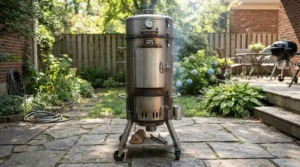
Step up to the Pit Barrel Cooker XL 22.5″ and you get a wider barrel with 16 hooks. The extra diameter matters most when you’re feeding a crowd, because a larger footprint means more racks of ribs or more pork butts per cook.
Capacity isn’t free, though. A wider drum burns more charcoal per hour and has more internal air to heat. Expect to plan fuel accordingly. What the spec sheet won’t tell you is that bigger doesn’t mean easier to control. The same hands-off philosophy applies, but the larger volume means slightly more time to come up to temperature.
This model suits backyard hosts, tailgaters, and anyone who regularly cooks for eight or more people. If you usually cook for two to four, the Pit Barrel Cooker Classic 18.5″ will save you money and charcoal. One published roundup ranks the XL package as its overall favorite thanks to capacity and simplicity, though I couldn’t verify a robust pool of independent customer ratings for this exact package, so treat that praise as one reviewer’s view.
Pros:
- ✅ Sixteen hooks handle big-crowd cooks
- ✅ Same easy-cleanup porcelain finish
- ✅ Simple, low-learning-curve operation
Cons:
- ❌ Burns more charcoal than smaller drums
- ❌ Overkill for small households
Price range: around $500–$600 range. Verdict: worth it only if you regularly cook large volumes.
3. Oklahoma Joe’s Bronco Pro 21.5″ — oversized basket for marathon cooks
The Oklahoma Joe’s Bronco Pro 21.5″ answers the most common complaint about smaller drums: running out of fuel. Its oversized charcoal basket, paired with gaskets and an airflow system, is marketed at a 15-plus-hour burn on about 17 pounds of fuel.
That capacity translates directly to overnight brisket and pork shoulder cooks, where a mid-cook refuel is a real interruption. A heat diffuser and wagon wheels add flexibility and portability.
Here’s what to weigh. This is a bigger, heavier machine than the smaller drums, so it’s less forgiving in a cramped patio. It also carries a higher price tag than its sibling, the Oklahoma Joe’s Bronco 18. For pitmasters who value fuel capacity above all, the extra cost is defensible.
Reviews aggregated for the Bronco family flag some recurring themes: built-in thermometers aren’t always accurate, and customer service gets mixed marks. Pair it with a separate probe thermometer and you’ll sidestep the first issue.
Pros:
- ✅ Oversized basket supports 15-plus hour burns
- ✅ Heat diffuser adds cooking flexibility
- ✅ Wheels make relocation easier
Cons:
- ❌ Built-in gauge accuracy is questionable
- ❌ Bulky for small patios
Price range: about $450–$550 range. Verdict: strong value for overnight cooks.
4. Oklahoma Joe’s Bronco 18 — best mid-range value
The Oklahoma Joe’s Bronco 18 brings a fuel access door and about nine hooks to a comparatively affordable price, and marketing materials cite a 14-plus hour burn. The access door means you can add lit or unlit charcoal without lifting the whole lid and dumping heat.
Reviewers frequently compare the Bronco favorably to the Weber Smokey Mountain and highlight the hinged lid, indexed air intake, and exhaust. On paper, an indexed vent means repeatable settings: you can note where the vent sat on your last good cook and return to it.
The main analytical caution is capacity versus reality. Some reviewers argue the basket is too small for cooks beyond about eight hours, and others find refueling awkward. If most of your smoking is ribs and pulled pork in the six-to-ten-hour window, that’s manageable.
Recommended for beginners who want to learn vent control without paying premium prices. If you’re already planning overnight brisket, look at the Oklahoma Joe’s Bronco Pro 21.5″ instead.
Pros:
- ✅ Fuel access door reduces heat loss
- ✅ Indexed vents make settings repeatable
- ✅ Affordable for a branded drum
Cons:
- ❌ Basket may be tight for very long cooks
- ❌ Reviewers report weak customer support
Price range: approximately $300–$350 range. Verdict: the sweet spot for first-time buyers.
5. Weber Smokey Mountain 18″ — the long-term durability pick
The Weber Smokey Mountain 18″ is the veteran of the category. It uses a steel body with a porcelain-enameled bowl and plated cooking grates, so it’s guarded against rust and corrosion. One roundup lists 481 square inches of cooking area across two grates, with a side door for charcoal access.
The second grate matters more than it looks. It can cook at higher heat, or it can hold a heat deflector. That two-level layout makes the cooker more flexible than a single-grate hanging drum.
The trade-off, as reviewers note, is price and weight. It’s pricey compared with alternatives and heavy to move. Review sentiment on the Weber model is described as mixed in one aggregated analysis, which is worth noting because loyalty to the brand runs high in forums. I’d frame it this way: you’re paying for build quality and a design that has been copied by nearly everyone else.
If you plan to smoke regularly for a decade rather than casually for a summer, the higher upfront cost can amortize well over time.
Pros:
- ✅ Rust-resistant porcelain-enameled construction
- ✅ Two grates add cooking flexibility
- ✅ Side door simplifies charcoal access
Cons:
- ❌ Costs more than similar-size rivals
- ❌ Heavy to move around
Price range: about $400–$450 range. Verdict: buy it for longevity, not for bargains.
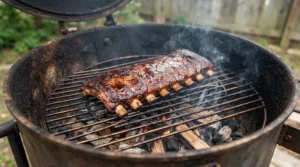
6. Weber Smokey Mountain 22″ — bigger footprint, bigger warranty peace of mind
The Weber Smokey Mountain 22″ takes the same design and scales it up. One vertical-smoker roundup lists a 10-year warranty for it, which is a meaningful signal of manufacturer confidence.
Extra diameter means room for whole turkeys, multiple racks, or several pork butts at once. It also means a bigger charcoal ring and more fuel per cook. On paper, that suits families and small-scale competition cooks.
Because the design mirrors the smaller Weber, the same trade-offs apply: heavy, expensive, and durable. Compared with the Pit Barrel Cooker XL 22.5″, the Weber offers more layout flexibility through its two-grate setup, while the Pit Barrel Cooker XL 22.5″ offers hanging simplicity.
I couldn’t verify a meaningful set of aggregated reviews for this specific size, so I’m relying on the shared design characteristics and manufacturer warranty information. Verify recent buyer feedback on the retailer listing before you commit.
Pros:
- ✅ Ten-year warranty listed in one roundup
- ✅ Roomy for large cuts and multi-rack cooks
- ✅ Two-grate layout adds flexibility
Cons:
- ❌ Highest fuel appetite in this list
- ❌ Premium price and heavy weight
Price range: roughly $500–$600 range. Verdict: excellent for large-volume smokers who want a long warranty.
7. VEVOR Charcoal Smoker Grill — the under-$150 experiment
The VEVOR Charcoal Smoker Grill exists to lower the entry barrier. One buying guide describes it as the budget pick that gets you smoking for under $150.
At that price, the honest analysis is about trade-offs. Budget barrels typically use thinner steel, which loses heat faster and reacts more sharply to wind and cold. Fit and finish may be less refined than branded drums, so expect a tuning period of experiments with vents and fuel loading.
That said, it can teach you the fundamentals cheaply. If you’re unsure whether you’ll actually enjoy smoking, spending under $150 to find out is a rational move. If you catch the bug, you’ll upgrade to a Oklahoma Joe’s Bronco 18 or Weber Smokey Mountain 18″ with a clearer sense of what you want.
I couldn’t verify a deep pool of independent long-term durability reports, so plan to inspect welds, seals, and paint on arrival and seal gaps if needed.
Pros:
- ✅ Lowest entry cost in this comparison
- ✅ Good sandbox for learning airflow
- ✅ Low financial risk for beginners
Cons:
- ❌ Likely thinner metal and weaker heat retention
- ❌ Less consistent quality than established brands
Price range: under $150. Verdict: a smart trial run, not a forever smoker.
Top 7 Comparison: Specs, Trade-Offs, and Who Should Buy
| Model | Standout Advantage | Watch-Out | Best For |
|---|---|---|---|
| Pit Barrel Cooker Classic 18.5″ | Hook system, easy cleanup | Hot lid handle | Set-it-and-forget-it cooks |
| Pit Barrel Cooker XL 22.5″ | 16 hooks, high capacity | Fuel appetite | Feeding crowds |
| Oklahoma Joe’s Bronco Pro 21.5″ | 15-plus hour basket | Bulk and weight | Overnight briskets |
| Oklahoma Joe’s Bronco 18 | Access door, indexed vents | Basket size | First-time buyers |
| Weber Smokey Mountain 18″ | Durability, two grates | Price and weight | Long-term owners |
| Weber Smokey Mountain 22″ | Roomy, 10-year warranty listed | Fuel use | Large-volume hobbyists |
| VEVOR Charcoal Smoker Grill | Under-$150 entry | Thin build likely | Budget testers |
Reading across the rows, the pattern is simple: capacity and durability cost money, and simplicity costs a different kind of money. The Oklahoma Joe’s Bronco 18 is the compromise most beginners should start with. If you already know you cook long and often, the Weber Smokey Mountain 18″ or the Oklahoma Joe’s Bronco Pro 21.5″ become easier to justify.

Charcoal Basket Placement: A Practical Setup Guide
Charcoal basket placement is the quiet variable that separates a smoker that cruises from one that fights you. The basket should sit centered and elevated, so air enters from the bottom vents, rises through the fuel, and exits the lid.
Here’s a setup routine that works across most drums:
- Center the basket. An off-center basket pulls heat to one side and creates hot and cold zones on the grate.
- Keep it off the floor. Elevating the basket lets ash fall away instead of choking the fire, which is a design principle common to UDS builds.
- Match the vents to the basket. Intake holes near the bottom should feed fresh air directly beneath the coals.
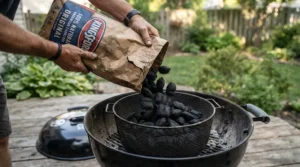
- Use the minion method. Fill the basket with unlit charcoal and drop a small batch of lit coals on top, so the fire creeps downward slowly instead of burning through everything at once.
- Bury smoke wood in the pile. Chunks placed among unlit coals ignite gradually, which keeps smoke steady instead of producing one big burst.
A common mistake in the first 30 days is overloading the basket with lit coals, which overshoots your target temperature and forces you to choke the vents. That overshoot can take a long time to correct because the barrel’s thick walls hold heat. Start smaller than you think and let it climb.
For drums with a fuel access door, like the Oklahoma Joe’s Bronco 18 and the Weber Smokey Mountain 18″, adding unlit charcoal mid-cook is easier. For fully sealed designs like the Pit Barrel Cooker Classic 18.5″, plan your fuel load carefully at the start.
✨ Ready to dial in your fire?
🔥 Pick a drum with a basket sized for your typical cook length, then check current pricing and availability on the highlighted models. The right basket setup turns a temperamental smoker into a dependable one!
Low and Slow Cooking Technique: Your First 30 Days
Low and slow cooking technique boils down to three habits: hold a steady temperature, be patient through the stall, and cook to feel and probe rather than to the clock. Most drum smokers do best in the 225–275°F range, where collagen in tough cuts melts into gelatin without drying the meat.
Week one: learn your vents. Do a plain-charcoal burn with no meat. Note where the intake vents sit when the temperature stabilizes, then write it down. That number is your baseline.
Week two: cook something forgiving. Pork butt is the classic teacher. It’s fatty, cheap, and hard to ruin. Cook until the meat is tender, and use a probe to judge it rather than trusting a rigid time.
Week three: expect the stall. Meat temperature often plateaus for hours as evaporation cools the surface. Don’t panic and crank the heat. Patience is the technique.
Week four: refine smoke. Drum smokers can deliver heavy smoke because the food sits so close to the fire. One well-known pitmaster’s advice is to keep airflow limited and use minimal wood, especially with chicken. Less smoke is often better smoke. On the science side, Texas Monthly’s breakdown of the smoke ring is a good reminder that pink color signals chemistry, not a finished flavor.
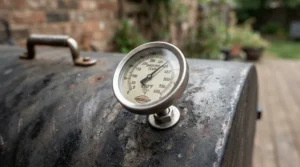
Pair every cook with a reliable probe thermometer, since built-in lid gauges are frequently off. Add sauces late, and let the meat rest before slicing.
Drum Smoker for Ribs and Pulled Pork: Real-World Scenarios
A drum smoker for ribs and pulled pork is arguably the perfect match. Ribs benefit from steady, moderate heat, and pork shoulder rewards a long, gentle cook. Here are three profiles.
The weekend family cook (budget-conscious, 1–2 cooks per month). You feed four people and want ribs on Saturday. An Oklahoma Joe’s Bronco 18 balances cost and capacity. Hang or lay two racks, hold the temperature in the mid-200s, and use a bend test: the rack should flex and crack the surface without falling apart.
The neighborhood host (feeding 10–12, 2–3 cooks per month). Pulled pork for a crowd means multiple butts. A Pit Barrel Cooker XL 22.5″ or Weber Smokey Mountain 22″ gives the room. Plan a fuel load that lasts through the long stall.
The overnight enthusiast (frequent long cooks, cares about sleep). You want to load the smoker at bedtime and check it at dawn. The Oklahoma Joe’s Bronco Pro 21.5″ with its 15-plus hour basket is the natural fit, ideally paired with a wireless probe that alarms if temperatures drift.
For pork ribs, typical pull ranges are around 195–203°F internal, judged by probe tenderness rather than the number alone. For pulled pork, tender at roughly 200–205°F is the common target. Always confirm safety minimums, which the safety section below covers.
What Is an Ugly Drum Smoker (UDS)? Store-Bought vs DIY
An ugly drum smoker (UDS) is a converted 55-gallon steel drum fitted with intake vents, a charcoal basket, and cooking grates. It looks rough and cooks beautifully. The design matters here because nearly every commercial drum is a polished descendant of the UDS.
How To BBQ Right’s UDS build guide advises using an unlined, reconditioned, food-grade drum. That advice is central to safety: linings and residues must be burned out or removed before cooking. A DIY build typically includes bottom intake holes, bolts to hold grates, and a lid exhaust. The author calls it a great smoker that’s simple and durable, with little to break.
DIY pros: low cost, customizable, easy to repair. DIY cons: time, tools, and the risk of getting drilling, cleaning, or sealing wrong.
Store-bought drums like the Pit Barrel Cooker Classic 18.5″ and Oklahoma Joe’s Bronco 18 trade that DIY flexibility for warranty, tested airflow, and coatings that don’t require a torch. If you enjoy building things, a UDS is a rewarding project. If you want to cook this weekend, buy a finished drum.
Vertical Charcoal Smoker Design: How to Choose the Right One
Vertical charcoal smoker design determines everything: how heat travels, how fuel burns, and how easy the cooker is to live with. Use these seven steps to choose.
- Decide your typical cook size. Match diameter to household or party size. Bigger is not automatically better.
- Prioritize airflow control. Look for adjustable, repeatable intake vents and a controllable exhaust.
- Check fuel capacity. Longer cooks need bigger baskets. A basket too small forces mid-cook refueling.
- Look for a fuel access door. It lets you add coals without dismantling the cooker.
- Inspect the finish. Porcelain enamel resists rust and simplifies cleanup.
- Choose hooks or grates. Hooks suit ribs and butts, while grates give more flexibility for chicken and whole roasts.
- Confirm warranty and support. Customer service quality varies by brand, so read recent feedback.
Vertical designs generally stack the fire, water pan or diffuser, and grates in a column, which keeps the footprint small compared with offset smokers. That’s an asset for patios and a limitation for cooks wanting sprawling grate space.
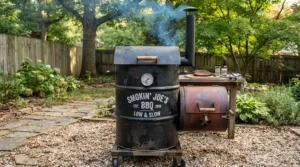
Barrel Grill Heat Retention: What to Expect in Real-World Performance
Barrel grill heat retention is why drums are so fuel-efficient. Thick steel walls absorb and radiate heat, and a tight lid holds it in. On paper, this means once the barrel is up to temperature, it needs less fuel to stay there than a thin-walled cooker.
In practice, retention cuts both ways. It steadies temperatures against wind and short-term fluctuations, but it also means a mistake takes time to correct. Overshoot to 325°F and you may wait a long while for the barrel to drift back down.
Wall thickness is the key spec. One product roundup describes the Pit Barrel Cooker Classic 18.5″ as 18-gauge steel, and the Oklahoma Joe’s Bronco Pro 21.5″ is marketed as heavy-gauge steel with gaskets to keep temperatures steady. Budget models such as the VEVOR Charcoal Smoker Grill likely lose heat faster in cold or windy conditions, though I couldn’t verify measured data.
Cold-weather tips: shelter the drum from wind, start with a slightly larger fuel load, and resist opening the lid. Every peek costs you a chunk of stored heat and extends the cook.
Features That Actually Matter (And Those That Don’t)
Marketing loves feature lists. Your ribs care about a few of them.
Matters:
- Airflow control. Repeatable vents beat flashy gadgets.
- Basket capacity. It sets your unattended cook time.
- Build gauge and finish. They govern heat retention and rust resistance.
- Access door. It makes long cooks practical.
Doesn’t matter as much:
- Built-in lid thermometers. Reviewers of the Bronco family note accuracy issues, so a separate probe is the real tool.
- Side tables and extras. Nice, but they don’t change the food.
- Color options. Available in black or orange on some models, and irrelevant to flavor.
The takeaway is to spend your budget on airflow, capacity, and construction, then fill the rest with a good probe thermometer. Compared with a fancy lid gauge, a $40-range thermometer is the smarter upgrade.
Benefits vs Traditional Alternatives: Drum vs Offset, Kettle, and Pellet
| Cooker Type | Fuel Efficiency | Learning Curve | Flavor | Best For |
|---|---|---|---|---|
| Barrel drum charcoal | High | Low to moderate | Strong charcoal-smoke character | Ribs, butts, hands-off cooks |
| Offset stick burner | Lower | Steep | Deep, classic smoke | Enthusiasts who enjoy fire management |
| Kettle grill | Moderate | Moderate | Good with setup | Multi-purpose grilling and smoking |
| Pellet smoker | High | Very low | Milder smoke | Convenience seekers |
The analysis is straightforward. Drums beat offsets on ease and fuel economy, while offsets win on ritual and capacity. Kettles are more flexible but more finicky for long cooks. Pellet smokers are the easiest, yet a drum delivers a punchier charcoal-fired flavor at a lower price. For most people who want traditional barbecue without full-time babysitting, a drum is the best compromise.
Long-Term Cost & Maintenance
Ownership cost isn’t just the sticker price. It includes charcoal, wood, replacement parts, and your time.
Fuel: larger drums burn more charcoal. A basket sized for a 15-hour burn holds a lot of fuel, but you only burn what your vents allow, so tight vent control saves money.
Maintenance: dump ash after each cook and wipe grates. Porcelain-lined models like the Pit Barrel Cooker Classic 18.5″ need little interior scrubbing. Use a cover to limit rust on exposed steel, as UDS builders commonly do with a kettle cover on the lid.
Durability: the Weber Smokey Mountain 18″ and Weber Smokey Mountain 22″ cost more upfront, but their rust-resistant construction and a listed 10-year warranty on the larger model help spread that cost across years.
Cost-per-use example: if a $400-range drum lasts ten years with 20 cooks a year, that’s roughly $2 per cook before fuel. A budget barrel that fails after two seasons could cost more per cook. Value depends on longevity as much as price.
Now the price and value picture:
| Tier | Example Models | Price Range | Value Verdict |
|---|---|---|---|
| Budget | VEVOR Charcoal Smoker Grill | Under $150 | Cheap way to learn |
| Mid-range | Oklahoma Joe’s Bronco 18 | $300–$350 | Best balance |
| Premium | Weber Smokey Mountain 18″, Pit Barrel Cooker Classic 18.5″ | $400–$450 | Durability and simplicity |
| High-capacity | Oklahoma Joe’s Bronco Pro 21.5″, Pit Barrel Cooker XL 22.5″, Weber Smokey Mountain 22″ | $450–$600 | Crowds and marathon cooks |
Ranges are approximate at the time of research. The table’s message is that value peaks in the middle, while both extremes make sense only for specific buyers.
Safety and Food Safety Guide
Low and slow doesn’t mean careless. The USDA’s guidance on smoking meat and poultry says to use a food thermometer and cook to safe minimum internal temperatures. Its current guidance lists 145°F for whole cuts of beef, pork, lamb, and veal (with a three-minute rest), 160°F for ground meats, and 165°F for poultry. Older USDA material listed 160°F for all pork, so check the latest guidance if you rely on printed handouts.
Practical drum-specific safety points:
- Never cook with a lined or chemically treated barrel. UDS builders burn off paint and coatings and use unlined drums.
- Handle hot lids carefully. The Pit Barrel Cooker Classic 18.5″ lid handle can get very hot per reviewer feedback.
- Chill promptly. Refrigerate leftovers within two hours, cut into shallow containers.
- Use outdoors only, away from structures. Charcoal produces carbon monoxide.
Finally, apply sauces near the end. USDA advises the last 15 to 30 minutes to avoid burning.
FAQ
❓ How many pounds of pork can an 18 inch drum smoker hold?
❓ Do you need a water pan in a barrel drum smoker?
❓ How much charcoal do you need for a 12 hour cook in a drum smoker?
❓ Can you smoke in a drum smoker during winter?
❓ Is a drum smoker good for beginners?
Conclusion
A barrel drum charcoal grill for low and slow smoking earns its cult following because it turns a hard hobby into a manageable one. The design is simple: a compact fire, thick walls, and controllable air. It’s forgiving with ribs and pulled pork, efficient with charcoal, and durable if you choose well.
If you want the fewest decisions, the Pit Barrel Cooker Classic 18.5″ is the simplest path. If you want the best all-round value, the Oklahoma Joe’s Bronco 18 is the safest starting point. If you cook overnight, the Oklahoma Joe’s Bronco Pro 21.5″ adds fuel capacity. If you want long-term durability, look at the Weber Smokey Mountain 18″ or Weber Smokey Mountain 22″. For a low-risk trial, the VEVOR Charcoal Smoker Grill gets you started cheaply, and the Pit Barrel Cooker XL 22.5″ is the pick for feeding a crowd.
Whichever you choose, pair it with a reliable probe thermometer, dial in your vents, and give yourself a few practice cooks before the big party.
Recommended for You
- Charcoal Grill Under $500 For Backyard Parties: 7 Top Picks 2026
- Top 7 Charcoal Grill Under $200 For A Small Family (2026)
- Offset Charcoal Smoker For Backyard Brisket: 7 Real Picks (2026)
Disclaimer: This article contains affiliate links. As an Amazon Associate, I earn from qualifying purchases. If you purchase products through these links, we may earn a small commission at no additional cost to you.
✨ Found this helpful? Share it with your friends! 💬🤗
