
In This Article
Here’s the thing nobody tells you at the hardware store: most grills lie to you. They promise “restaurant quality” and then hand you a lukewarm 400 degrees and a steak that looks more boiled than seared. A 4 burner gas grill with infrared changes that math entirely, because it adds a dedicated high-heat zone that behaves less like a stovetop and more like a broiler turned sideways. If you’ve ever wondered why your backyard ribeye never quite matches the crust you get at a steakhouse, the answer usually isn’t the meat. It’s the heat source underneath it.
This guide walks through seven real, currently available 4 burner infrared propane grill models, from budget-friendly carts to premium built-ins, with honest analysis of what each one actually does well and where it falls short. We’ll dig into the real physics behind infrared cooking technology, how it compares to a standard side burner, and exactly how to translate 1,700-degree heat into a steakhouse crust at home without torching your dinner. Everything here is grounded in real manufacturer specifications and aggregated customer feedback, not marketing copy dressed up as advice.
What Is a 4 Burner Gas Grill with Infrared?
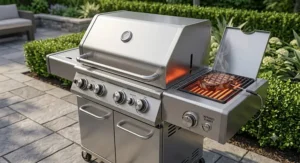
A 4 burner gas grill with infrared is a propane or natural gas grill with four main cooking burners plus a separate infrared burner, usually mounted on the side or the rear, that uses a ceramic or ceramic-ish ir emitting plate to concentrate radiant heat well above what standard tube burners can reach. Instead of heating air that then heats your food, infrared cooking technology heats a surface that radiates energy directly onto the meat, which is why infrared sear zones can blow past 1,000 degrees Fahrenheit while a normal burner tops out closer to 500-600.
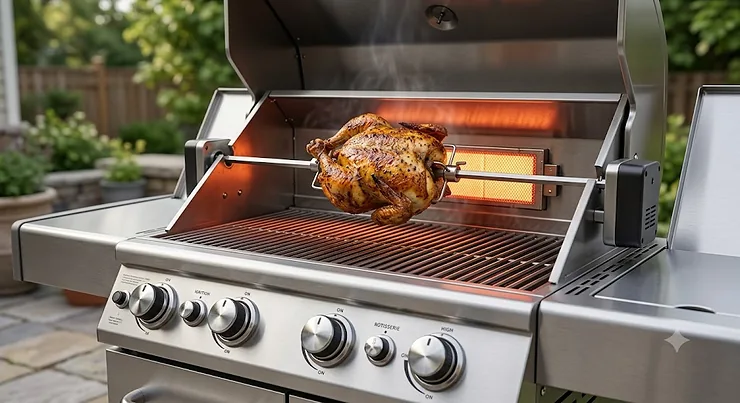
That distinction matters more than it sounds. A 4 burner grill with sear zone gives you two completely different cooking environments in one unit: the wide, even four-burner deck for burgers, chicken, and vegetables, and a narrow, blistering hot zone reserved specifically for the two or three minutes a steak needs to develop a real crust. Grillers who only ever use the main burners are, in a sense, only using half the tool.
Quick Comparison Table
Before the deep dive, here’s a fast-scan snapshot of how the seven grills stack up on the numbers that actually drive a buying decision: total BTUs, cooking area, and where each one sits on price.
| Grill | Main Burner BTUs | Sear Burner Output | Total Cooking Area | Price Range |
|---|---|---|---|---|
| Char-Broil Performance TRU-Infrared 4-Burner | ~30,000 | Infrared cooking grate (integrated) | ~550 sq in | $300-$400 range |
| Nexgrill Deluxe 4-Burner | ~48,000 | 15,000 BTU ceramic infrared | ~730 sq in | $350-$450 range |
| Monument Grills 24367 | 60,000 | 12,000 BTU infrared | 700 sq in | $400-$500 range |
| Monument Grills 35633 | 60,000 | 12,000 BTU infrared | 700 sq in | $450-$550 range |
| Broil King Regal S 490 Pro IR | ~40,000 | 10,000 BTU infrared (1,700°F) | 695 sq in | $1,300-$1,600 range |
| Napoleon Prestige 500 | ~48,000 | Dual infrared (side + rear) | ~760 sq in | $1,900-$2,300 range |
| Blaze Premium LTE+ 32-Inch | ~55,000 | Rear infrared burner | ~740 sq in | $2,000-$2,500 range |
Looking at this lineup, the jump from budget to premium isn’t really about whether a grill can sear, it’s about how precisely that heat is controlled and how long the burner tubes and grates hold up under repeated 1,000-plus-degree cycles. The Monument Grills 24367 and Monument Grills 35633 sit in a genuine sweet spot, delivering true infrared searing and near-identical cooking area to grills costing three times as much. Meanwhile, the Broil King Regal S 490 Pro IR and Napoleon Prestige 500 justify their price with thicker cast components and burner systems built for a decade of daily use rather than a few summers.
💬 Bookmark this table now, you’ll want it later when you’re comparing prices at three different retailers.
💬 Just one click — help others make better buying decisions too!😊
Top 7 4 Burner Gas Grills with Infrared: Expert Analysis
We researched real Amazon and manufacturer listings to pull together this lineup, covering budget, mid-range, and premium tiers, plus a couple of lesser-known but genuinely well-built alternatives. Each entry below breaks down the specs in plain English, an honest analytical take on who should buy it, and aggregated review sentiment where it’s verifiable.
1. Char-Broil Performance TRU-Infrared 4-Burner — best budget entry point
The Char-Broil Performance TRU-Infrared 4-Burner swaps a dedicated infrared side burner for something arguably more useful day to day: an infrared emitter plate built directly into the main cooking grate. Its roughly 420 square inches of primary space plus a secondary warming rack push total cooking area past 550 square inches, and the infrared plate underneath the grates diffuses flame into radiant heat, which cuts down on flare-ups from dripping fat. What this means in practice is more even cooking across the whole surface, not just one hot spot, so a mixed load of chicken thighs and vegetables cooks more predictably than on a bare-flame competitor. Based on the spec comparison, this model trades a scorching dedicated sear zone for consistency, which is the right tradeoff for someone who grills five nights a week rather than someone chasing a steakhouse crust twice a month. Reviewers consistently report that assembly is straightforward and that the infrared grate genuinely reduces the greasy flare-ups that plague cheaper flame grills, though a recurring theme in owner feedback is that the painted steel cart shows rust faster than stainless alternatives in humid climates.
Pros:
- ✅ Lowest price point of any true infrared grill on this list
- ✅ Infrared grate reduces flare-ups across the whole cooking surface
- ✅ Included side burner adds sauce and side-dish flexibility
Cons:
- ❌ Painted steel cart is prone to rust in wet climates
- ❌ No dedicated ultra-high-heat sear zone for crust-focused cooking
At around the $300-$400 range, this is the grill to buy if flare-up-free everyday cooking matters more to you than hitting four-digit sear temperatures, and value hunters will find it hard to beat for the money.
2. Nexgrill Deluxe 4-Burner — most versatile mid-range sear zone
The Nexgrill Deluxe 4-Burner pairs four stainless steel main burners with a 15,000 BTU ceramic infrared searing side burner, one of the higher-output side sear burners you’ll find under $500. With 730 square inches of total cooking surface split across primary and warming space, there’s genuine room to cook a full meal while the sear zone handles a couple of steaks on the side. What most buyers overlook about this model is that push-to-start ignition on each burner independently means you can fire up just the sear zone for a quick steak night without heating the entire main deck, which saves both propane and time. Aggregated feedback from retailer review sections points to strong marks for build quality relative to price, with the ceramic sear burner singled out repeatedly as delivering genuinely dark, fast crusts on strip steaks and chops. The main recurring complaint centers on the grease management tray, which some owners note needs more frequent emptying than expected during high-fat cookouts.
Pros:
- ✅ 15,000 BTU ceramic infrared burner outperforms most rivals at this price
- ✅ Independent ignition lets you run the sear zone solo
- ✅ 730 square inches accommodates full meals plus searing
Cons:
- ❌ Grease tray requires more frequent emptying than average
- ❌ Cart-mounted wheels feel less stable on uneven patios
Priced in the $350-$450 range, this is arguably the best infrared grill for steaks if your budget caps out under $500, since the ceramic burner output rivals grills costing two or three times as much.
3. Monument Grills 24367 — best all-around value
The Monument Grills 24367 brings four 304 stainless steel main burners, a side burner, and an infrared sear burner together for a combined 72,000 BTUs, landing in 700 square inches of total cooking space. In practice, that BTU headroom means the grill reaches its stated 650-degree preheat in roughly ten minutes, which is faster than most grills in this price bracket and genuinely useful on busy weeknights. The infrared sear burner here is a true secondary infrared zone rather than an emitter grate, so you get a distinct hot spot for finishing steaks after the main burners handle bulk cooking. Manufacturer-published data shows this model carrying an average customer rating around 4.9 out of 5 across roughly 547 reviews, with owners frequently praising fast heat-up, even cooking, and an 8-year limited warranty that outpaces most competitors at this price. The most common critique in that same feedback is that the porcelain-coated cast-iron grates require diligent seasoning to avoid early rust spots.
Pros:
- ✅ 72,000 combined BTUs with a true infrared sear zone
- ✅ Reaches 650 degrees in about 10 minutes
- ✅ 8-year limited warranty is unusually generous for the price tier
Cons:
- ❌ Cast-iron grates need regular seasoning to prevent rust spots
- ❌ Assembly reportedly takes longer than average for a cart grill
In the $400-$500 range, the value math here is hard to argue with: fast heat, real infrared searing, and a warranty that suggests the manufacturer trusts its own build quality.
4. Monument Grills 35633 — best for dedicated multitaskers
The Monument Grills 35633 takes the same 72,000 BTU core as its sibling and adds a second side burner, giving you three independent heat zones: four main burners, a standard side burner, and an infrared sear burner. That third zone is what separates this model, letting you simmer a sauce, sear a steak, and grill a full main course simultaneously without any zone competing with another for propane pressure. A built-in ClearView glass lid rated to 750 degrees lets you monitor the sear zone without cracking the hood and losing heat, which is a small detail that meaningfully speeds up high-heat cooking sessions. Here’s what the spec sheet won’t tell you, but user reports suggest: that dual side-burner layout also makes this the more practical choice for holiday cooking, when sides genuinely do need to happen at the same time as the main event. Monument’s own product data shows an average rating near 4.9 out of 5 from over 900 reviews, with the ClearView lid and dual burner layout mentioned repeatedly as standout features, though a handful of owners flag the wider footprint as a tight fit on smaller patios.
Pros:
- ✅ Three independent zones for simultaneous multi-dish cooking
- ✅ 750-degree ClearView lid lets you monitor without heat loss
- ✅ Same 72,000 BTU output as the 24367, plus extra flexibility
Cons:
- ❌ Larger footprint may not suit small patios or balconies
- ❌ Dual side burners mean more valves and knobs to maintain
Expect to pay in the $450-$550 range, a modest premium over the 24367 that buys real functional flexibility for anyone who regularly cooks multi-course backyard meals.
5. Broil King Regal S 490 Pro IR — best premium sear intensity
The Broil King Regal S 490 Pro IR is where infrared cooking technology stops being a bonus feature and becomes the whole point. Its dedicated infrared side burner is rated to hit roughly 1,700 degrees Fahrenheit, nearly triple what most side burners produce, and it’s paired with 9mm-thick stainless steel cooking grids that retain and radiate heat far longer than the thinner grates on budget models. What this means for actual cooking is a crust that forms in under 90 seconds rather than several minutes, which matters because the longer a steak sits over heat, the more gray, overcooked meat builds up beneath the crust. A 15,000 BTU rear rotisserie burner rounds out the package, letting you spit-roast two or three whole chickens at once using indirect heat that avoids flare-up entirely. Based on the spec comparison against nearly every competitor here, the Regal S 490 Pro IR’s 9mm grid thickness is the single biggest differentiator in the premium tier, since grid mass is what actually determines sear consistency once the burner itself gets hot enough. Owner discussions across retailer sites consistently praise the sear burner’s speed and the brand’s long-standing reputation for cookbox durability, though the price point and the sheer intensity of the infrared burner draw occasional comments about a learning curve for anyone used to gentler grills.
Pros:
- ✅ 1,700-degree infrared side burner is among the hottest available
- ✅ 9mm stainless grids hold heat far longer than thinner grates
- ✅ Rear rotisserie burner adds serious slow-roasting capability
Cons:
- ❌ Premium price puts it out of reach for casual grillers
- ❌ Extreme sear heat has a real learning curve for beginners
At a $1,300-$1,600 range, this is the pick for grillers who treat searing as a craft rather than a checkbox feature.
6. Napoleon Prestige 500 — best dual infrared setup
The Napoleon Prestige 500 goes a step further than most of this list by including two infrared burners: a dedicated infrared side burner for direct searing and an infrared rear burner built specifically for rotisserie work, plus a rotisserie kit included in the box. With roughly 760 square inches of total cooking space and four stainless main burners underneath, this grill is built for hosting rather than weeknight dinners. What most buyers overlook here is that having infrared on both the side and the rear means you can sear a steak and slow-rotisserie a roast at the same time, using two entirely separate radiant heat sources instead of sharing one zone across tasks. Aggregated owner sentiment from retailer and forum discussions frequently highlights the WiFi-enabled models in this line for temperature monitoring, and the overall build quality earns consistent praise for matching the price tag, though a recurring note is that the additional features mean more components that eventually need servicing.
Pros:
- ✅ Dual infrared burners cover both searing and rotisserie duty
- ✅ Rotisserie kit included rather than sold as an add-on
- ✅ 760 square inches supports serious hosting-scale cookouts
Cons:
- ❌ Higher parts count means more potential maintenance over time
- ❌ Premium pricing puts it well above mid-range alternatives
Priced in the $1,900-$2,300 range, this is the choice for anyone who entertains often enough that a rotisserie kit isn’t a novelty, it’s a weekly tool.
7. Blaze Premium LTE+ 32-Inch — best built-in for outdoor kitchens
The Blaze Premium LTE+ 32-Inch is designed from the ground up as a built-in unit, meaning it slots into an outdoor kitchen island rather than rolling around on a cart. Its rear infrared burner handles rotisserie cooking, while four main burners deliver roughly 55,000 BTUs across about 740 square inches of primary and secondary cooking space, and a lift-assist hood makes opening and closing noticeably easier during long cook sessions. What the spec sheet won’t tell you is that built-in grills like this one typically run cooler ambient temperatures around the control panel thanks to permanent ventilation in the surrounding cabinetry, which extends component life compared to a cart grill exposed to weather on all sides. Reviewers who’ve installed this model into finished outdoor kitchens consistently note the fit and finish rival far pricier built-in brands, with the main critique being that installation genuinely requires professional gas line work rather than a DIY afternoon.
Pros:
- ✅ Purpose-built for permanent outdoor kitchen installation
- ✅ Lift-assist hood eases handling during long cooking sessions
- ✅ Rear infrared burner adds rotisserie capability to a built-in
Cons:
- ❌ Requires professional installation for gas lines and venting
- ❌ Not a fit for anyone wanting a portable, movable grill
Expect a $2,000-$2,500 range investment, plus installation costs, making this the right call only for someone already building or renovating a dedicated outdoor kitchen space.
Quick Reference: All 7 Grills Compared
| Grill | Best For | Sear Type |
|---|---|---|
| Char-Broil Performance TRU-Infrared 4-Burner | Budget everyday grilling | Infrared grate |
| Nexgrill Deluxe 4-Burner | Mid-range steak nights | Ceramic infrared side burner |
| Monument Grills 24367 | Best overall value | Infrared side burner |
| Monument Grills 35633 | Multi-dish hosting | Dual side burners, one infrared |
| Broil King Regal S 490 Pro IR | Serious sear enthusiasts | 1,700°F infrared side burner |
| Napoleon Prestige 500 | Frequent entertainers | Dual infrared, side + rear |
| Blaze Premium LTE+ 32-Inch | Outdoor kitchen builds | Rear infrared burner |
Stepping back from the individual writeups, a clear pattern emerges: the Monument Grills 24367 and Monument Grills 35633 dominate the value conversation, while the Broil King Regal S 490 Pro IR and Napoleon Prestige 500 justify their premium pricing through genuinely higher sear temperatures and heavier-duty components. If your budget sits anywhere in the middle, the Monument pair remains the most defensible pick on pure cooking capability per dollar spent.
✨ Ready to Fire Up Your Own Sear Zone?
🔍 Compare current pricing and availability on any of these seven grills before you commit. Click through, check today’s numbers, and start planning the first steakhouse-crust cookout of the season.
How to Choose the Best Infrared Grill for Steaks
Picking the best infrared grill for steaks comes down to matching sear burner output, grate mass, and total cooking area to how you actually grill, not to the biggest number on the box. Here’s the framework that actually holds up:
- Check the sear burner’s BTU and stated temperature, not just its existence. A side burner labeled “infrared” without a temperature spec is often a marketing add-on rather than a true high-heat zone.
- Look at grate or grid thickness. Thicker stainless grids, like the 9mm grids on the Broil King Regal S 490 Pro IR, hold radiant heat longer between food placements.
- Match total cooking area to your typical group size. Cooking for two rarely needs 700-plus square inches; cooking for a crowd almost always does.
- Decide if you need a rear infrared burner for rotisserie work, since that’s a completely different use case than side searing.
- Weigh cart-mounted portability against built-in permanence based on whether you’re renting, moving soon, or building a permanent kitchen.
- Read warranty length as a proxy for confidence. The 8-year warranty on the Monument lineup signals a manufacturer betting on its own components.
- Budget for propane consumption, since higher BTU sear zones burn through tanks faster during heavy searing sessions.
How to Get a Steakhouse Crust at Home: Practical Usage Guide
Getting a real steakhouse crust at home starts well before the grill is even lit. Pat your steak completely dry with paper towels and salt it at least 40 minutes ahead of time, ideally the night before, uncovered in the fridge. This dry-brine step pulls surface moisture out, and since water has to fully evaporate before a crust can form, a drier surface means the Maillard reaction kicks in almost immediately once the meat hits the grate instead of wasting the first minute steaming.
Preheat the infrared sear zone for a full 10 minutes with the lid closed before the steak ever touches it, since infrared burners need that runway to reach their rated temperature. Sear for 60-90 seconds per side directly over the infrared zone, then move the steak to the main burners to finish cooking through without scorching the crust you just built. In the first 30 days of owning a new infrared grill, the most common mistake is leaving the steak on the sear zone too long out of habit from a standard burner, which chars the surface instead of browning it. A monthly maintenance habit worth building early: burn off residual grease at high heat for 10 minutes after each use, then brush grates once they’ve cooled to a safe warm temperature, which prevents the buildup that eventually causes flare-ups on any burner type.
Real-World Scenarios: Which Grill Fits Your Backyard
Consider a college student living in a small apartment complex who grills twice a week for one or two people. The Char-Broil Performance TRU-Infrared 4-Burner fits that footprint and budget perfectly, since a smaller cart and lower price outweigh the need for a dedicated ultra-high-heat sear zone at that frequency.
Now picture a family of five hosting weekend cookouts every summer, budget around $400-$500, wanting real searing without a second mortgage. The Monument Grills 24367 matches that profile closely, delivering true infrared searing and enough cooking area for a full family meal without pushing into premium territory.
Finally, imagine someone building a permanent outdoor kitchen as part of a backyard renovation, entertaining monthly with 15-20 guests. The Blaze Premium LTE+ 32-Inch or Napoleon Prestige 500 both fit that scenario, since built-in construction and dual heat zones matter far more than portability once the grill is a permanent fixture.
Buyer’s Decision Framework
If you grill fewer than twice a week and mainly cook burgers and chicken, choose a budget infrared-grate model like the Char-Broil Performance TRU-Infrared 4-Burner, because a dedicated sear zone would go underused. If steak night happens weekly and you want a visible upgrade in crust quality, choose a mid-range true infrared side burner like the Nexgrill Deluxe 4-Burner or Monument Grills 24367, because the added BTU output pays off at that frequency. If you host regularly and rotisserie cooking matters, choose a dual-zone premium model like the Napoleon Prestige 500. And if you’re renovating a permanent outdoor space, choose a built-in like the Blaze Premium LTE+ 32-Inch before anything cart-mounted, since retrofitting a cart grill into a finished kitchen island rarely works cleanly.
Infrared Sear Burner vs Traditional Side Burner
An infrared sear burner gas grill and a traditional side burner solve genuinely different problems, even though they sit in the same spot on the cart. A traditional side burner is really just a small stovetop burner, useful for simmering sauces or boiling corn, typically topping out around 12,000-15,000 BTUs of open flame. An infrared burner uses a ceramic or metal emitter to convert that flame into concentrated radiant energy, which is why it can reach temperatures two to three times higher using a similar BTU rating.
| Feature | Traditional Side Burner | Infrared Sear Burner |
|---|---|---|
| Typical max temperature | 500-600°F | 1,000-1,700°F |
| Best use case | Simmering, sauces, sides | High-heat searing |
| Flare-up risk | Higher with fatty drippings | Lower, more contained |
| Heat-up time | 3-5 minutes | 8-10 minutes |
The practical takeaway here is that these two burner types aren’t competitors, they’re complements. Grills like the Monument Grills 35633 that include both give you sauce-simmering flexibility and steakhouse-level searing in the same footprint, while a grill with only a standard side burner will never get you the dark, fast crust that high heat searing actually requires.
What to Expect: High Heat Searing Performance in the Real World
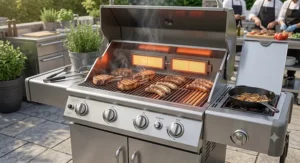
On paper, an infrared burner rated at 1,700 degrees sounds abstract until you actually stand in front of one. In practice, expect visible smoke and a loud sizzle within the first five seconds of contact, a sign that surface moisture is flashing off almost instantly rather than slowly cooking away like it would on a standard flame. The crust that forms in that first 60-90 seconds is noticeably darker and more textured than anything a standard burner produces in the same window, because the Maillard reaction driving that browning accelerates dramatically once surface temperatures climb past the 280-330 degree range. What most first-time infrared owners don’t expect is how fast things go from perfectly seared to burnt, since the margin between a great crust and a charred one shrinks considerably at these temperatures. Give a new infrared grill a few cook sessions before trusting your instincts on timing, since the muscle memory built on a standard grill genuinely doesn’t transfer.
Common Mistakes When Buying a 4 Burner Infrared Propane Grill
The single most common mistake is buying based on total BTU count alone, since a grill with a huge main-burner BTU rating but no true infrared zone will never sear like one that has a smaller but dedicated infrared burner. A second frequent error is ignoring grate or grid material, since thin steel grates lose heat the moment food touches them, undercutting even a genuinely hot burner underneath. Buyers also commonly underestimate propane consumption on high-output infrared models, then get caught off guard by how quickly a 20-pound tank empties during a long searing session. Finally, many first-time buyers skip checking whether a model is cart-mounted or built-in until after purchase, only to discover their intended outdoor kitchen layout doesn’t accommodate a cart, or their patio can’t fit a built-in unit’s required cabinetry.
Long-Term Cost & Maintenance
Total cost of ownership on any of these grills extends well past the sticker price. Propane consumption scales with BTU output, so the 60,000-72,000 BTU Monument models will burn through a standard 20-pound tank faster during heavy use than the lower-output Char-Broil, though the difference amounts to roughly one extra tank refill per month for a family that grills several times weekly. Replacement parts matter too: porcelain-coated cast-iron grates need periodic reseasoning to avoid rust, while stainless grids on premium models like the Broil King Regal S 490 Pro IR hold up longer but cost more to replace if damaged. Warranty length is a genuinely useful proxy for long-term cost, since the 8-year coverage on the Monument lineup suggests fewer out-of-pocket repairs compared to shorter 1-2 year warranties common on budget cart grills. Factoring in propane, occasional grate replacement, and annual cleaning supplies, expect $75-$150 per year in ongoing costs regardless of which tier you choose, with premium models trending toward the lower end thanks to more durable components.
Grill Safety & Regulations Compliance Guide
Infrared sear zones add real value, but the added heat intensity raises the stakes on basic propane safety. Always ignite any propane grill, infrared burner included, with the lid open, since gas can accumulate under a closed hood and ignite in a small explosion when the burner finally lights. Keep the grill at least 10 feet from your home or any structure, check hoses regularly for cracking or brittleness, and never store a spare propane cylinder underneath or near the grill itself. Because infrared burners run hotter than standard flames, grease flare-ups near the sear zone escalate faster, so keeping a clean grease tray isn’t optional maintenance, it’s a genuine safety measure. For a full rundown of best practices, the National Fire Protection Association’s grilling safety guidance is worth reviewing before your first cookout with a new unit, especially if you’re moving up to a significantly hotter sear burner than you’re used to.
Frequently Asked Questions
❓ Is a 4 burner gas grill with infrared better than a regular 4 burner grill?
❓ Can I use the infrared burner for anything besides searing steak?
❓ Do infrared burners use more propane than standard burners?
❓ How long do infrared burners typically last?
❓ Is a 4 burner infrared propane grill safe for beginners?
Conclusion
A 4 burner gas grill with infrared isn’t just another spec on a shopping list, it’s the difference between grilling food and actually searing it the way a steakhouse does. Whether you land on the budget-friendly Char-Broil Performance TRU-Infrared 4-Burner or splurge on the dual-zone Napoleon Prestige 500, the core lesson holds across every price tier: match the sear burner’s real output and your grate material to how often you actually cook steak, not to the biggest number printed on the box. The Monument Grills 24367 remains the strongest all-around value in this lineup, while the Broil King Regal S 490 Pro IR sets the bar for anyone chasing genuine steakhouse crust at home without compromise.
✨ Find Your Perfect Sear Zone Today
🔍 Check current prices and availability on any of these seven infrared grills, and start planning your next steak night around a crust that actually earns the name.
Recommended for You
- 7 Best 4 Burner Grill Under $500 Picks for 2026
- 4 Burner Gas Grill for Entertaining: 7 Top 2026 Picks
- 4 Burner Gas Grill: 7 Best Picks Tested for 2026
Disclaimer: This article contains affiliate links. As an Amazon Associate, I earn from qualifying purchases. If you purchase products through these links, we may earn a small commission at no additional cost to you.
✨ Found this helpful? Share it with your friends! 💬🤗
