
In This Article
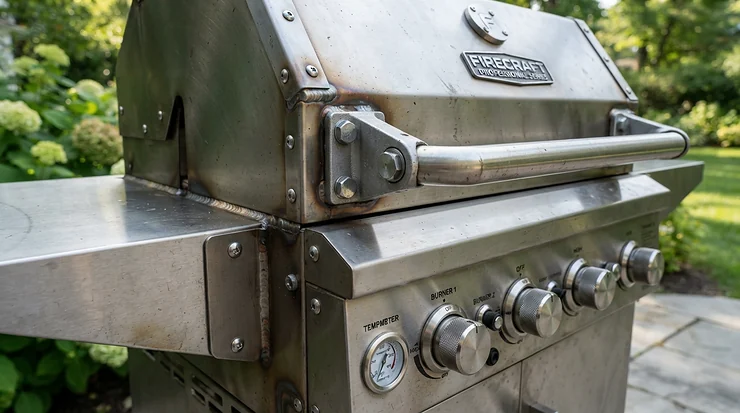
A premium pellet grill for serious barbecue enthusiasts is a wood-pellet cooker built with heavy-gauge or stainless steel, insulated or double-wall construction, and a precise PID temperature control or equivalent controller. It holds low-and-slow temperatures for 12-plus hours, adds real smoke flavor, and is engineered to last a decade or more.
Now the honest part. The $500 pellet grill in your cart is a perfectly good teacher. Then you smoke your fifth brisket, watch the temperature wander 40 degrees while the wind picks up, and start eyeing the heavier machines. The idea is old: pellet grills trace back to the 1980s, when Joe Traeger’s patented design fed wood pellets to a fire with an electric auger. After the patent expired in 2007, an entire industry piled in.
What separates a premium pellet grill for serious barbecue enthusiasts from the pack isn’t a logo or a Wi-Fi badge. It’s steel thickness, insulation, controller logic, and whether the thing will still be running when your kids are hosting the cookout.
This guide covers seven real grills, plus the six factors that matter most: high end pellet smoker construction, stainless steel build quality, premium pellet grill insulation, the pellet smoker insulation blanket question, PID temperature control, and what makes a competition style pellet grill different. Everything here comes from published specs and aggregated reviewer and owner feedback. No hands-on testing is claimed, and prices are ranges that change often.
Quick Comparison: 7 Top Picks at a Glance
| Grill | Standout | Price Tier | Best For |
|---|---|---|---|
| recteq RT-1250 | 1,250 sq in, 40 lb hopper | Roughly $1,500-$1,800 (owner-reported) | High-volume overnight cooks |
| Yoder YS640S | 10-gauge hopper, USA-built | Premium, below the Timberline tier | Competition-style purists |
| Traeger Timberline XL | Double-wall, induction plate | Well above $3,000 | Connected outdoor kitchens |
| Traeger Ironwood XL | Dual-wall insulation | Around $2,000 | Cold-climate value seekers |
| Memphis Pro ITC3 | Sealed 304 double-wall | Around $5,000 | Stainless-or-bust luxury |
| Camp Chef Woodwind Pro | Smoke Box | Premium mid-range | Flavor chasers |
| Weber Searwood XL 600 | Full-surface sear | Mid-to-premium | Smoke-and-sear versatility |
Read this table by priority. The recteq RT-1250 wins on capacity per dollar, the Yoder YS640S on raw steel, and the Memphis Pro ITC3 on stainless finish, though you pay roughly triple the RT-1250 for far less cooking area. If winters are your enemy, the Traeger Ironwood XL gets you double-wall insulation without Timberline-level pricing.
💬 Just one click — help others make better buying decisions too!😊
Top 7 Premium Pellet Grills for Serious Barbecue Enthusiasts: Expert Analysis
Each pick below is judged on what its specs mean in practice, what reviewers keep saying, and who should spend the money. Ratings aren’t quoted because they can’t be verified across retailers.
1. recteq RT-1250 — 40 lb hopper and an all-stainless interior
The headline is the 40 lb hopper. recteq rates it for up to roughly 40 hours of non-stop cooking on a full load, so a brisket, an overnight pork butt and a rib session fit before you reach for the pellet bag.
The RT-1250 offers 1,250 square inches thanks to a sliding upper rack, a 180-700°F range, and a 304 stainless firepot, grates and drip pan paired with a cast-iron heat deflector. That 304 firepot sits at the hottest, most corrosive spot, which is the right place to spend on steel. A 6-year warranty backs it up. The 700°F ceiling also means real searing and pizza-oven temperatures.
On paper, this is the volume play: competition-sized capacity below boutique-rig pricing. One caveat is that the exterior is 430 stainless, which resists corrosion less than 304. Reviewers who compare it with the Pitts & Spitts Maverick rate the Maverick’s build slightly higher at a notably higher price.
Owner threads on enthusiast forums praise the stainless-heavy feel. Recurring complaints involve flaky app connectivity and occasional lid “pops” from smoke buildup, so keep vents clean.
Pros:
- ✅ Enormous 40 lb hopper for marathon cooks
- ✅ 304 stainless firepot, grates and drip pan
- ✅ 700°F top end for real searing
Cons:
- ❌ App connectivity gets mixed owner feedback
- ❌ Exterior is 430, not 304, stainless
Owner-reported pricing has swung between roughly $1,500 and $1,800, and the Amazon listing showed as unavailable at the time of research, so check current price. Value verdict: the best cost-per-square-inch of the premium group.

2. Yoder YS640S — competition-bred steel you can feel
Weight is the first thing owners mention, and it’s no accident. The YS640S pairs a 10-gauge steel hopper with a 14-gauge cart and weighs about 335 pounds, roughly 46 more than the bigger Timberline that Smoked BBQ Source compared it against.
It offers 1,070 square inches across two 16″x20″ grates and a slide-out shelf, a 150-600°F range, and Yoder’s proprietary Adaptive Control System in place of a conventional PID. Reviewers say it adjusts for door openings, cold meat and even pellet type. The Variable Displacement Damper pushes heat straight up so you can sear with an optional grate. Mass means stability, which is why this grill suits cold, windy cooks.
The warranty is a 10-year burn-through guarantee, with 3 years on electronics and 1 on the igniter. The grill is made in the USA.
Owner feedback is warm on build and customer service. The recurring complaint is rust and paint flaking, since this is painted carbon steel. One owner reported only a speck after eight months, another reported significant rust within seven.
Pros:
- ✅ Heavy-gauge steel and a 10-year burn-through warranty
- ✅ Direct-sear capability via the damper
- ✅ USA-built with strong support reputation
Cons:
- ❌ Painted steel needs touch-ups over time
- ❌ No pellet-dump feature
Pricing sits meaningfully below the Timberline tier (check current price). Value verdict: arguably the strongest pure-smoker buy here.
3. Traeger Timberline XL — induction sear plate and double-wall chamber
The induction side plate is the party trick. It lets you sear a steak or warm sauce without leaving the grill, which no other pick here offers.
The Timberline XL stretches the lineup to 1,320 square inches, versus 880 on the standard model, with a double-wall stainless interior, a D2 PID controller held to about ±5°F, WiFIRE, Alexa support and a 165-500°F range. The standard model’s 22 lb hopper has a cleanout hatch for swapping wet or old pellets. Traeger says its TRU Convection speeds cooking by up to 20%. Warranty runs 10 years, with shorter coverage on controllers and probes.
Here’s the analysis. The double-wall construction is real premium pellet grill insulation, and it helps most in winter. The 500°F ceiling limits true searing, which is why the induction plate exists. It’s also manufactured in China, which Smoked BBQ Source lists as a drawback at this price.
Reviewers describe it as the tech-rich option. The earlier Timberline 850 drew complaints about inaccurate thermometers that couldn’t be calibrated, though the reviewer says later revisions improved performance. Owner comments are mixed on long-term build.
Pros:
- ✅ Double-wall stainless interior and insulation
- ✅ Induction plate for searing and sauces
- ✅ Mature app, Alexa and pellet alerts
Cons:
- ❌ Expensive, well above $3,000
- ❌ 500°F maximum and China-made
Value verdict: justified if you want a connected outdoor kitchen, harder to defend on pure smoking value.
4. Traeger Ironwood XL — dual-wall insulation at a gentler price
The Ironwood XL takes Timberline-style tech and sells it for nearly half the money, according to Field & Stream’s review.
It provides 924 square inches, a 22 lb hopper with a pellet sensor, a fully insulated dual-wall chamber and hood, WiFIRE, Smart Combustion, Super Smoke mode, and the EZ-Clean Grease & Ash Keg. The FreeFlow firepot is designed to keep smoke moving. Dual-wall construction reduces temperature swings when the mercury drops, so it earns its keep in colder regions.
Field & Stream positions it as the price-and-performance sweet spot, and that matches the spec reading. It gives up the induction plate and some capacity, but keeps the insulation that matters most.
Independent long-term owner data is thinner here than for older models, so treat reliability claims cautiously. Traeger’s mass-market lineup is made in China and has drawn some quality-control complaints in the past.
Pros:
- ✅ Fully insulated dual-wall body
- ✅ Smart Combustion keeps temps steady
- ✅ EZ-Clean keg simplifies grease and ash
Cons:
- ❌ Less sear headroom than 600-700°F rivals
- ❌ Smaller than the 1,250 sq in giants
Pricing sits around $2,000 for the XL per the reviewer, but check current price. Value verdict: the sensible entry point for insulated, connected cooking.
5. Memphis Pro ITC3 — sealed double-wall 304 stainless
Material is the whole story here. The Memphis Pro ITC3 is built from heavy-duty 304 stainless with sealed, double-wall construction, and its patented IntelliBurn secondary combustion aims for a cleaner, more efficient burn.
It has 568 square inches (432 primary plus 136 secondary), an 18 lb dual-bin hopper for mixing pellet flavors, a 180-650°F range, a variable-speed DC motor and blower, a 7″ touchscreen, interior lights, an oven-grade gasket and a preprogrammed cleaning routine. The ITC3 controller adds Wi-Fi monitoring, and the grill offers indirect and direct-flame modes.
The analysis is blunt. You’re paying for stainless steel build quality, seals and engineering, not capacity. At roughly the RT-1250‘s size times two in price, the cooking area is less than half. BBQGuys names Memphis its pick for luxury pellet grills, and Steven Raichlen has called the brand “the Tesla of pellet grills.”
Real-world owner data is sparse in the sources reviewed, so conclusions here lean on specs and expert placement.
Pros:
- ✅ Sealed double-wall 304 stainless throughout
- ✅ Dual-bin hopper mixes pellet flavors
- ✅ Secondary combustion for cleaner burn
Cons:
- ❌ Roughly $5,000 for 568 sq in
- ❌ Smaller 18 lb hopper
Freestanding listings cluster around $5,000 and built-in versions slightly lower, so check current price. Value verdict: a luxury purchase for stainless purists and outdoor-kitchen builders.
6. Camp Chef Woodwind Pro — Smoke Box for real-wood flavor
Here’s the pellet grill’s flavor fix. Smoked BBQ Source calls the Woodwind Pro its mid-range pick, praising the Smoke Box, which lets you burn lump charcoal or wood chunks for a more authentic smoke than pellets alone deliver.
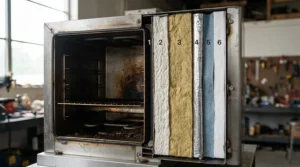
It’s sold in 24-inch and 36-inch sizes, works with Sidekick accessories, and has a fire-resistant fiberglass insulated blanket made for each size. Another 2026 buying guide concludes that the premium price is justified if you’re serious about smoke flavor or plan to buy Sidekick accessories.
The analysis: this is the pellet smoker for people who miss the bark and bite of a stick burner. The pellet smoker insulation blanket sold as an official accessory is a smart nod to winter cooking. Treat the accessory ecosystem as part of the true cost.
Pros:
- ✅ Smoke Box adds real wood-chunk flavor
- ✅ Official insulation blanket in both sizes
- ✅ Sidekick accessory compatibility
Cons:
- ❌ Premium pricing before accessories
- ❌ Blanket and Sidekick cost extra
Check current price. Value verdict: best for flavor chasers who’ll use the box.
7. Weber Searwood XL 600 — sears across the entire cooking surface
The Searwood line is the answer to pellet grills’ oldest complaint. Smoked BBQ Source’s best-overall pick (the 600) can grill over the entire cooking surface and produce proper sear marks, unlike most pellet grills.
It also offers an adjustable smoke setting, a feature usually found on pricier grills. The XL version, stocked by retailers like BBQGuys, extends the idea for bigger cooks. Detailed XL specs weren’t verified in the sources reviewed, so check Weber’s sheet before buying.
Here’s the take. If your Saturday is ribs at noon and steaks at six, this removes the second grill. It isn’t marketed as a double-wall, ultra-heavy-gauge machine, so serious cold-weather smokers may still want a blanket.
Pros:
- ✅ True full-surface searing
- ✅ Adjustable smoke setting
- ✅ Well regarded by reviewers
Cons:
- ❌ Insulation isn’t a headline feature
- ❌ XL specs need checking before purchase
Check current price. Value verdict: a smart pick for versatility over pure low-and-slow mass.
Construction, Insulation and Control Compared
| Grill | Build and Material | Insulation Approach | Control | Best For |
|---|---|---|---|---|
| recteq RT-1250 | Stainless chamber, 304 firepot | Not marketed as double-wall | PID, app | Big overnight cooks |
| Yoder YS640S | 10/14-gauge painted steel | Not insulated; blanket optional | Adaptive Control System | Heavy-duty smoking |
| Traeger Timberline XL | Double-wall stainless | Fully insulated | D2 PID, WiFIRE | Tech-heavy kitchens |
| Traeger Ironwood XL | Dual-wall chamber and hood | Insulated | Smart Combustion | Winter value |
| Memphis Pro ITC3 | Sealed 304 double-wall | Sealed double-wall | ITC3 Wi-Fi | Luxury builds |
| Camp Chef Woodwind Pro | Steel body, Smoke Box | Optional fiberglass blanket | Wi-Fi models | Flavor seekers |
| Weber Searwood XL 600 | Steel body, sear design | Not marketed as double-wall | Adjustable smoke setting | Smoke plus sear |
Look at the insulation column. Only the Timberline XL, Ironwood XL and Memphis Pro ITC3 bake it into the cooker, while the Yoder YS640S and Woodwind Pro lean on mass or add-on blankets. Controller strategy also splits the field: the Yoder YS640S uses a proprietary system rather than standard PID, and Smoked BBQ Source’s reviewer rates it highly regardless.
Practical Usage Guide: Your First 30 Days With a Premium Pellet Grill
A premium pellet grill rewards the first month of good habits, and punishes bad ones quietly.
Week one: burn-in and baseline. Run the manufacturer’s burn-in, then do a low-risk cook like chicken thighs. Use a separate food probe and oven-safe air thermometer to check the dome reading against the grate. Dome gauges can lie.
Week two: learn the controller. Notice how long the grill needs to recover after opening the lid. On PID-style systems, it learns your conditions gradually, so resist fiddling.
Week three: cleaning rhythm. Vacuum ash from the firepot every few cooks and scrape grease paths. Forum owners trace several igniter failures and grease fires to skipped cleanings between fatty cooks.
Week four: pellet discipline. Store pellets airtight and dry. Humid climates swell them, and swollen pellets jam augers.
Common first-month mistakes: peeking constantly, overloading the grates so airflow stalls, and smoking cold meat straight from the fridge without checking temperatures. If you smoke in winter, preheat longer and consider a blanket, as covered below.
Real-World Scenarios: Which Premium Pellet Grill Fits Your Cook?
Scenario one: the weekend competitor. You smoke two briskets a month, enter local cook-offs, and want hardware that won’t flinch. The Yoder YS640S or recteq RT-1250 fit. The YS640S wins on steel mass and sear capability, while the RT-1250 wins on hopper size for overnight cooks. Budget: roughly $1,500 to premium-tier. Frequency: monthly or more.
Scenario two: the cold-climate winter smoker. You live where January means single digits and still want ribs. The Traeger Ironwood XL gives built-in dual-wall insulation near $2,000, and the Timberline XL adds capacity and an induction plate for more money. One retailer’s cold-weather guide estimates preheat times for uninsulated grills at roughly 15-25 minutes near 0-10°F versus about 4-6 minutes with a blanket or double-wall body, a useful illustration of the stakes.
Scenario three: the outdoor-kitchen builder. Your patio is stainless and the grill must match. The Memphis Pro ITC3, particularly the built-in version, belongs here. Expect a dedicated electrical circuit and a bigger budget, around $4,500-$5,000.
Scenario four: the flavor chaser. You love pellets’ convenience but miss real wood. The Camp Chef Woodwind Pro and its Smoke Box are the fit.
✨ Don’t Miss These Exclusive Deals!
🔍 Take your backyard barbecue to the next level with these carefully selected grills. Click on any highlighted item to check current pricing and availability. These machines will help you create authentic competition-worthy barbecue your family will love!
How to Choose a Premium Pellet Grill for Serious Barbecue Enthusiasts
Follow these steps in order. Each one narrows the field.
- Set your real budget. Premium means roughly $1,500 to $5,000-plus. Decide whether you’re paying for capacity, steel, insulation or tech.
- Match capacity to your biggest cook. If you smoke a packer brisket plus ribs, 1,000-plus square inches matters. The recteq RT-1250 and Traeger Timberline XL lead here.
- Check steel gauge and grade. Thicker steel holds heat. 304 stainless outlasts 430 in corrosion resistance.
- Judge insulation against your climate. Cold or windy? Prioritize double-wall like the Traeger Ironwood XL or plan on a blanket.
- Evaluate the controller. PID temperature control or a proven proprietary system keeps swings small.
- Read the warranty carefully. Burn-through coverage differs from electronics coverage. The Yoder YS640S and recteq RT-1250 both advertise long terms.
- Verify availability and support. Prefer brands with responsive US support.
High End Pellet Smoker Construction: Gauge, Welds and Weight
High end pellet smoker construction comes down to three things you can verify: steel thickness, how it’s joined, and total weight. Thick steel stores heat like a cast-iron skillet, smoothing out the swings that gusts and lid-openings cause.
The Yoder YS640S is the textbook example, with a 10-gauge hopper and 14-gauge cart. Owners repeatedly describe the heft as obvious on first touch. At the other extreme, thinner sheet-metal grills heat quickly but lose heat just as fast.
Weight isn’t a perfect proxy, though. The Memphis Pro ITC3 achieves its performance through sealed double-wall design rather than pure mass. Look for solid welds, stout hinges, quality casters, and gaskets that compress evenly.
One practical test: shut the lid and feel for resistance. A well-sealed door should push back slightly. For higher-end pellet smoker construction, ask how the firepot, hopper and chamber are attached and whether the manufacturer will replace burned-through components for a decade, as Yoder does.
Stainless Steel Build Quality: 304, 430 and What the Label Won’t Say
“Stainless” on a spec sheet can mean very different things. Stainless steel build quality hinges on grade, thickness and where the steel is used.
Grade 304 contains more nickel and resists corrosion better than 430, which is magnetic and cheaper. BBQGuys’ comparison table shows the recteq RT-1250 using 430 on the exterior, while the Memphis Pro ITC3 advertises 304 stainless, which explains part of the price gap. recteq counters by using 304 on the firepot, grates and drip pan, the parts that face fire and grease.
Smart buyers ask three questions. First, which grade is used where? Second, how thick is it? Third, are the welds and finishing clean? A thin 304 skin can dent, and a thick 430 panel can rust at the seams in coastal air.
For painted competitors like the Yoder YS640S, the tradeoff runs the other way: thicker steel, but paint that needs maintenance. Stainless steel build quality is valuable, but it isn’t the only variable that matters.
Premium Pellet Grill Insulation: Why Double-Wall Changes the Game
Premium pellet grill insulation is about reducing how hard the controller has to work. A single-wall body leaks heat to the wind, forcing the auger and fan to compensate, and that wastes pellets and stretches swings.
Double-wall designs trap a layer of insulating air or material between the inner chamber and the outer shell. The Traeger Timberline XL and Ironwood XL both advertise this, and the Memphis Pro ITC3 goes further with sealed double-wall construction. Smoked BBQ Source’s reviewer lists the Timberline’s fully insulated dual-wall design among its standout virtues.
Cold-weather estimates from a retailer’s guide suggest insulation can cut preheat from about 5-10 minutes to 1-2 minutes near 40-50°F, and the gap widens as temperatures drop.
Insulation also helps after you open the lid, since stored heat in the walls speeds recovery. If you cook year-round in a cold or windy place, premium pellet grill insulation should rank above app features on your checklist.
Pellet Smoker Insulation Blanket: When a Bolt-On Fix Makes Sense
Not every great grill is double-walled. That’s where a pellet smoker insulation blanket enters. Camp Chef sells fire-resistant fiberglass blankets for 24-inch and 36-inch Woodwind Pro models, and a Smoked BBQ Source commenter notes that Yoder owners can buy a blanket for the YS640S.
A blanket is the fastest winter upgrade. One retailer’s guide calls it the quickest way to improve cold-weather performance on many pellet grills.
Use it carefully, though:
- Let the grill cool before removing the blanket.
- Keep fabric away from grease paths and hot vents.
- Use only blankets made for your model.
A blanket can’t match a sealed double-wall design in daily use, since you must fit and remove it. But for owners of heavy single-wall cookers, a pellet smoker insulation blanket is a cost-effective compromise.
PID Temperature Control: The Brain Behind the Brisket
PID stands for proportional, integral, derivative. In plain English, the controller compares your target to the actual temperature and adjusts based on how far off you are, how long you’ve been off, and how fast the gap is changing. Wikipedia’s overview notes the derivative term helps reduce overshoot.
On a pellet grill, it adjusts auger timing and fan behavior rather than simply cycling on and off. The pellet grill entry explains that PID controllers learn how much fuel is needed under current conditions and keep refining the cycle for hours. In practice, PID temperature control means fewer spikes after lid-openings and less wasted fuel.
Not every top grill uses textbook PID. Smoked BBQ Source says the Yoder YS640S relies on its proprietary Adaptive Control System, yet the reviewer rates it among the best controllers around. The Traeger Timberline XL uses a D2 PID rated near ±5°F.
Judge controllers by results: recovery speed, wind resistance and consistency across long cooks. PID temperature control is a strong sign, not the only one.
Competition Style Pellet Grill vs. Backyard Pellet Grill
A competition style pellet grill prioritizes repeatability over frills. Think heavy steel, large hoppers, precise controllers and the ability to cook the same way in a ballpark parking lot as in your yard.
The Yoder YS640S is the clearest example, since the brand focuses on competition-grade builds and sells a competition cart accessory. The recteq RT-1250 brings capacity for volume. The Pitts & Spitts Maverick, mentioned by reviewers as a step up in steel gauge, sits at the extreme end at a higher price.
Backyard-oriented models, by contrast, emphasize convenience: apps, recipe libraries and compact footprints. The Traeger Timberline XL leans that way, with a polished app and prep space.
So which is right? A competition style pellet grill rewards you if you cook large volumes and care about control. If you smoke occasionally and want convenience, backyard-focused tech may serve you better. Neither is wrong. They’re optimized for different Saturdays.
Long-Term Cost and Premium Pellet Grills vs. Traditional Alternatives
Total cost of ownership matters more than sticker price. A durable premium pellet grill can outlast several cheaper units, and pellets are the main running cost. Insulation and efficient controllers help limit waste. Budget for covers, probes, replacement igniters and, in cold regions, a blanket.
| Cooker Type | Flavor and Fuel | Effort and Stability | Best For |
|---|---|---|---|
| Premium pellet grill | Mild to moderate wood smoke; pellets | Low effort, steady with PID | Set-and-forget serious cooks |
| Offset stick burner | Strongest smoke; split logs | High effort, constant fire tending | Purists who love the process |
| Kamado ceramic | Charcoal plus wood chunks | Moderate effort, excellent insulation | Versatile slow-and-sear cooks |
| Gas grill | Minimal smoke; propane or natural gas | Low effort, high heat | Weeknight grilling |
Pellet grills sit in the middle: more convenient than an offset, more smoke-capable than gas. Reviewers note that pellet grills excel at low-and-slow while gas wins on high-heat searing, which is why units like the Weber Searwood XL 600 and Yoder YS640S emphasize searing features. If flavor intensity is your only metric, a stick burner still leads, but few people want to tend a fire at 3 a.m.
Food Safety and Smoker Safety Basics
Premium hardware doesn’t replace food-safety discipline. USDA’s Smoking Meat and Poultry guidance advises thawing meat completely before smoking, using a food thermometer to check internal temperature, and refrigerating leftovers within two hours of removing food from the smoker.
USDA also recommends cooking all poultry to a safe minimum internal temperature of 165°F. Use two thermometers: one for the food, and one oven-safe thermometer for the smoker’s air temperature. This is where accurate controllers and quality probes pay off.
Also check local fire rules. Many apartment complexes and municipalities restrict fuel-burning cookers on balconies, and some areas have seasonal burn restrictions. Keep a clear zone around the grill, clean grease paths regularly, and never leave a hot cooker unattended during high winds.

FAQ
❓ Is a premium pellet grill really worth it over a $500 model?
❓ Do I need a blanket if my grill isn't double-walled?
❓ Is PID temperature control always better than a standard controller?
❓ What stainless steel grade should I look for on a pellet grill?
❓ Can a competition style pellet grill really handle backyard use?
Conclusion
There’s no single winner among the premium pellet grills for serious barbecue enthusiasts, only the right grill for your cooking life.
For capacity per dollar, the recteq RT-1250 is hard to beat. For heavy steel and competition pedigree, the Yoder YS640S leads. If winters bite, the Traeger Ironwood XL delivers insulation at a friendlier price, while the Traeger Timberline XL adds capacity and an induction plate. The Memphis Pro ITC3 is the stainless-steel luxury pick, the Camp Chef Woodwind Pro chases real-wood flavor, and the Weber Searwood XL 600 solves the sear problem.
Before you buy, check stainless steel build quality, insulation and controller design, and remember that a pellet smoker insulation blanket can rescue a heavy single-wall cooker in winter. Verify current prices and availability, since both change often. Then pick the machine you’ll actually enjoy using every weekend.
✨ Don’t Miss These Exclusive Deals!
🔍 Take your backyard barbecue to the next level with these carefully selected grills. Click on any highlighted item to check current pricing and availability. These machines will help you create authentic competition-worthy barbecue your family will love!
Recommended for You
- Mid Range Pellet Grill For Backyard Cooks: 7 Best Picks 2026
- Entry Level Pellet Grill: 7 Best Picks That Won’t Disappoint (2026)
- Charcoal Kettle Grill Review For Beginners: 7 Proven Picks (2026)
Disclaimer: This article contains affiliate links. As an Amazon Associate, I earn from qualifying purchases. If you purchase products through these links, we may earn a small commission at no additional cost to you.
✨ Found this helpful? Share it with your friends! 💬🤗
