
In This Article
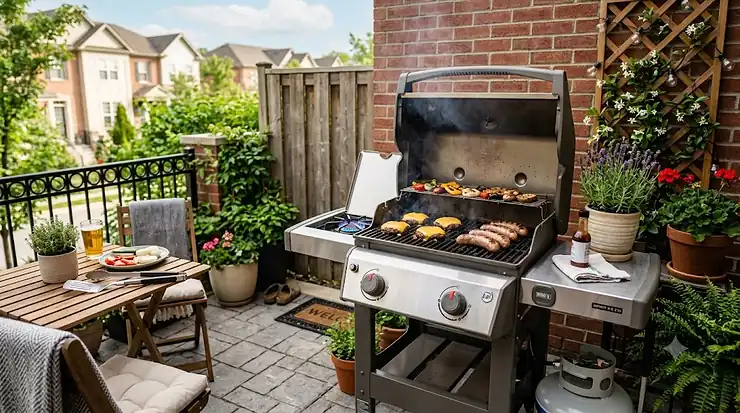
A 2 burner gas grill for small patio use is a compact, dual-burner propane grill — typically 270 to 470 square inches of cooking surface — designed to fit tight outdoor spaces like apartment balconies, condo patios, and townhome decks while still offering two independently controlled heat zones. That’s the short version. The longer version is that “small patio” covers a lot of ground: a 6-foot-wide concrete slab behind a townhouse is a different challenge than a 30-inch-deep apartment balcony three floors up, and the right grill for one isn’t necessarily right for the other.
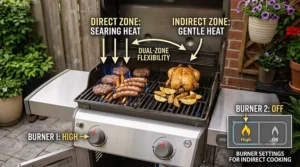
Two burners hit a sweet spot that a lot of single-burner tabletop grills can’t touch: you get a hot zone and a cooler zone at the same time, which means you can actually sear a chicken thigh on one side while keeping rice or veggies warm on the other, instead of babysitting one flame and hoping for the best. That zone control is also the entire trick to cooking well on a small footprint — you’re compensating for limited grates with smarter heat management.
This guide rounds up seven 2-burner gas grills that are currently sold on Amazon, ranging from a $150 tabletop unit to a $500+ cabinet-style Weber, so you can match the grill to your actual space — not an idealized backyard you don’t have. We’ll also cover something most buying guides skip entirely: whether you’re even legally allowed to use a gas grill on your specific balcony, because for apartment dwellers, that question matters more than BTUs.
Quick Comparison Table
| Grill | Best For | Total Cooking Area | BTUs | Approx. Price* |
|---|---|---|---|---|
| Weber Spirit II E-210 | Best overall build quality | 450 sq in (360 primary + 90 warming) | 26,500 | $400–$550 |
| Char-Broil Performance Series 2-Burner | Best value with storage | ~400–410 sq in | 24,000 | $200–$350 |
| Cuisinart CGG-306 | Tightest balconies / tabletop | 275 sq in | 20,000 | $150–$230 |
| Monument Grills 14633 (Mesa 200) | Budget full-cart alternative | 473 sq in (326 primary + 147 warming) | 24,000 | $250–$350 |
| Dyna-Glo Premier 2-Burner (DGP321SNP-D) | Heavy-duty cabinet build | 445 sq in | 24,000 | $180–$280 |
| Pit Boss PB200P | Lightest / most portable | 274–276 sq in | 20,000 | $130–$200 |
| Nexgrill Deluxe 2-Burner (720-0864R) | Budget dual-fuel cart | 401 sq in | 28,000 | $150–$220 |
*Prices fluctuate constantly on Amazon — these are typical ranges based on recent listings, not live prices. Always check the current listing before buying.
Looking at the spread, the real split isn’t really “good vs. bad” — it’s cart-style vs. tabletop. The Weber, Char-Broil, Monument, Dyna-Glo, and Nexgrill are all rolling carts with their own legs and storage, built for a patio that has floor space to spare. The Cuisinart and Pit Boss are tabletop units meant to sit on a railing-mounted shelf or a small table, which matters enormously if your “patio” is actually a narrow balcony. BTU output matters less than people assume once you’re in the 20,000–28,000 range — at that size, heat retention from the grates and lid seal quality affects your sear more than raw burner output does.
💬 Just one click — help others make better buying decisions too! 😊
💬 Found a model you like below?
A quick click helps you compare current pricing before you commit.
Top 7 2-Burner Gas Grills for Small Patios: Expert Analysis
1. Weber Spirit II E-210 — Best Overall Build Quality
The Weber Spirit II E-210 is the grill most small-patio buyers end up comparing everything else against, and there’s a reason for that beyond brand loyalty. Weber explicitly markets this model as sized to fit on a small patio or balcony, and at 450 total square inches (360 sq in primary plus a 90 sq in warming rack) and 26,500 BTU across two stainless steel burners, it threads the needle between “actually compact” and “still cooks dinner for four.”
What the spec sheet doesn’t fully convey: the porcelain-enameled cast-iron grates retain heat noticeably longer between burger flips than the steel grates on cheaper carts, which means less temperature swing if you’re cooking in batches on a small surface. The cast-aluminum cookbox won’t rust through the way painted steel carts eventually do, which matters if your patio gets direct rain exposure. The trade-off is the Snap-Jet ignition system — newer owner reviews note it occasionally needs a couple of tries to catch, a step down from the older battery-spark version some long-time Weber owners remember fondly.
This is the pick for someone who wants one grill they won’t be replacing in five years and is willing to pay a real premium for Weber’s 10-year warranty and parts ecosystem.
Pros: Backed by a 10-year limited warranty; porcelain-enameled cast-iron grates hold heat well; folds down compactly with side table down.
Cons: Among the pricier options here; some buyers report inconsistent first-light on the newer ignition.
Price range: $400–$550, depending on sales — Weber tightly controls pricing across retailers, so don’t expect deep discounts outside major sale events.
2. Char-Broil Performance Series 2-Burner — Best Value With Built-In Storage
The Char-Broil Performance Series 2-Burner (sold under several FlavorMax-branded model numbers) is the grill to look at if cabinet storage matters as much as cooking space. With roughly 300–310 square inches of primary cooking area plus an 85–100 sq in warming rack, and a 24,000 BTU FlavorMax burner system designed to even out hot spots and cut down flare-ups, it covers the same use case as the Weber for noticeably less money.
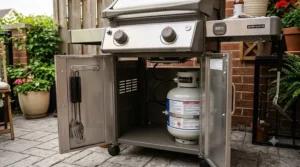
The standout feature for small-patio living is the enclosed cabinet base — your propane tank, tools, and a grill brush all live behind a closed door instead of cluttering an open cart frame, which is a real advantage when “patio” doubles as a walkway. Two locking caster wheels make it easy to shift a few inches without a struggle. The trade-off shows up in material thickness: owners and testers consistently flag thinner steel and a noticeably cooler edge-to-center temperature spread compared to pricier grills, so plan to rotate food rather than trusting every inch of the grate equally.
Pros: Enclosed storage cabinet keeps the propane tank and tools out of sight; foldable side shelf saves space when not cooking; electronic ignition is reliable.
Cons: Thinner-gauge steel than Weber or Dyna-Glo; some heat unevenness at the grate edges.
Price range: $200–$350 depending on the specific model and finish (stainless vs. black).
3. Cuisinart CGG-306 — Best for the Tightest Balconies
If your outdoor space is genuinely a balcony rail and a folding chair, the Cuisinart CGG-306 Chef’s Style Tabletop Grill solves a different problem than the cart-style grills above. At 275 square inches of cooking surface and 20,000 BTU from two independently controlled 10,000 BTU burners, it’s a full tabletop unit — no cart, no wheels, no floor footprint — that sits on any sturdy surface and weighs around 22–24 pounds.
This is the only grill on this list designed from the ground up for portability rather than as a compact version of a full-size grill, and that distinction matters: it sets up in under 10 minutes with no tools, folds flat with a locking lid, and the carry handle makes it genuinely easy to move in and out for storage between uses — a real consideration if your HOA or lease requires you to stow grills when not cooking. Independent testers note the heat distribution runs hottest directly above the burners and along the back edge, with cooler zones at the grate corners and the gap between burners, so use that knowledge to plan your layout rather than assuming even heat across the whole surface.
Pros: No cart or wheels needed — fits on a railing shelf or small table; fast, tool-free setup; built-in lid thermometer.
Cons: Smaller cooking surface than the cart-style options; uneven heat at the grate edges per independent testing.
Price range: $150–$230.
4. Monument Grills 14633 (Mesa 200) — Best Budget Full-Cart Alternative
The Monument Grills 14633, also sold as the Mesa 200, positions itself directly against pricier Weber and Napoleon models at a noticeably lower price point. It delivers 473 total square inches (326 sq in primary plus a 147 sq in warming rack) from two 304 stainless steel burners putting out 24,000 BTU — genuinely competitive cooking space for the category.
The feature that sets it apart is the Clearview lid window with a built-in thermometer, which lets you check food without lifting the lid and dumping heat — useful on a small grill where every heat-retention advantage counts toward consistent results. LED-lit control knobs are a nice touch for evening cookouts. The recurring complaint across owner reviews is assembly: instructions are frequently described as unclear or poorly illustrated relative to the grill’s quality, though Monument does provide assembly videos that several buyers mention using to get unstuck. One practical design quirk worth knowing before you buy: the folding side shelves can pool roughly half an inch of rainwater when left down, which then dumps out when you raise them — something to plan around if the grill lives outside uncovered.
Pros: Glass-window lid lets you monitor food without losing heat; large total cooking area for the price tier; LED knob lighting.
Cons: Assembly instructions are widely reported as confusing; side shelves can collect rainwater when folded down.
Price range: Typically $250–$350, positioned as a budget alternative to premium cart grills.
5. Dyna-Glo Premier 2-Burner (DGP321SNP-D) — Best Heavy-Duty Build for the Price
The Dyna-Glo Premier 2-Burner Propane Gas Grill uses Dyna-Glo’s EquiHeat burner technology across two stainless steel tube burners for 24,000 total BTU, spread over 445 square inches of total cooking space. Dyna-Glo specifically markets its 2-burner line as suited to apartment and condo patios where a 4- or 5-burner grill simply won’t fit.
The practical advantage here is mobility and storage logistics: four casters (two of which lock) make repositioning easy on a tight patio, and folding side shelves cut the footprint down further when the grill isn’t in use. Cast-iron cooking grates give you the heat retention of the pricier Weber without the matching price tag, though the overall steel gauge throughout the cart is noticeably lighter-duty than Weber’s construction — appropriate for the price point, but worth knowing if you’re expecting Weber-level long-term durability.
Pros: Strong total cooking area for the price; folding shelves and locking casters for easy repositioning; cast-iron grates retain heat well.
Cons: Lighter-gauge cart construction than premium competitors; fewer accessory options than Weber’s ecosystem.
Price range: $180–$280.
6. Pit Boss PB200P Stainless Steel 2-Burner — Best Lightweight Portable
The Pit Boss PB200P (also listed as model 75275) is the second tabletop-style entry on this list, and it leans hard into portability: 274–276 square inches of cooking space from two independently controlled 10,000 BTU burners, a type-430 stainless steel body, folding legs, and a latching hood, all at roughly 22 pounds.
What distinguishes it from the Cuisinart is the latching, locked hood — genuinely useful if “small patio” sometimes means “trunk of the car for a tailgate,” since the grill stays sealed shut in transit. A built-in dome thermometer and push-button ignition round out the feature set. The honest trade-off shows up in flare-up control: several owner reviews describe near-constant flare-ups during the first few minutes of cooking and a narrower gap between low and high heat settings than larger grills offer, meaning more active monitoring is required rather than a “set it and walk away” experience.
Pros: Very lightweight and genuinely portable; latching hood for transport; independently controlled burners.
Cons: Flare-ups are more frequent than on cart-style grills; less precise control between low and high heat.
Price range: $130–$200, generally the most affordable cart-free option here.
7. Nexgrill Deluxe 2-Burner (720-0864R) — Best Budget Dual-Fuel Cart
The Nexgrill Deluxe 2-Burner Gas Grill covers 401 square inches with 28,000 BTU — the highest raw BTU figure on this list — from two stainless steel burners paired with angled flame tamers designed to cut down flare-ups while distributing heat across the surface.
The feature that separates it from the other budget options is dual-energy capability: the same unit converts between propane and natural gas, which is worth knowing if your patio has (or might eventually get) a natural gas line, since you avoid buying a second grill down the road. Foldable side shelves keep the footprint manageable when not cooking, and porcelain-coated cast-iron grates plus a porcelain upper warming rack add some flexibility for cooking multiple items at different intensities. As with most grills at this price tier, expect a lighter overall steel gauge than the pricier cart options — fine for the cooking performance, but don’t expect Weber-level longevity from the frame.
Pros: Converts between propane and natural gas; highest BTU output in this lineup; foldable shelves keep footprint compact.
Cons: Lighter-gauge construction typical of the price tier; fewer included accessories than competitors.
Price range: $150–$220.
Decision Framework: Match the Grill to Your Patio
Before scrolling back up to compare specs again, run through this quickly:
- If your space is a true balcony with railing and no floor room to spare → go tabletop (Cuisinart CGG-306 or Pit Boss PB200P). A cart grill will eat your only walking path.
- If you have a small but real floor footprint (a 4×4 ft slab or bigger) → go cart-style, and prioritize a closed cabinet (Char-Broil or Dyna-Glo) if you need somewhere to stash the tank and tools out of sight.
- If you’re cooking for 3–4 people regularly, not just 1–2 → prioritize total cooking area over price — the Weber and Monument both clear 450 sq in, noticeably more breathing room than the tabletop options.
- If you might move within a year or two and don’t want to re-buy a grill → the lightest, most portable options (Cuisinart, Pit Boss) travel well; cart grills are a bigger commitment to disassemble and re-assemble.
- If your patio could eventually get a natural gas hookup, or already has one → the Nexgrill’s dual-fuel conversion is the only grill here built for that switch without extra parts.
Safety and Regulations: What “Small Patio” Buyers Often Miss
This is the section most buying guides skip, and it matters more for this specific keyword than almost any other grill category, because a lot of small-patio shoppers are apartment or condo residents — and gas grills on balconies are restricted by fire code in most U.S. multifamily buildings, regardless of how compact the grill is.
Under NFPA 1 (the National Fire Protection Association’s model fire code), gas and charcoal grills generally cannot be used or stored on a balcony, under any overhang, or within 10 feet of a structure in buildings with more than two units — though common exceptions exist for one- and two-family dwellings, and for buildings where the balconies are protected by automatic sprinklers (see NFPA’s grill placement guidance). Many cities and states adopt this rule directly into local fire code, and HOAs or property managers can add stricter rules on top of it. If you live in a condo or apartment above the ground floor, check your lease and local fire code before buying — this is the single most common reason a perfectly good 2-burner grill ends up unused in a storage closet.
For grills used in compliant spaces (ground-floor patios, single-family homes, or sprinklered buildings that permit it), the U.S. Consumer Product Safety Commission recommends keeping the grill at least 10 feet from your home or any building, never operating it in a garage, breezeway, or under any surface that can catch fire, and checking gas hoses regularly for cracking or leaks using a soapy-water test rather than an open flame (see CPSC’s gas grill safety tips). Propane tanks should always be stored upright, outdoors, and away from the grill itself when not connected — never indoors, and never in a hot car trunk.
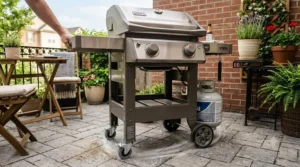
How to Choose a 2 Burner Gas Grill for Small Patio Use
- Measure your actual footprint first, including clearance. Most fire codes and manufacturer manuals call for at least a few feet of clearance from combustible walls and railings — measure before you fall in love with a cart-style grill that won’t physically fit.
- Decide tabletop vs. cart before comparing specs. This decision matters more than BTUs or even cooking area, since it determines whether the grill needs floor space at all.
- Prioritize cooking area per square foot of footprint, not raw BTUs. A grill with more square inches of grate per inch of cart width gives you more usable cooking room without a bigger physical footprint.
- Check whether you need enclosed storage. If your patio doubles as a walkway or entertaining space, a closed-cabinet design (Char-Broil, Dyna-Glo) keeps the tank and tools out of the way; if storage space exists elsewhere, an open-cart design saves money.
- Confirm fuel type fits your setup. Standard 20 lb propane tanks suit most cart grills; tabletop models often run on smaller 1 lb canisters, which are more portable but require more frequent swaps.
- Read the heat-distribution notes, not just the BTU number. As this guide covers above, several models here run noticeably hotter in the center or back than at the edges — knowing that in advance changes how you arrange food on the grate.
- Factor in your region’s grill regulations before, not after, buying. See the Safety and Regulations section above — this step alone prevents the most common buyer’s regret in this category.
Common Mistakes When Buying a Compact Gas Grill
A few patterns show up repeatedly in buyer feedback across these models. The biggest one is buying based on cooking area alone without checking assembled dimensions — several of these grills list a compact cooking surface but still need real floor clearance once the cart frame, side shelves, and wheels are factored in. The second is underestimating BTU needs for the climate: 20,000 BTU is plenty for most patio cooking, but in consistently windy or cold conditions, a lower-output tabletop grill will take noticeably longer to come up to temperature. The third, and most overlooked, is skipping the local fire-code check entirely and discovering the restriction only after the grill arrives — a five-minute search before buying avoids the cost and hassle of a return.
Features That Actually Matter (And Those That Don’t)
Matters: an enclosed cabinet if storage space is tight; cast-iron or thick stainless grates for heat retention on a small cooking surface; locking casters if the patio has any slope; a lid-mounted thermometer for monitoring without heat loss.
Matters less than marketing suggests: raw BTU figures above roughly 24,000 for two-person or small-family cooking, since heat retention and lid seal quality affect actual sear quality more than burner output; built-in LED lighting and USB ports, which are pleasant but not functionally important; side burners on a “small patio” grill, which usually just eat into your already-limited footprint.
Long-Term Cost and Maintenance
Across this category, expect to budget for a few recurring costs beyond the purchase price: a fitted grill cover (roughly $20–$40) if the grill lives outdoors uncovered, periodic grate replacement on lighter-gauge cart models after 3–5 seasons of regular use, and propane refills, which for a 20 lb tank typically last 15–20 hours of cooking time depending on burner usage. Stainless steel burner tubes generally outlast painted steel cart frames, so when comparing total cost of ownership, weigh burner material as heavily as sticker price — a $200 grill with stainless burners can outlast a similarly priced model with painted steel components by several seasons.
2-Burner Gas Grills vs. Charcoal or Single-Burner Alternatives
For small-patio cooking specifically, gas wins on two practical fronts: faster heat-up (most of these grills reach cooking temperature in 10–15 minutes versus 20–30 for charcoal) and no ash disposal, which matters when “disposal” means carrying a bucket of hot coals through a shared hallway. Charcoal still wins on smoke flavor and high-heat searing capability, but it’s also more heavily restricted under the same fire codes covered above, and often banned outright on balconies regardless of building type. Compared to single-burner tabletop grills, the second burner’s main advantage isn’t raw power — it’s the ability to run a hot zone and a cool zone simultaneously, which is what actually makes cooking a complete small meal possible without constant temperature adjustment.
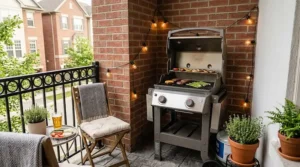
Frequently Asked Questions
❓ Can I use a gas grill on my apartment balcony?
❓ What size cooking area do I need for a small patio grill?
❓ Do small 2-burner grills get as hot as larger gas grills?
❓ Can a 2-burner grill run on natural gas instead of propane?
❓ How long does a 20 lb propane tank last on a 2-burner grill?
Conclusion
There isn’t one “best” 2 burner gas grill for small patio use — there’s a best one for your specific patio, and the right starting question is tabletop vs. cart, not brand vs. brand. If you want the most durable long-term option and have the budget, the Weber Spirit II E-210 is hard to beat. If your space is genuinely balcony-sized with no floor room, the Cuisinart CGG-306 or Pit Boss PB200P solve a problem the cart grills simply can’t. And if your budget is the deciding factor, the Nexgrill and Monument options both deliver real cooking capability without the premium price tag. Whichever you pick, the one step that prevents the most regret in this category isn’t comparing BTUs — it’s checking your local fire code and lease terms before the grill shows up at your door.
✨ Don’t miss current pricing on these picks — availability and discounts shift often, especially around major sale events, so check the listing before you decide. 🔍
Recommended for You
- Best 2 Burner Gas Grills 2026: 7 Top Picks That Deliver
- Gas Grill vs Charcoal Grill: 7 Best Picks for Backyard BBQ in 2026
- Gas Grill for the Money: 7 Top Picks for 2026
Disclaimer: This article contains affiliate links. As an Amazon Associate, I earn from qualifying purchases. If you purchase products through these links, we may earn a small commission at no additional cost to you.
Found this helpful? Share it with someone hunting for patio grill ideas! 💬🤗
