
In This Article
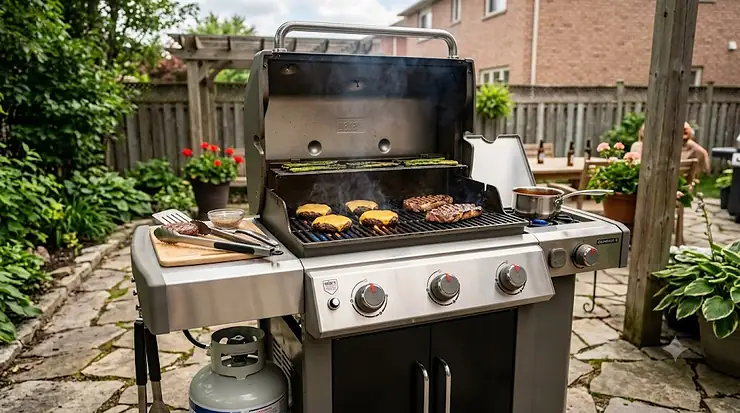
Somewhere between a cramped little two-burner and a monstrous six-burner cook station that eats your whole deck, there’s a sweet spot. That sweet spot is the 3 burner gas grill, and it’s probably the single most popular grill format in America for a reason nobody puts on the box: it’s just enough. Enough space to cook dinner for the family without hovering over the grates like a worried parent. Enough burners to build real heat zones — sear on one side, hold warm on the other. Not so much machine that assembling it turns into a Saturday you’ll never get back.
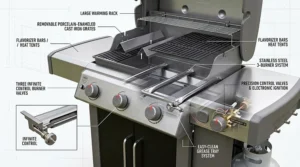
A 3 burner gas grill is a propane or natural-gas outdoor cooker with three independently controlled burner tubes arranged side by side beneath a single cooking grate, typically producing 24,000 to 48,000 combined BTUs across 400 to 630 square inches of cooking space…that’s the forty-second version, anyway. In practice, it means you can run one burner on low for chicken thighs while the middle burner screams hot enough to sear a ribeye, all under the same lid. That kind of zone control is the whole reason gas grills largely replaced the single-basin charcoal kettle for weeknight cooking, and it’s why the design traces back to the first portable propane grills built in the 1950s using the now-familiar 20-pound cylinder.
This guide skips the fluff and gets straight to what actually separates a grill you’ll love from one you’ll be cursing by August. We tracked down seven real 3 burner gas grill models — budget, mid-range, and genuinely nice — pulled their actual specs, and dug into what owners say once the new-grill smell wears off, using the same core criteria Consumer Reports uses to evaluate grills: heat distribution, temperature range, and build quality. Whether you’re chasing a 3 burner gas grill reviews rabbit hole at 11pm, hunting for the best 3 burner propane grill under $300, or just want the best mid size gas grill for a family of four, you’re in the right spot. We’ll also walk through independent burner control, porcelain coated grates, and electronic ignition system tech in plain English, because marketing copy loves throwing those terms around without explaining why they matter to your actual cookout.
Quick Comparison: 3 Burner Gas Grill at a Glance
| Grill | Total BTU | Cooking Area | Ignition | Best For |
|---|---|---|---|---|
| Weber Spirit II E-310 | 30,000 | 529 sq in | Infinity electronic | Best all-around, long-term reliability |
| Char-Griller E3001 Grillin’ Pro | 40,800 + 12,000 side | 630 sq in | Electronic igniter probe | Best value / most cooking space |
| Monument Mesa 305 | 48,000 | 570 sq in | Electronic push-button | Best for searing, best mid size gas grill |
| Nexgrill 720-0830MN | 40,500 | 591 sq in | Electronic | Best storage cabinet |
| MASTER COOK 3-Burner | 30,000 | 472 sq in | Piezoelectric | Best budget pick |
| Char-Broil Performance 375 Cabinet | 27,000 + 10,000 side | 495 sq in | Electronic | Best for beginners |
| Megamaster 3-Burner | 30,000 | 430 sq in | Push-and-turn | Best lesser-known compact option |
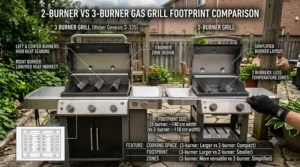
Look at the spread here and a pattern jumps out fast: BTUs and square footage don’t move together in lockstep, and that mismatch is exactly what should guide your decision. The Char-Griller and Nexgrill both cross 40,000 BTUs and 590+ square inches, which sounds like raw power but really just means more surface to heat, not necessarily hotter food — heat flux (BTU per square inch) is the number that predicts sear quality, and Weber’s tightly packed 30,000 BTUs over 529 square inches actually punches above its BTU count for that reason. Meanwhile the MASTER COOK and Megamaster keep things compact and cheap, which is the right call if you’re grilling for two or three rather than hosting the block.
💬 Ready to fire one up? Compare current prices below and grab the model that fits your backyard.😊
💬 Just one click — help others make better buying decisions too!😊
Top 7 3 Burner Gas Grill Picks: Expert Analysis
1. Weber Spirit II E-310 — best all-rounder for long-term reliability
The Spirit II E-310 has been the default answer to “what grill should I buy” for years, and once you dig into why, it’s not just brand loyalty talking.
The E-310 puts up 424 square inches of primary cooking area plus a 105-square-inch warming rack, for 529 total square inches, run by three stainless steel burner tubes delivering 30,000 BTUs of even heat. That works out to a heat flux in the low-to-mid 70s BTU per square inch — solidly efficient without wasting propane on empty space. Based on the spec comparison against grills at similar price points, the real differentiator isn’t raw output, it’s the GS4 grilling system: cast-iron cooking grates for heat retention, porcelain-enameled Flavorizer bars that vaporize drippings into smoke flavor instead of letting them just burn off, and Weber’s Infinity electronic ignition, which lights reliably without the repeated clicking common on cheaper igniters.
Reviewers consistently note two things: assembly is straightforward at under an hour for two people, and the warranty coverage is unusually generous — Weber backs the cookbox, lid, and burners for 10 years, grates for 5, and everything else for 2, a spread that exceeds what most competitors offer at this price point. The trade-off owners mention most is size: the 424-square-inch primary area is on the smaller side for anyone regularly hosting large groups, and Weber’s own lineup nudges people with bigger appetites toward the Genesis series instead.
Pros:
✅ Ten-year warranty on cookbox and burners, longest in this roundup
✅ GS4 system delivers consistently even heat across all three zones
✅ Compact footprint fits small patios without sacrificing performance
Cons:
❌ Smaller primary cooking area than several rivals here
❌ No side burner included on the base E-310 model
At around $550-$600, the Spirit II E-310 isn’t the cheapest 3 burner gas grill on this list, but the resale value, parts availability, and decade-long burner warranty make the ownership cost genuinely competitive with grills that cost $150 less upfront.
2. Char-Griller E3001 Grillin’ Pro — most cooking space for the money
If square inches per dollar is your metric, the Grillin’ Pro wins this comparison outright, and it’s not particularly close.
The E3001 offers 438 square inches of primary grilling space plus a 192-square-inch warming rack for 630 total square inches, powered by three stainless steel burner tubes generating 40,800 BTUs combined, plus a separate 12,000 BTU side burner. What most buyers overlook about barrel-style grills like this one is the ventilation design: dual smoke stacks improve airflow across the cook box, which in practice means fewer cold spots at the edges of the grate compared to flat-lidded competitors. Porcelain-coated cast iron grates and a stainless steel thermometer round out the build, and an electronic igniter probe sits on every burner rather than a single central ignition button.
Aggregated owner feedback is split in a telling way: people love the cooking performance and side burner versatility for years running, but a recurring complaint across long-term reviews is firebox rust setting in around the three-to-five-year mark on units that aren’t covered and re-seasoned regularly. One long-time owner described replacing an eight-year-old unit not because it failed, but because it had “stood up remarkably well” through harsh Ohio winters and they simply wanted an upgrade — suggesting that with basic maintenance, the rust concern is manageable rather than disqualifying.
Pros:
✅ Largest total cooking area in this lineup at 630 square inches
✅ Includes a genuinely useful 12,000 BTU side burner
✅ Dual smoke stacks reduce cold spots versus flat-lid rivals
Cons:
❌ Firebox prone to rust without a cover and annual reseasoning
❌ Heavier steel construction makes it less mobile than lighter grills
Priced in the $300-$400 range, this is the pick for anyone who entertains often and wants restaurant-style side-burner flexibility without stepping up to premium pricing.
3. Monument Mesa 305 — best for searing and fast heat-up
The Mesa series leans hard into the “sear fast, look good doing it” pitch, and the spec sheet mostly backs it up.
The Mesa 305 runs a 48,000 BTU output with side burner across a stainless body, and Monument claims searing temperatures of 650°F reached in about 15 minutes — notably faster than the 20-25 minute preheat typical of lower-BTU competitors in this guide. Total cooking area lands at 570 square inches, split between 405 square inches primary and 165 square inches of warming rack. Here’s what the spec sheet won’t tell you, but the design choices suggest: the ClearView glass lid isn’t just a gimmick. Being able to monitor food without lifting the lid genuinely helps hold temperature steady, especially in windy conditions where every lid-open resets your internal heat.
Porcelain-enameled cast iron grates and stainless steel flame tamers work together to reduce flare-ups and even out heat distribution, and a built-in indicator light shows burner status at a glance — a small touch that matters more than it sounds like at dusk. This grill is for buyers who prioritize speed to sear over sheer cooking real estate; if you regularly cook for eight or more people at once, the 405-square-inch primary area (smaller than the Char-Griller’s 438) may feel tight.
Pros:
✅ Fastest documented preheat-to-sear time in this comparison
✅ ClearView glass lid maintains temperature without opening
✅ Burner status indicator light adds real convenience after dark
Cons:
❌ Primary cooking area smaller than the Char-Griller and Nexgrill
❌ Mesa Series cannot be converted to natural gas
Expect to pay in the $350-$440 range depending on the black or stainless finish, putting it squarely mid-pack — reasonable given the searing performance it delivers.
4. Nexgrill 720-0830MN Stainless 3-Burner — best built-in storage cabinet
For buyers who want their propane tank and tools hidden rather than dangling off an open cart, this Nexgrill earns its spot.
This model delivers 40,500 total BTUs across three stainless steel burners, each rated at 13,500 BTUs, with 591 square inches of total cooking space. Reviewers consistently note the enclosed storage cabinet as the standout feature — it neatly houses the propane tank and tools out of sight, a real upgrade over the open-shelf carts common at this price. Based on the spec comparison, porcelain-coated cast iron cooking grids retain heat well for strong sear marks, and four smooth-rolling casters make repositioning easy compared to grills with only two fixed wheels.
What most buyers overlook here is the ignition detail: this specific Nexgrill variant uses electric ignition for instant startup rather than the piezoelectric click-and-hope systems found on some budget models, which matters more than it seems on a cold, damp morning when you just want the grill lit on the first try. Home Depot lists this model around $319, putting it comfortably in the mid-range bracket alongside the Monument Mesa.
Pros:
✅ Enclosed cabinet keeps propane tank and tools fully hidden
✅ Four casters offer easier maneuverability than two-wheel carts
✅ Reliable electric ignition lights on the first attempt
Cons:
❌ Cabinet design adds bulk versus open-cart competitors
❌ Foldable shelves feel less sturdy than the fixed side tables on pricier models
At an around $300-$350 range, this Nexgrill is the practical middle-ground choice for anyone who values a tidy patio setup as much as raw cooking output.
5. MASTER COOK 3 Burner BBQ Propane Gas Grill — best budget pick
Every roundup needs an honest entry-level option, and this is the one that shows up again and again in best 3 burner propane grill searches for good reason: it’s cheap and it works.
The MASTER COOK offers 472 square inches of total cooking area — 339 square inches primary plus 133 square inches of warming rack — powered by three stainless steel burners rated at 30,000 BTU-per-hour. On paper this means a reasonably generous cooking surface for the price tier, and the whole unit runs on a piezoelectric ignition system with a push-and-turn control knob, plus two foldable side tables and heavy-duty wheel casters for storage.
Aggregated review sentiment paints a fair, if unglamorous, picture: customers appreciate the cooking performance and foldable shelves for tight spaces, but flag concerns about plastic control knobs and some assembly friction. One detailed review noted independent control of all three burners with genuinely useful low-to-high temperature range for slow-roasting brisket and pork butt via indirect heat — solid evidence this budget grill can handle more than just weeknight burgers, provided you temper expectations about hardware longevity.
Pros:
✅ Largest cooking area among the true budget-tier options tested
✅ Independent burner control supports real low-and-slow cooking
✅ Foldable shelves save real space on small patios and balconies
Cons:
❌ Plastic control knobs feel less durable than metal alternatives
❌ Some owners report a fiddlier-than-average assembly process
Typically priced under $200, this is the grill to buy if you’re testing whether you’ll actually use a 3 burner gas grill regularly before investing more.
6. Char-Broil Performance Series 375 3-Burner Cabinet — best for beginners
Char-Broil built its reputation on making gas grilling approachable, and the Performance Series 375 cabinet model is a clean example of that philosophy in action.
This grill offers 375 square inches of primary cooking space, enough for roughly 20 burgers, 8 chicken breasts, or 5 steaks at once, run by a 27,000 BTU rating from three 9,000 BTU burners. Reviewers consistently note the enclosed two-door stainless cabinet as a highlight — it stores the propane tank and accessories neatly, with four casters for mobility, two of which lock in place. What the spec sheet doesn’t fully capture is how forgiving this grill is for first-timers: the Amplifire cooking system is designed to prevent flare-ups and keep food juicier, which functionally means less babysitting and fewer scorched dinners while you’re still learning your grill’s hot spots.
Porcelain-coated cast-iron grates resist rust and stay easier to clean, and Char-Broil backs the unit with a five-year burner warranty, two years on the firebox, and one year on remaining parts — a shorter window than Weber’s, but reasonable for the price bracket. The 495 total square inches (375 primary plus a 120-square-inch warming rack) sits toward the smaller end of this roundup, which is exactly the point for anyone easing into gas grilling without committing to a backyard centerpiece.
Pros:
✅ Amplifire system meaningfully reduces flare-ups for new grillers
✅ Enclosed cabinet keeps setup tidy with lockable caste
✅ Five-year burner warranty offers solid mid-tier peace of mind
Cons:
❌ Smallest primary cooking area of the mid-range models here
❌ Shorter overall warranty coverage than the Weber Spirit II
Priced around $300-$350, this Char-Broil earns its spot on any top 3 burner grill brands list as the pick specifically built to smooth out a new griller’s learning curve.
7. Megamaster 3-Burner Propane Gas Grill — best lesser-known compact option
Megamaster doesn’t have the brand recognition of Weber or Char-Broil, but the spec sheet holds up surprisingly well against grills costing more.
Three independently controlled stainless-steel burners each supply 10,000 BTUs, totaling 30,000 BTUs across the cooking surface, matching the Weber and MASTER COOK on raw output, and over 400 square inches of total cooking space keeps it competitive with the budget tier. Based on the spec comparison, what sets this apart from other sub-$250 grills is the ignition and control layout: push-and-turn ignition knobs for each burner paired with a durable stainless-steel control panel and built-in temperature gauge — features that are often missing or downgraded on similarly priced competitors.
Foldable side tables provide condiment and prep space without adding bulk when stored, and the compact 400-plus-square-inch footprint makes this a genuinely reasonable pick for a balcony, small patio, or secondary grill at a lake house. If you cannot verify real reviews for a niche brand like this, the honest move is to say so rather than invent sentiment — and independent, in-depth Megamaster review coverage remains thinner than for the household names above, so treat the spec claims with a bit more caution and lean on the manufacturer’s own documented warranty terms before buying.
Pros:
✅ Matches 30,000 BTU output of pricier name-brand competitors
✅ Full stainless control panel uncommon at this price tier
✅ Compact size ideal for balconies and small patios
Cons:
❌ Fewer independent, in-depth long-term reviews available
❌ Brand lacks the widespread parts network of Weber or Char-Broil
Generally found in the $200-$270 range, this is the pick for buyers specifically hunting top 3 burner grill brands lists for an under-the-radar option that doesn’t skimp on control quality.
Practical Usage Guide: Setup, First Month & Maintenance
Getting a new 3 burner gas grill right in the first 30 days sets the tone for how long it lasts. Start with assembly: budget one to three hours depending on the model, and don’t skip the manufacturer’s burn-off step — running the grill on high for 15 minutes before the first real cook clears manufacturing residue from the grates and interior, and it’s the single most skipped step among first-time owners.
Once assembled, check every propane connection with a soapy water solution before the first light: apply the solution at the connection point and watch for bubbles, which indicate a leak that needs tightening or professional repair before use. During the first few cooks, resist the urge to crank every burner to max — running each zone independently at first helps you map out hot spots and calibrate how your specific grill’s independent burner control actually behaves, since even grills with identical BTU ratings distribute heat differently based on burner tube design and flame tamer placement.
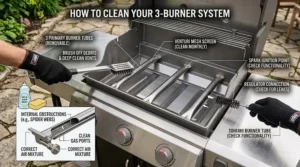
The most common first-month mistake is neglecting the grease tray. A full tray isn’t just messy — it’s a flare-up risk, and it also throws off airflow, which mimics the symptoms of a failing burner and sends new owners chasing a repair they don’t need. Clean it after every second or third cook. For long-term care, brush porcelain coated grates with a nylon or stainless brush (never a worn wire brush, since loose bristles are a documented ingestion hazard) after each use while the grates are still warm, and give the whole cook box a deeper scrub-down at the start and end of grilling season. Re-season cast-iron grates with a light coat of high-smoke-point oil after cleaning to fight rust, especially on barrel-style grills like the Char-Griller that are more rust-prone by design.
✨ Don’t Miss These Exclusive Deals!
🔍 Take your backyard cookouts to the next level with these carefully selected grills. Click on any highlighted model above to check current pricing and availability, and turn your next cookout into the one your family actually asks for again.
Real-World Scenarios: Which 3 Burner Gas Grill Fits Your Life
The apartment-balcony griller. You’ve got maybe 30 square feet of outdoor space, cook for one or two people most nights, and want something you can wheel into a corner when not in use. The Megamaster or MASTER COOK make the most sense here — both stay under 475 square inches total, fold down compactly, and don’t demand a big investment for occasional use.
The weekend host with a growing family. You’re cooking for four to six regularly, hosting a cookout every few weekends, and want zone flexibility for kids’ hot dogs alongside adult steaks. The Char-Griller E3001 or Nexgrill 720-0830MN both clear 590+ square inches, giving genuine room to run three different foods simultaneously without playing grate-space Tetris.
The searing-obsessed steak person. If your grilling identity revolves around getting a proper crust on a ribeye, the Monument Mesa’s faster preheat and higher BTU concentration per square inch will satisfy you more than a grill optimized purely for surface area. Pair it with a reverse-sear technique — indirect heat first, hard sear last — and the ClearView lid becomes genuinely useful for monitoring internal progress.
The long-term investor who hates replacing appliances. If you’d rather pay more once than replace a rusted-out grill in three years, the Weber Spirit II E-310’s decade-long burner warranty and widely available replacement parts make it the safer bet, even though it offers less raw cooking space than some rivals here.
How to Choose a 3 Burner Gas Grill
- Match cooking area to your typical group size, not your biggest party. Most grilling happens on ordinary weeknights, so size for four to six people and treat bigger cookouts as the exception, not the rule you’re designing around.
- Prioritize heat flux over raw BTU numbers. Divide total BTUs by primary cooking square inches; anything in the 60-100 range typically sears well, while lower numbers mean more gentle, even heat better suited to the indirect, low-and-slow cooking style that defines American barbecue rather than direct searing.
- Check the ignition type before you buy, not after. Electronic ignition systems light more reliably in damp or windy conditions than piezoelectric knobs, and it’s a small line item that makes a daily difference.
- Look past the lid material to the grate material. Porcelain coated grates and cast iron retain heat and produce better sear marks than bare stainless wire grates, which cool faster when you open the lid.
- Read the warranty terms on burners specifically, not just “the grill.” Burner tubes are the part most likely to fail first; a five-to-ten-year burner warranty says more about expected lifespan than a vague “limited lifetime warranty” on cosmetic parts.
- Factor in storage and mobility for your specific space. An enclosed cabinet is worth paying extra for if you lack a shed or garage; four casters beat two if you’ll be repositioning the grill often.
- Decide on side burner needs upfront. It’s far cheaper to buy a grill with one built in than to add a standalone burner later, if sauces, sides, or simmering matter to how you cook.
Common Mistakes When Buying a 3 Burner Gas Grill
The single biggest mistake is buying based on total BTU count alone. A 48,000 BTU grill spread across 630 square inches can actually sear worse than a tightly packed 30,000 BTU grill over 450 square inches, because what matters is heat concentration, not gross output — this is exactly why the Weber’s modest BTU rating still produces excellent sear results.
The second mistake is underestimating warming rack space in the total-area marketing number. Manufacturers often advertise “total cooking area” that lumps in the warming rack, which isn’t hot enough for direct grilling — always check the primary cooking area figure separately before comparing two grills’ capacity.
Third, buyers frequently skip checking parts availability for lesser-known brands. A grill that’s $50 cheaper isn’t a deal if a burner tube or flavorizer bar becomes impossible to source in three years, forcing an early replacement of the whole unit.
Finally, people underestimate assembly time and end up rushing it, which leads to loose gas connections — a genuine safety issue, not just an inconvenience. Budget real time, follow every torque and connection step in the manual, and don’t grill on a rushed first assembly.
Long-Term Cost & Maintenance
The sticker price is only part of the total cost of ownership on any 3 burner gas grill. A 20-pound propane tank typically lasts 18-25 hours of actual cooking time depending on burner usage, so a household grilling twice a week burns through a refill roughly every six to eight weeks in season — budget accordingly regardless of which model you buy, since fuel cost doesn’t vary dramatically across this BTU range.
Where total cost diverges more is replacement parts and grill lifespan. Grills with thinner steel fireboxes and less robust coatings, common at the sub-$250 tier, often need grate or flame-tamer replacements within two to three years of regular use. Mid-range and premium models with porcelain-enameled cast iron and longer burner warranties — the Weber and Monument Mesa both fall here — tend to stretch that timeline to five-plus years before major part replacement, which meaningfully changes the real cost-per-year math even against a higher upfront price. A cover is cheap insurance either way: leaving any grill uncovered through winter accelerates rust regardless of brand, and it’s the single highest-ROI accessory purchase you can make alongside the grill itself.
Features That Actually Matter (And Those That Don’t)
Independent burner control genuinely matters — it’s the entire reason a 3 burner layout beats a single-zone charcoal setup for weeknight versatility, letting you hold one zone low while another runs hot. Electronic ignition system reliability matters more than people expect walking in; a grill that requires five clicks to light becomes a daily annoyance fast. Porcelain coated grates matter for both cleanup and heat retention, genuinely earning their premium over bare wire grates.
What matters less than the marketing suggests: side-burner BTU count (most sauce and side-dish cooking doesn’t need more than 10,000-12,000 BTUs regardless of what’s advertised), and cosmetic finish options like matte black versus stainless, which affect looks but nothing about cooking performance. LED-lit knobs and bottle openers are pleasant extras, not decision-driving features — don’t let a flashy accessory list distract from checking the primary cooking area and burner warranty terms that actually determine how the grill performs and how long it lasts.
Safety, Regulations & Compliance Guide
Propane grill safety isn’t optional reading — it’s the difference between a good cookout and an emergency room visit. The U.S. Consumer Product Safety Commission recommends positioning any gas grill at least 10 feet away from your house or any building, and never using one in a garage, breezeway, carport, or porch. Before every grilling season, and ideally before every use if the grill sat unused for weeks, visually inspect gas hoses for cracking, brittleness, or holes, and confirm there are no sharp bends restricting flow.
Always store and transport propane cylinders in an upright, vertical position, kept outdoors and away from the grill itself rather than stashed underneath it. The National Fire Protection Association publishes updated grilling safety guidance every year, and one of the most consistently cited factors across incident reports is neglected hose maintenance — a five-minute soap-and-water check genuinely prevents a meaningful share of grill fires. If you ever smell gas while cooking, the correct response is simple: get away from the grill immediately, do not attempt to move it, and call for help from a safe distance rather than troubleshooting on the spot.
Frequently Asked Questions
❓ What is the best 3 burner gas grill for a family of four?
❓ How many BTUs do I actually need on a 3 burner gas grill?
❓ Are porcelain coated grates better than stainless steel grates?
❓ Do all 3 burner gas grills convert to natural gas?
❓ How long does a propane tank last on a 3 burner gas grill?
Conclusion
There’s no single best 3 burner gas grill for everyone, and honestly, anyone telling you otherwise is skipping the part where your patio size, group size, and patience for maintenance actually matter more than any spec sheet. If you want the safest long-term bet with the best warranty, the Weber Spirit II E-310 remains hard to beat. If cooking space per dollar is your priority, the Char-Griller E3001 delivers real value with a side burner thrown in. Searing enthusiasts should look hard at the Monument Mesa, budget-conscious first-timers can start confidently with the MASTER COOK or Megamaster, and anyone who wants a fuss-free entry point into gas grilling will appreciate what the Char-Broil Performance Series gets right.
Whichever you choose, the fundamentals stay the same: check hoses before every season, keep the grease tray clean, and give porcelain coated grates a light oiling after cleaning to fight rust. Do that, and any of these seven grills will earn its keep on your patio for years, not just one good summer.
💬 Found the right grill for your backyard? Compare current prices on your top pick above and get grilling this weekend!😊
Recommended for You
- 2 Burner Gas Grill for Couple: 7 Best Picks for 2026
- 7 Best 2 Burner Gas Grills for Small Patios in 2026
- Best 2 Burner Gas Grills 2026: 7 Top Picks That Deliver
Disclaimer: This article contains affiliate links. As an Amazon Associate, I earn from qualifying purchases. If you purchase products through these links, we may earn a small commission at no additional cost to you.
✨ Found this helpful? Share it with your friends! 💬🤗
