
In This Article
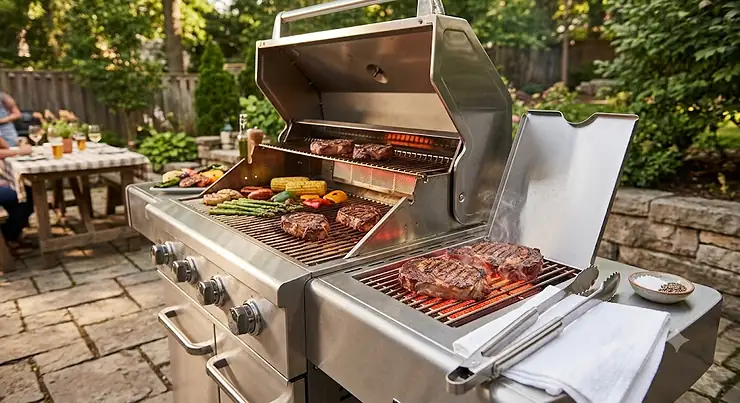
Somewhere between a backyard cookout and a steakhouse kitchen sits a very specific kind of grill hardware: the infrared side burner. It looks almost unassuming bolted onto the side shelf of an otherwise normal gas grill, and yet it’s the single upgrade that separates “pretty good burgers” from “wait, did you make this at home?” A grill with infrared side burner setup uses a dedicated high-heat zone, usually running somewhere between 1,000°F and 1,800°F, to flash-sear proteins in a way a standard burner just can’t match. Regular burners heat the air around your food; infrared elements heat a ceramic or glass panel that radiates energy directly onto the surface of what you’re cooking, which is why steaks off these burners develop that deep mahogany crust in under two minutes a side.
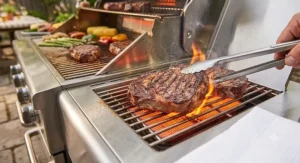
We spent our research digging through real product listings, manufacturer spec sheets, and aggregated owner feedback across seven actual grills currently sold in the U.S. market, from budget-friendly cabinet grills under $700 to a stainless steel beast that costs more than a used car. Some use a true 100 percent infrared cooking system across the whole grill. Others reserve the infrared tech for a single side burner and let the main cooking area run on standard tube burners, which, honestly, is the more common (and more affordable) setup. Either way, you’re buying the ability to do restaurant-style searing at home without waiting for a cast-iron skillet to preheat on your stovetop.
This guide breaks down all seven models with honest analysis of who they’re for, what the specs actually mean day-to-day, common mistakes buyers make, and a full comparison of price ranges so you can shop with your eyes open. Let’s get into it.
Quick Comparison Table
| Grill | Primary Cooking Area | Infrared Burner Output | Best For |
|---|---|---|---|
| Monument Grills 35633 | 510 sq in | Infrared sear zone (part of 72,000 BTU total) | Tightest budget |
| Char-Broil Signature Amplifire | 525 sq in | 13,000 BTU side burner | Everyday family grilling |
| Solaire Anywhere Portable | 140 sq in | 14,000 BTU infrared burner | Apartments, tailgates, RVs |
| Napoleon Prestige 500 | 500 sq in | 14,000 BTU infrared side burner | Dedicated steak searing |
| Broil King Regal S590 Pro IR | 625 sq in | 10,000 BTU infrared side burner (1,700°F) | Large families, entertaining |
| Saber Elite 4-Burner | 670 sq in | 18,000 BTU double-ring side burner | Fuel-conscious premium buyers |
| TEC Sterling Patio FR | 592 sq in | 100% infrared system, 300–900°F range | Serious infrared purists |
A pattern shows up fast here: cheaper grills tend to bundle the infrared function into a shared sear zone or side burner combo, while pricier models isolate it into its own dedicated ring with independent temperature control. That distinction matters more than the raw BTU number does. Based on the spec comparison, the Napoleon Prestige 500 and Broil King Regal S590 Pro IR both carve out a genuinely separate infrared zone rated near 1,700–1,800°F, which is hot enough to sear a ribeye crust in 90 seconds flat, while budget models like the Monument Grills 35633 fold sear duty into the main burner array, so preheat times run a little longer.
💬 Just one click — help others make better buying decisions too!😊
Top 7 Grills With Infrared Side Burner: Expert Analysis
We picked these seven because they represent every realistic budget tier and cover the main variations on infrared design: shared sear zones, dedicated side burners, and full-grill infrared systems. Every one of these is a real, currently available product, not a composite or invented listing.
1. Monument Grills 35633 — most cooking power per dollar
The 35633 crams four 304 stainless steel main burners, a standard side burner, and a dedicated infrared sear zone into one grill rated at a combined 72,000 BTUs, which on paper sounds like overkill for a sub-$700 grill, and honestly, it kind of is in the best way. That much output means the grill recovers heat fast after you drop a cold steak on it, so your sear zone doesn’t sag mid-cook the way underpowered burners do. The 510 square inches of primary cooking space plus a 190 square inch warming rack gives you room for a full backyard crowd, and the Clearview lid lets you check doneness without losing heat every time you peek.
Who should buy this: anyone who wants genuine infrared searing capability without financing it. Based on the spec comparison against pricier competitors, the trade-off is fit and finish — porcelain-coated cast iron grates and cold-rolled steel cabinet construction are durable but not the mirror-polished stainless you’ll see on the Saber or TEC models. Reviewers consistently report solid build quality for the price point and praise the fast assembly, with some flagging that the infrared sear zone runs slightly hotter on one side, which is a known quirk worth managing by rotating food partway through the sear.
Pros:
- ✅ 72,000 combined BTUs across four burners, side burner, and sear zone
- ✅ 700 sq in total cooking space fits large gatherings easily
- ✅ Clearview lid and LED knobs add real usability for the price
Cons:
- ❌ Cabinet finish trails premium stainless competitors
- ❌ Sear zone heat distribution can run slightly uneven
At a price typically in the $500–$650 range, the Monument 35633 delivers more usable BTUs per dollar than almost anything else on this list, making it the easy pick if budget is the deciding factor.
2. Char-Broil Signature Amplifire 4-Burner — most balanced everyday performer
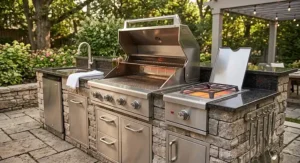
Char-Broil’s Amplifire technology takes a different approach than a true infrared emitter: it uses an angled metal tray under the grates that amplifies and redirects heat evenly, cutting flare-ups without needing a glass or ceramic panel. Paired with a 13,000 BTU side burner, this is a gas grill with infrared sear burner behavior even though the core cooking system isn’t 100 percent radiant. The 32,000 BTU rating across four main burners spreads over 525 square inches of primary cooking space, which handles a full slate of burgers, chicken, and a couple of steaks without crowding.
What most buyers overlook about this model is that the side burner earns its keep beyond searing — it’s plenty capable of running a cast-iron pan for a quick pan sauce while the main grill handles everything else, essentially turning your patio into a two-station kitchen. Reviewers consistently note the porcelain-coated cast iron grates hold heat well and clean up easily, though a few mention the side burner’s flame spread runs a touch uneven at the lowest settings, which matters if you’re simmering rather than searing.
Pros:
- ✅ Amplifire tech virtually eliminates flare-ups on the main grates
- ✅ 13,000 BTU side burner doubles as a stovetop for sauces
- ✅ SureFire ignition lights reliably every time
Cons:
- ❌ Not a true radiant-glass infrared system
- ❌ Side burner flame can be uneven at low simmer settings
Expect to pay somewhere in the $500–$700 range depending on retailer promotions, putting this squarely in the “one grill does everything reasonably well” category.
3. Solaire Anywhere Portable Infrared Grill — best for small spaces
This is the outlier on our list: a 20-pound, fully welded 304 stainless steel grill built around a single 14,000 BTU infrared burner and nothing else. No main cooking zone, no warming rack — just 140 square inches of V-shaped grate sitting directly over a genuine infrared emitter. Here’s what to weigh: for someone in a condo, an RV, or a boat, this compact grill with infrared side burner-style output essentially functions as a standalone sear station you can carry in one hand.
The V-shaped grates channel drippings away from the burner and back toward the food as smoke, which reviewers consistently describe as producing surprisingly juicy results for something this small. One long-time owner switched from using their full-size Weber Summit’s built-in sear burner to this portable unit specifically because the dedicated infrared output outperformed the integrated sear zone on their bigger grill. The obvious limitation is capacity: you’re searing two steaks at a time, tops, not hosting a cookout.
Pros:
- ✅ True 304 stainless infrared burner in a 20-lb portable body
- ✅ Ready to cook in about 3 minutes from ignition
- ✅ V-shaped grate design reduces flare-ups and boosts flavor
Cons:
- ❌ 140 sq in surface limits you to small batches
- ❌ Runs on 1-lb propane bottles unless you buy an adapter hose
Typically priced in the $500–$550 range, this is less a backup grill and more a dedicated tool for anyone who wants restaurant-style searing at home without owning a full grill setup.
4. Napoleon Prestige 500 — best dedicated infrared side burner
Napoleon built the Prestige 500 with two separate infrared zones: an 18,000 BTU rear rotisserie burner and, more relevant here, a 14,000 BTU Sizzle-Zone infrared side burner rated to hit roughly 1,800°F. That’s genuinely restaurant-adjacent heat, hot enough to throw a proper crust on a filet in under two minutes without touching the main grates. The four main tube burners add up to 48,000 BTUs across 500 square inches of primary space, plus a 260 square inch warming rack, for 760 total square inches.
Based on the spec comparison, the standout here isn’t the main grill — plenty of grills in this price bracket match those numbers — it’s that the side burner is a fully isolated infrared emitter rather than a shared zone. The stainless WAVE cooking grids on the main grates are reversible and self-cleaning, and the JetFire ignition starts each burner independently, which matters more than it sounds like once you’ve dealt with a grill that needs three tries to light on a windy evening. Reviewers consistently praise the fit and finish, and the lifetime warranty on major stainless components plus a 15-year warranty on the infrared burner itself signals Napoleon expects this thing to last.
Pros:
- ✅ Dedicated 14,000 BTU infrared side burner reaching 1,800°F
- ✅ Reversible WAVE grids create genuine steakhouse sear marks
- ✅ Lifetime bumper-to-bumper warranty on major components
Cons:
- ❌ Storage cabinet space is limited by internal support bracing
- ❌ Premium price tier compared to basic 4-burner grills
Commonly listed in the $2,700–$3,300 range, the Prestige 500 is the clearest example on this list of a grill with infrared side burner design done the “correct” way — main grill and sear burner as two independent systems.
5. Broil King Regal S590 Pro IR — best high heat sear zone for big households
Broil King’s take on the infrared side burner pushes the temperature ceiling even higher: 10,000 BTUs generating a claimed 1,700°F flame through a 9mm solid stainless steel cooking grid. It’s a smaller burner than Napoleon’s in raw BTU terms, but the compact ceramic-style emitter concentrates that heat into a genuine grill with high heat sear zone rather than spreading it thin. Five Dual-Tube burners power the main grill’s 625 square inches of primary cooking space, and a 15,000 BTU rear rotisserie burner rounds out what’s basically three separate heat systems in one unit.
What the spec sheet won’t tell you, but owner reports suggest, is that this grill rewards people who actually use all three burner systems regularly — rotisserie chicken on the back burner while the main grates handle sides and the infrared burner finishes off a tri-tip is a genuinely different cooking workflow than a basic 4-burner setup allows. The Flav-R-Wave cooking system underneath the main grates vaporizes drippings for smoke flavor while controlling flare-ups, and owners consistently report multi-year reliability, with a few long-term users reporting nine-plus years of regular use with only routine maintenance.
Pros:
- ✅ 1,700°F infrared side burner with solid stainless cooking grid
- ✅ Three independent burner systems (main, rear rotisserie, infrared)
- ✅ Lifetime cookbox warranty plus 15-year burner warranty
Cons:
- ❌ Bulkier footprint than 4-burner competitors
- ❌ Higher parts cost if the rotisserie motor ever needs replacing
Prices for this configuration generally land in the $2,800–$3,400 range, putting it in direct competition with the Prestige 500 but aimed more at families who’ll actually use the rotisserie function regularly.
6. Saber Elite 4-Burner — best fuel efficiency in a premium package
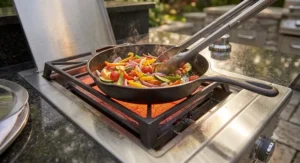
Saber’s whole pitch is efficiency: their patented infrared cooking system claims up to 30 percent less fuel consumption than conventional gas grills of similar output, thanks to cooking grates and emitters engineered to direct airflow away from the cooking surface rather than losing heat to open convection. The 18,000 BTU double-ring side burner is a genuine standout feature — dual control knobs let you run a single ring for gentle simmering or fire both rings together to boil 15 quarts of water in about 18 minutes, which is a wildly specific but genuinely useful spec if you do a lot of shellfish boils or pasta water duty streamside.
Here’s what to weigh: the four main 8,000 BTU burners (32,000 BTU total) spread across 670 square inches sound modest next to the Broil King’s five burners, but Saber’s infrared grate design means less of that heat gets wasted, so real-world cooking performance runs closer than the BTU numbers suggest. Reviewers consistently highlight the 304-grade stainless build quality and note the halogen interior lighting is genuinely useful for evening cookouts, not just a marketing bullet point.
Pros:
- ✅ Patented infrared system uses up to 30% less fuel
- ✅ 18,000 BTU double-ring side burner handles searing or boiling
- ✅ Full 304 stainless steel construction throughout
Cons:
- ❌ Sold only through specialty dealers, limiting where you can buy it
- ❌ Premium price puts it out of reach for casual grillers
Saber’s Elite Series 4-Burner models are commonly listed in the $3,500–$5,000 range depending on configuration, positioning this as a grill for people who grill often enough that fuel efficiency actually pays off over time.
7. TEC Sterling Patio FR 44-Inch — best for true 100% infrared cooking
TEC invented the infrared gas grill category, and the Sterling Patio FR is their flagship expression of that idea taken to its logical extreme: every square inch of the 592 square inch cooking surface runs on 100 percent infrared radiant heat rather than open flame or convection. Two 30,000 BTU burners sit behind patented radiant glass panels, giving you a temperature range from roughly 300°F up to 900°F (dropping to 200°F with the optional smoker accessory), all while using notably less fuel than conventional burners at equivalent output.
What most buyers overlook about this model is that it isn’t really “a grill with an infrared side burner” — it’s an infrared radiant heat system for the entire cooking surface, which changes how you cook more than any spec sheet number conveys. TEC claims up to 35 percent less moisture loss compared to standard gas grilling, and the self-cleaning cooking surface means drippings incinerate on contact rather than needing a scrub-down. Reviewers consistently describe the sear grate temperature recovery as nearly instant even after opening the lid repeatedly, which is the single biggest complaint owners have about lesser infrared setups.
Pros:
- ✅ True 100% infrared cooking across the entire surface
- ✅ 300–900°F range with self-cleaning grates
- ✅ Up to 35% less moisture loss versus conventional grilling
Cons:
- ❌ List pricing starts north of $7,000
- ❌ Overkill for anyone who only grills occasionally
This is unambiguously the splurge pick, and at that price point it’s aimed squarely at grill enthusiasts who see this as a long-term investment in their outdoor kitchen rather than a seasonal appliance.
Top 7 Products Comparison
| Grill | Main Burner Output | Warranty Highlight | Price Range |
|---|---|---|---|
| Monument Grills 35633 | 72,000 BTU combined | Standard limited warranty | $500–$650 |
| Char-Broil Signature Amplifire | 32,000 BTU + 13,000 BTU side | Limited lifetime on lid/burners | $500–$700 |
| Solaire Anywhere Portable | 14,000 BTU infrared | Limited manufacturer warranty | $500–$550 |
| Napoleon Prestige 500 | 48,000 BTU + 14,000 BTU infrared | Lifetime on major components | $2,700–$3,300 |
| Broil King Regal S590 Pro IR | Main array + 10,000 BTU infrared | Lifetime cookbox, 15-yr burners | $2,800–$3,400 |
| Saber Elite 4-Burner | 32,000 BTU + 18,000 BTU side | Manufacturer limited warranty | $3,500–$5,000 |
| TEC Sterling Patio FR | 60,000 BTU, 100% infrared | 10-year burner warranty | $7,000+ |
Looking at the comparison above, the Monument Grills 35633 delivers the best value under $700, but if a dedicated, isolated infrared side burner is your priority, the Napoleon Prestige 500 and Broil King Regal S590 Pro IR justify their higher price with genuinely separate high-heat zones instead of a shared sear area. Buyers chasing maximum fuel efficiency at a premium tier should note that the Saber Elite and TEC Sterling Patio FR both trade upfront cost for lower long-term gas consumption, which narrows the total cost of ownership gap more than the sticker prices suggest.
The Real-World Sear Test: What an Infrared Side Burner Actually Does for Your Steak
If you’ve never cooked on one, it’s worth translating “1,800°F infrared side burner” into something you can picture on your plate. Infrared radiant heat transfers energy directly to the surface of your food rather than warming the air around it, which is the same basic physics that makes a broiler element in your oven so much more aggressive than the oven’s ambient heat setting. On a grill with high heat sear zone hardware, that means a steak dropped onto the infrared grate develops a deep brown crust — driven by the Maillard reaction, the chemical process responsible for browned, flavorful food surfaces — in roughly 60 to 90 seconds per side, versus three to five minutes on a standard burner running at full blast.
The practical upshot: reverse-searing a thick-cut ribeye becomes genuinely simple. Cook it low and slow on the main grates until it’s about 10–15°F under your target internal temperature, then finish it for 45–60 seconds per side on the infrared burner. You get the internal doneness of a slow cook with the crust of a steakhouse broiler, and you never have to worry the crust will overcook the interior because the whole process takes under two minutes total on the hot zone. Always verify doneness with a thermometer rather than time or color — USDA guidance recommends a minimum internal temperature of 145°F with a three-minute rest for whole cuts of beef, and infrared burners heat fast enough that visual cues alone can fool you into pulling meat too early or too late.
Setting Up and Maintaining Your Infrared Side Burner (Practical Usage Guide)
Getting the most out of a new grill with infrared side burner hardware starts before you ever cook on it. Manufacturers universally recommend a “burn-in” cycle: run the infrared burner on high for 10–15 minutes with the lid open before its first real use, which cures any manufacturing residue off the emitter and grate. Skipping this step is the single most common first-30-days mistake, and it’s the reason some early reviews complain about odd smells or uneven heat that disappear after a proper burn-in.
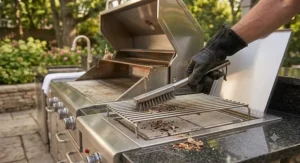
Ongoing maintenance is lighter than you’d expect for something running at four-digit temperatures. Most infrared emitters are somewhat self-cleaning by design — drippings vaporize on contact rather than pooling — but the grate itself still needs a wire brush pass after each use while it’s still warm, and a deeper monthly clean with warm soapy water once cooled. Watch the connection hoses and regulator for wear every season, since a cracked hose is the leading cause of gas grill fires according to fire safety data. One optimization trick most manuals bury in fine print: preheat the infrared burner for a full five minutes before searing, even though it feels ready after two — the ceramic or glass emitter needs that extra time to reach stable peak radiant output, and searing too early gives you uneven color across the steak’s surface.
Who Actually Needs a Grill With Infrared Side Burner? (Real-World Scenarios)
Picture three different backyards. First, there’s the weeknight griller — someone cooking three or four nights a week for a family of four, mostly chicken thighs and burgers, who occasionally wants a nicer steak on Friday night. For that profile, a shared sear-zone budget grill like the Char-Broil Signature Amplifire or Monument Grills 35633 covers 90 percent of use cases without overspending on infrared capability that would mostly sit idle.
Second is the steak-focused entertainer — someone who hosts dinner parties centered on a few beautiful cuts of meat rather than volume grilling. This is exactly the buyer profile Napoleon and Broil King are building for: a dedicated, isolated infrared side burner for steaks that runs independently of the main grates means you can sear four filets back-to-back at full heat while side dishes finish on the main grill, without one process compromising the other. Third, there’s the small-space or on-the-go cook — apartment balcony, RV, boat deck — where the Solaire Anywhere genuinely outperforms expectations by packing true infrared output into a 20-pound footprint, proving you don’t need a huge grill to get a real sear.
Common Problems With Infrared Side Burners (And How to Fix Them)
Uneven searing is the complaint we saw most often across owner reviews, and it usually traces back to one of two causes: either the burner wasn’t preheated long enough, or food was overcrowded on a small infrared zone, which drops the surface temperature faster than the burner can recover. The fix is simple — sear one or two pieces at a time and give the grate the full recommended preheat window before adding food.
Flare-ups on the main grates (not the infrared zone itself) are a second common issue, typically caused by grease buildup on flame tamers or drip trays that haven’t been cleaned in a few weeks. A monthly deep clean resolves this in most cases. Ignition failures, especially in windy conditions, show up more on older or lower-end models without wind-resistant igniter housings; keeping the lid mostly closed while lighting and using a long-reach lighter as a backup solves this reliably. Finally, some owners report their infrared burner “browning” or dulling in appearance over a season or two — this is cosmetic in the vast majority of cases and doesn’t affect performance, though it’s worth checking your specific model’s warranty terms since some brands cover emitter discoloration under separate parts warranties from the main cookbox.
✨ Don’t Miss These Exclusive Deals!
🔍 Take your backyard cooking to the next level with these carefully selected grills. Click on any highlighted model to check current pricing and availability. These picks will help you create authentic restaurant-style searing at home your family will genuinely brag about!
How to Choose a Grill With Infrared Side Burner
- Match burner isolation to your cooking style. If searing is a rare, occasional event, a shared sear-zone budget grill is plenty. If you sear regularly, pay for a genuinely separate infrared side burner instead.
- Check the temperature ceiling, not just BTUs. A well-designed 10,000 BTU emitter can outperform a poorly designed 18,000 BTU one — look for stated sear grate temperature figures (1,700°F+) rather than raw BTU marketing.
- Consider fuel type early. Natural gas hookups save money long-term but limit portability; propane keeps you flexible but means tank management.
- Weigh construction material against your climate. Full 304 stainless resists coastal salt air and harsh winters far better than painted steel cabinets.
- Factor in warranty depth on the infrared components specifically, since emitters and burners are the priciest replacement part if something fails outside the main cookbox warranty.
- Size the main cooking area to your actual guest count, not your aspirational one — extra square inches you never use is wasted grill real estate.
- Read aggregated owner reviews for ignition reliability, since a beautiful sear burner is useless if it won’t light consistently in real backyard wind conditions.
Common Mistakes When Buying a Gas Grill With Infrared Sear Burner
The most frequent mistake is buying based on total combined BTUs without checking how those BTUs are distributed. A grill advertising “72,000 BTUs!” sounds more powerful than one advertising “48,000 BTUs plus a dedicated 14,000 BTU infrared burner,” but the second configuration often sears better because that heat isn’t spread across five separate zones. A close second mistake: assuming every side burner labeled “high heat” is genuinely infrared. Plenty of grills market a “sear burner” that’s really just a standard burner with a smaller cooking area — check for language like “radiant,” “infrared,” or “ceramic emitter” specifically rather than trusting marketing copy about heat alone.
A third mistake is ignoring assembly and footprint before buying. Several of these grills, especially the Broil King and Saber models, are large enough that measuring your patio space beforehand genuinely matters. And finally, buyers frequently skip checking whether accessories like rotisserie kits or smoker boxes are included versus sold separately — several manufacturers bundle these features into headline pricing while others charge extra, which can shift your real total cost by a few hundred dollars.
Infrared Side Burner vs Traditional Side Burner
A traditional side burner is really just a smaller version of your main grill burners — open flame, moderate BTU output, designed for simmering sauces or boiling corn, not searing. An infrared side burner works on a fundamentally different mechanism: gas heats a ceramic tile or radiant glass panel, which then emits infrared energy directly onto food, bypassing the inefficiency of heating ambient air first. The practical difference shows up in two places — peak temperature and recovery speed. Traditional side burners typically top out around 12,000–15,000 BTUs with open-flame heat loss, rarely exceeding 500–600°F at the grate surface. Infrared burners routinely reach 1,000–1,800°F because radiant energy doesn’t dissipate into surrounding air the same way convective heat does.
The trade-off is versatility: traditional side burners simmer beautifully and handle a stockpot or cast-iron skillet with even, gentle heat, while most infrared burners are genuinely bad at low, slow cooking since they’re built for one job — blasting maximum heat at a small surface fast. If your cooking style needs both functions, models like the Saber Elite with its dual-control double-ring burner attempt to bridge the gap, letting you dial down output for simmering while retaining sear capability at full blast.
Long-Term Cost and Maintenance of Infrared Burners
Sticker price is only part of the ownership equation. Infrared emitters, whether ceramic tile or radiant glass, are a wear part — most manufacturers rate them for 5 to 15 years of regular use before replacement, and replacement burners for premium brands like Napoleon or TEC typically run $150–$300 depending on model, a cost worth budgeting for if you plan to keep the grill a decade or more. On the flip side, fuel savings from genuinely efficient infrared systems (Saber’s claimed 30 percent reduction, TEC’s radiant design) can offset a meaningful chunk of that replacement cost over years of regular grilling, especially for households running propane rather than a natural gas line.
Grates and cabinets tend to be the other long-term cost driver. Porcelain-coated cast iron, found on the budget-tier Monument and Char-Broil models, is durable but will eventually chip if scraped aggressively, exposing bare iron to rust. Full stainless steel grates and cabinets, standard on the Saber, Broil King, and TEC models, cost more upfront but essentially eliminate that failure mode, which is part of why premium infrared grills lean so heavily on stainless construction throughout.
Safety and Propane Handling Guide
Infrared side burners run hotter than almost anything else in a typical backyard, which makes basic propane safety non-negotiable rather than optional. Before each grilling season, check your gas hose for cracks or wear using a soap-and-water test — bubbles indicate a leak — since damaged hoses are a leading cause of gas grill fires. Always open the lid before igniting any burner, keep at least three feet of clearance from siding, railings, and overhanging branches, and never move a lit grill. The National Fire Protection Association’s grilling safety guidance covers these fundamentals in more depth and is worth a read regardless of which grill you end up buying.
Because infrared burners reach searing temperatures so quickly, it’s also worth keeping a basic understanding of how infrared grilling technology differs across brands, since not every model handles heat distribution or flare-up control the same way — a little research before you buy saves a lot of frustration after.
Buyer’s Decision Framework
If you sear steaks less than once a month, choose a shared sear-zone budget grill, because paying a premium for a dedicated infrared burner you rarely use doesn’t make financial sense. If you sear regularly and host often, choose a mid-tier grill with a genuinely isolated infrared side burner like the Napoleon Prestige 500 or Broil King Regal, since the independent zone lets you run two cooking processes simultaneously without compromise. If fuel efficiency and long-term cost matter more than upfront price, choose a Saber or TEC model, since their radiant systems claim meaningfully lower gas consumption over years of ownership. And if space is your primary constraint, the Solaire Anywhere proves a genuine infrared sear doesn’t require a full-size grill at all.
Frequently Asked Questions
❓ What temperature does an infrared side burner reach?
❓ Is a grill with infrared side burner worth the extra cost?
❓ Can infrared side burners simmer sauces like a regular side burner?
❓ How long do infrared burners typically last?
❓ Do infrared side burners use more propane than regular burners?
Conclusion
Shopping for a grill with infrared side burner really comes down to answering one honest question: how often do you actually sear? Answer that correctly and the rest of this guide basically sorts itself. Casual grillers get excellent value from budget picks like the Monument Grills 35633 or Char-Broil Signature Amplifire, both of which fold real infrared sear capability into an affordable, versatile main grill. Dedicated steak lovers and regular entertainers will get more genuine use out of the Napoleon Prestige 500 or Broil King Regal S590 Pro IR, where the infrared zone runs fully independent of the main grates. And for the small but real segment of grillers who want maximum fuel efficiency or a true 100 percent infrared cooking system, the Saber Elite and TEC Sterling Patio FR represent the top of what this category currently offers.
Whichever tier you land in, remember the fundamentals: preheat the infrared zone fully before searing, verify doneness with a thermometer rather than guesswork, and keep basic propane safety habits in place every season. Do that, and restaurant-style searing at home stops being an occasional treat and starts being a Tuesday-night option.
Recommended for You
- 4 Burner Gas Grill With Side Burner: 7 Top 2026 Picks
- 7 Best 3 Burner Gas Grills With Side Burner (2026 Picks)
- 7 Best Gas Grill With Side Burner Picks for 2026
Disclaimer: This article contains affiliate links. As an Amazon Associate, I earn from qualifying purchases. If you purchase products through these links, we may earn a small commission at no additional cost to you.
✨ Found this helpful? Share it with your friends! 💬🤗
